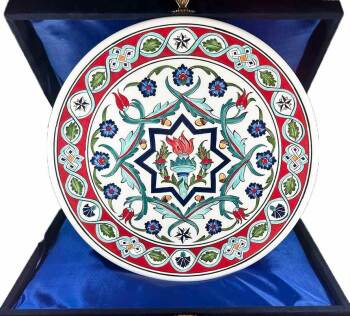
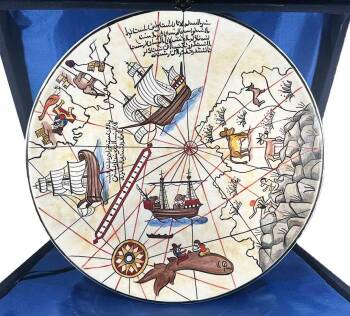
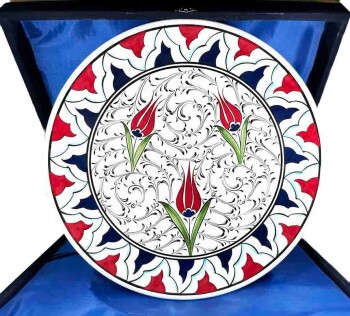
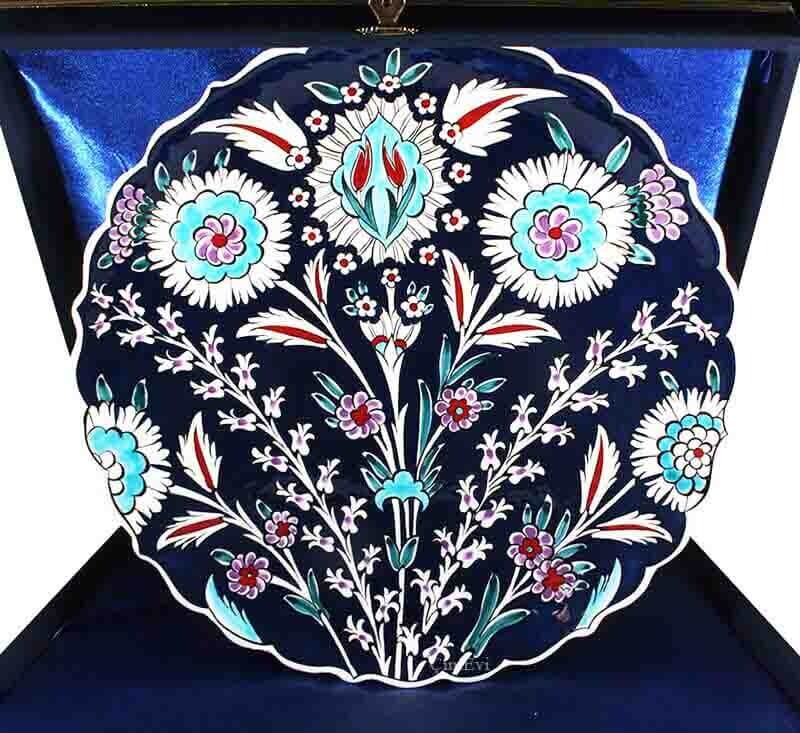
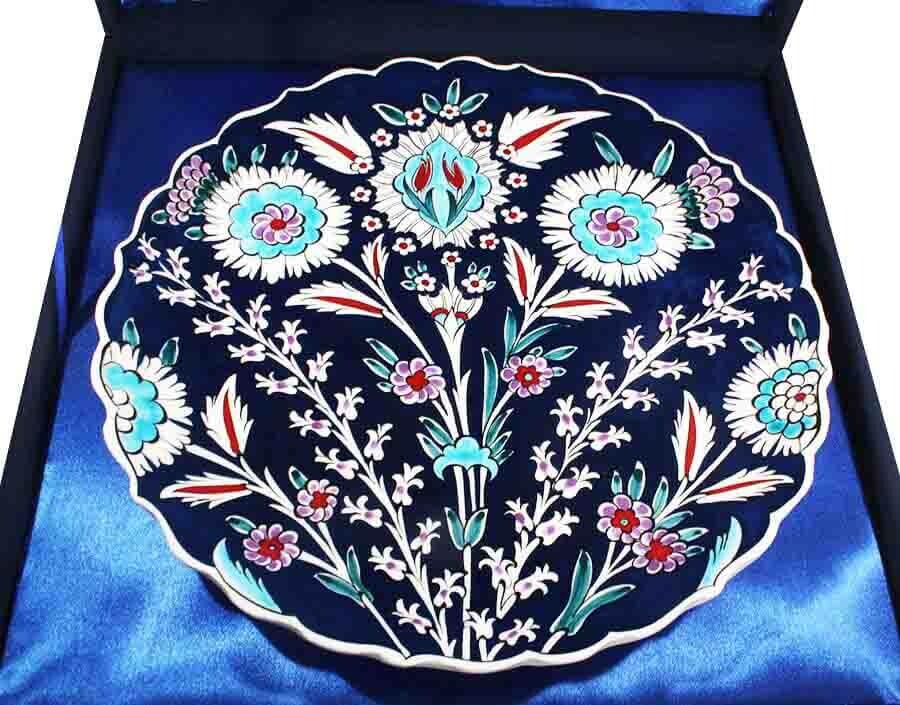
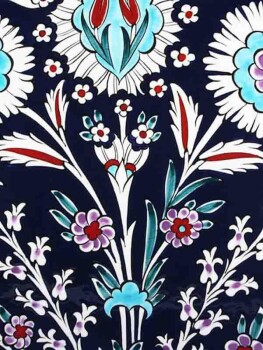
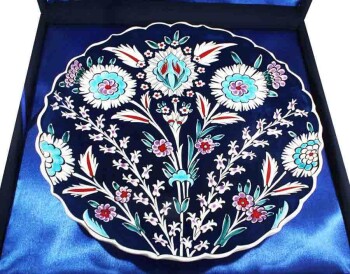
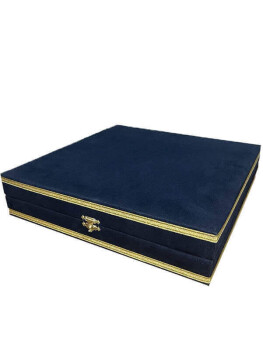
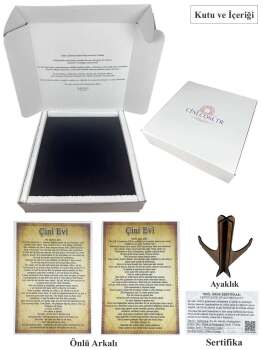
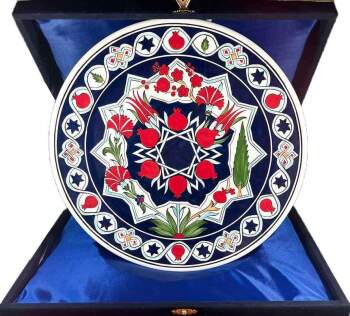
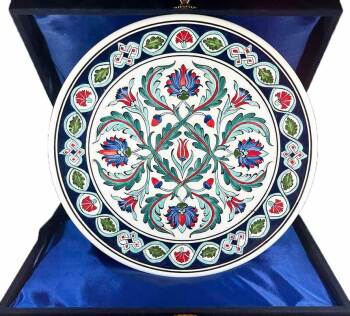
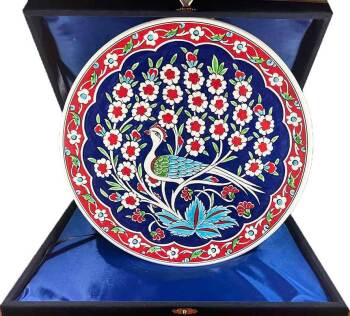
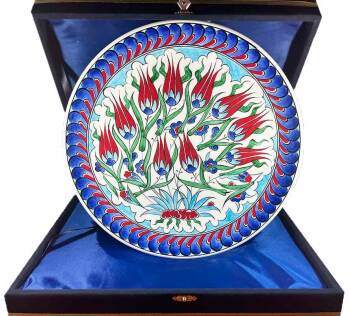
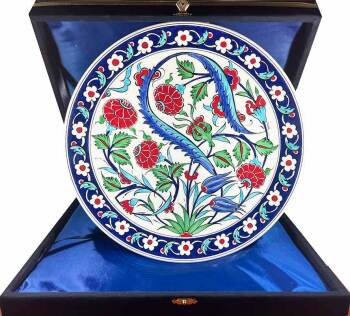
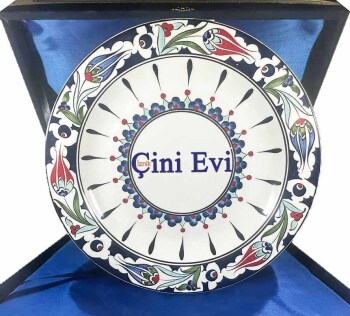
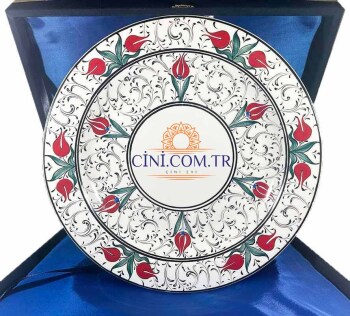
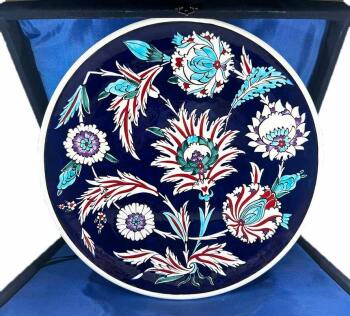
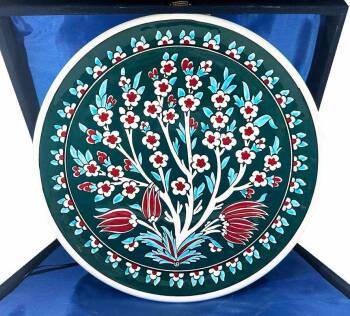
First-class handmade botanical patterned Iznik ceramic plate worked on a blue background.
Product Features
Each Iznik ceramic piece is unique, just like a fingerprint. Even if the same product is produced again in the same way, it will not be exactly identical.
The exact same piece you are viewing now cannot be produced again.
We recommend purchasing the product you like immediately if it meets your needs.
The value of Iznik ceramics never decreases, does not go out of fashion, and does not become outdated. It is an artistic heritage piece that can be passed down from generation to generation.
Pattern Information: Damascus Style Motif
The Damascus style motif represents a number of things, including the beauty of nature, the abundance of life, and the power of the Ottoman Empire.
Beauty of nature: The Damascus style motif is usually filled with stylized flowers and other motifs inspired by nature. This may suggest that the motif is a way of representing the beauty of nature.
Abundance of life: The Damascus style motif is often characterized by the use of vivid colors. This may suggest that the motif is a way of representing the abundance of life.
Power of the Ottoman Empire: The Damascus style motif was first developed during the rise of the Ottoman Empire. This may suggest that the motif is a way of representing the power of the Ottoman Empire.
The Damascus style motif is a beautiful and distinctive type of Iznik ceramic decoration. It is a reminder of Turkey’s rich history and culture and remains popular today.
Damascus ware is the name given to a group of ceramic vessels produced in Iznik in the mid-16th century.
Because the first examples were taken to Europe from Damascus toward the end of the 19th century, this name was given by Western collectors and was accepted without question for many years.
Recent research has revealed that these vessels were not produced in Damascus, but in Iznik, and that they form one of the groups among the most accomplished examples of Iznik ceramic art.
Today, these ceramics are also called pomegranate-artichoke pieces because of the decorative motifs on them. Their most striking feature is that sage green, then eggplant purple and black in the outlines, were added to colors such as blue, white, and turquoise seen in Iznik ceramics from the late 15th and early 16th centuries.
In Damascus ware examples, it is also observed that the dense compositional understanding of earlier periods was abandoned and that motifs were used more sparingly.
Large plants reminiscent of pomegranates or artichokes, covered with scale-like motifs, were often placed on a mostly white background in a loose and free arrangement, sometimes symmetrically.
In addition to these, flowers such as tulips, roses, and carnations, as well as trees and saz leaves, were also used in the decoration.