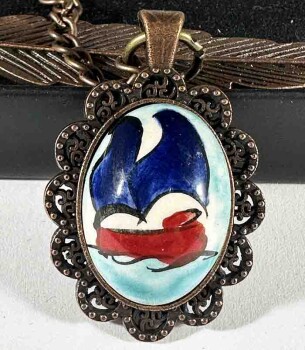
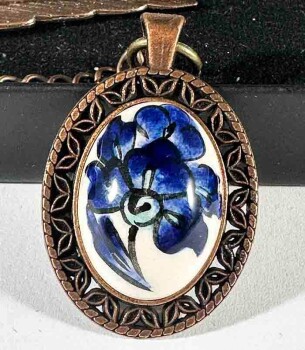
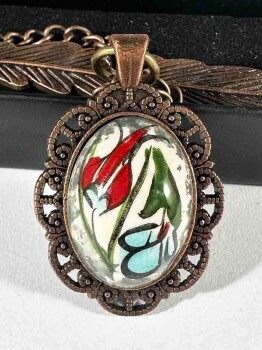
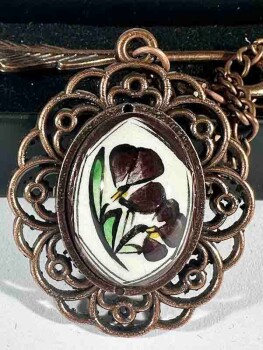
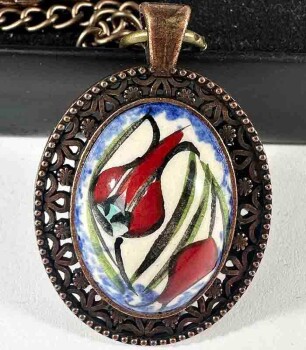
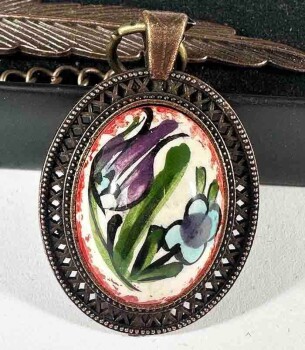
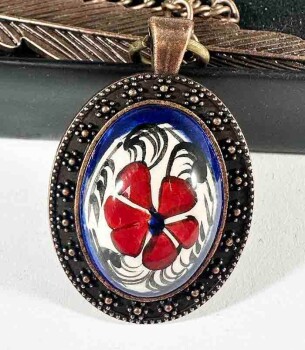
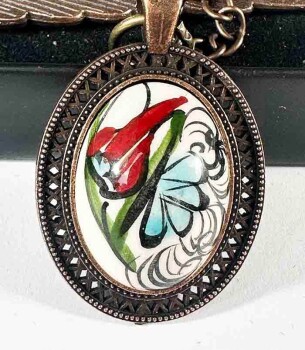
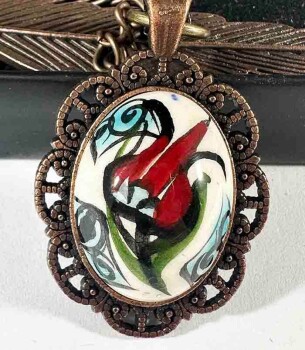
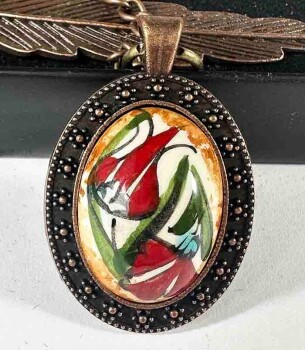
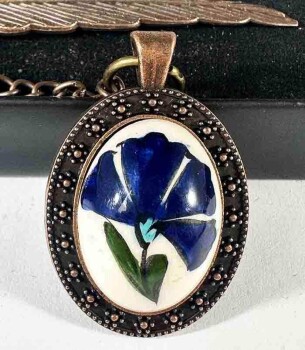
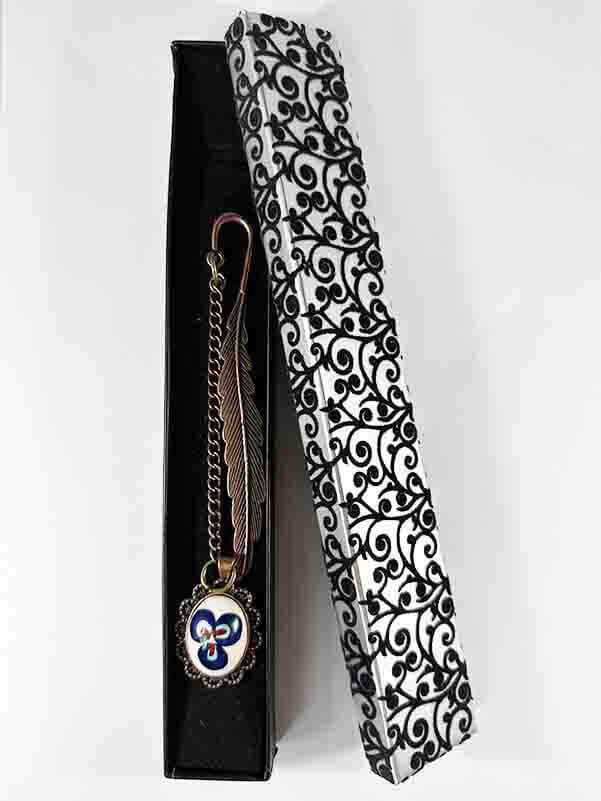
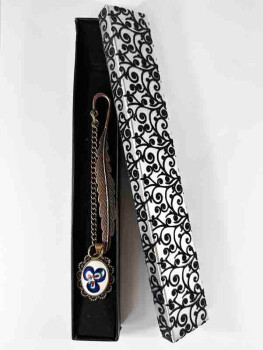
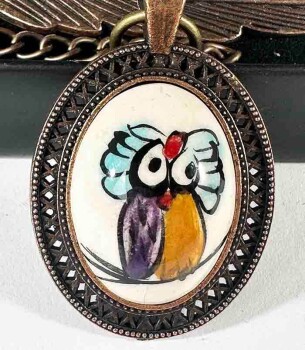
Every Iznik ceramic piece is unique, just like a fingerprint. Even if the same product is produced again with the same design, it will not be exactly identical.
The exact same piece you are viewing now cannot be reproduced in precisely the same way.
If this piece matches your taste, choosing it now is recommended because each handmade ceramic item is one of a kind.
Iznik ceramics never lose their value, go out of fashion or become obsolete. They are artistic heirlooms that can be passed down from generation to generation.
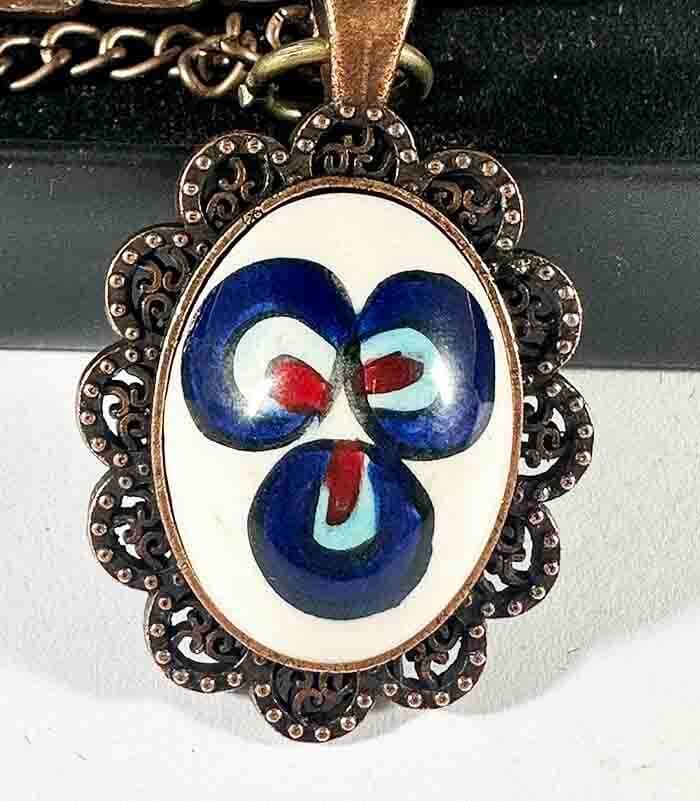
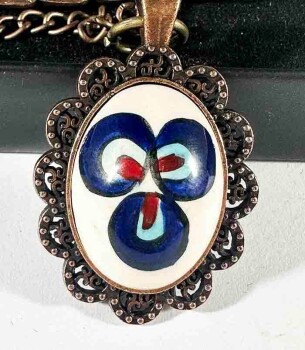
In the 15th and 16th centuries, the Cintemani motif became an important symbolic pattern. It is of Central Asian origin and has a long history in Turkish culture.
The word Cintemani is associated with the leopard and symbolizes power, speed and intelligence. The motif is usually formed with three circular elements and wavy lines repeated in a symmetrical order.
In the Ottoman Empire, the Cintemani motif was widely used because it represented strength and success. It appeared frequently in the decoration of palaces, mosques, tombs and other important buildings. It was also used on fabrics, carpets and ceramics.
The meaning of the Cintemani motif is connected with strength, speed, intelligence and achievement. It may also symbolize richness, fertility and prosperity.
In Iznik ceramics, Cintemani motifs are often used for their decorative value, adding visual depth and attraction to the surface.
This motif is considered an important part of the artistic heritage of the Ottoman Empire and continues to appear in Turkish ceramic art and design today.