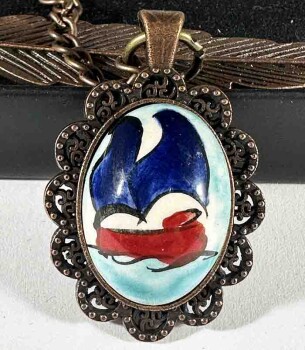
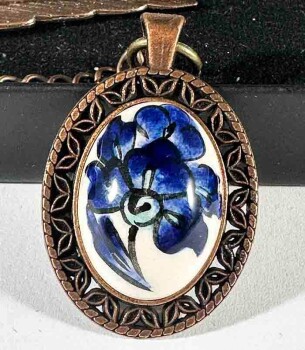
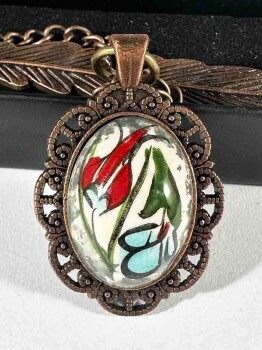
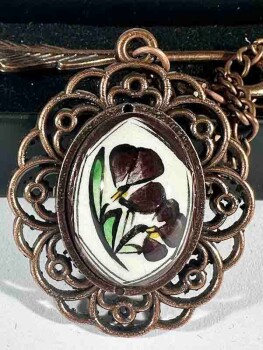
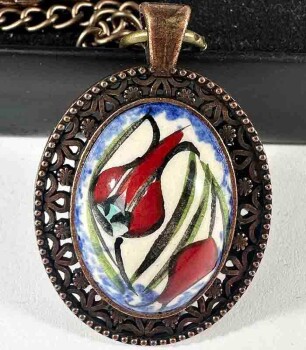
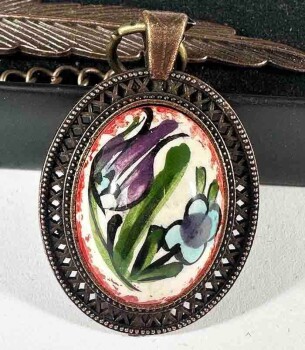
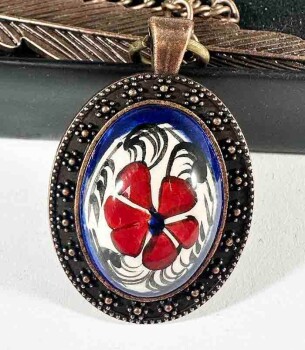
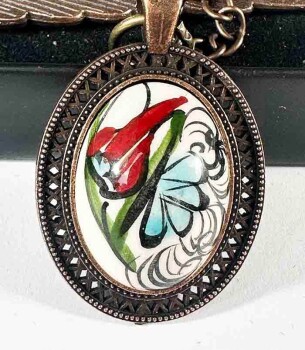
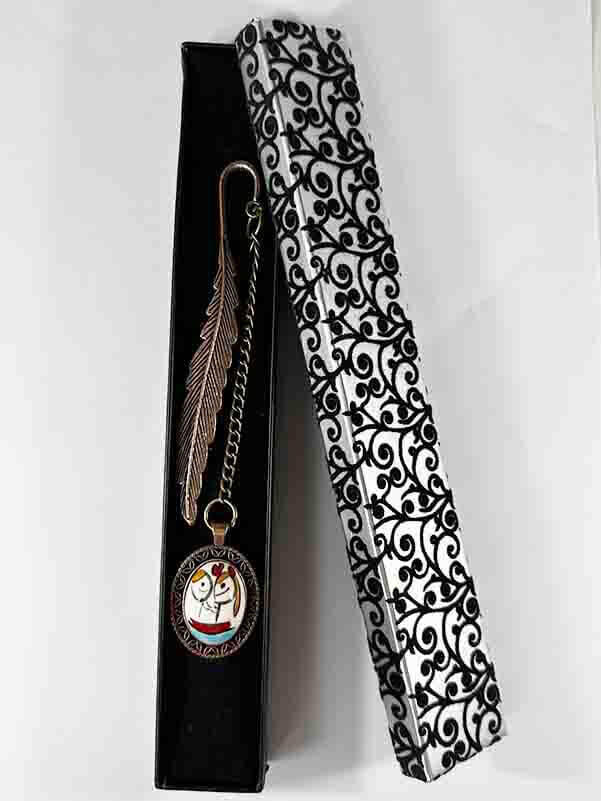
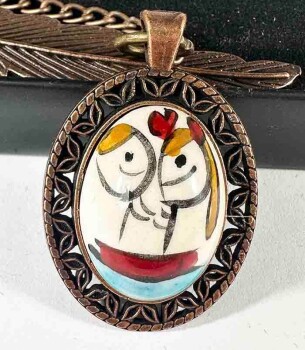
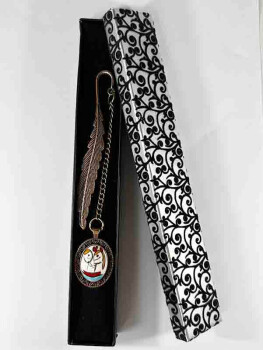
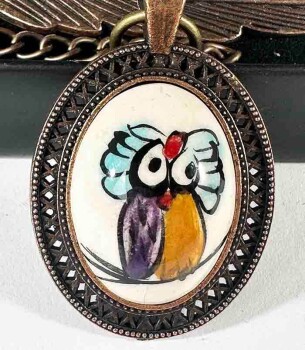
Every Iznik ceramic piece is unique, just like a fingerprint. Even if the same product is produced again with the same design, it will not be exactly identical.
The exact same piece you are viewing now cannot be reproduced in precisely the same way.
If this piece matches your taste, choosing it now is recommended because each handmade ceramic item is one of a kind.
Iznik ceramics never lose their value, go out of fashion or become obsolete. They are artistic heirlooms that can be passed down from generation to generation.
The Elif motif is one of the most common motifs in Iznik ceramics. It is a stylized representation of the first letter of the Arabic alphabet.
In Islamic tradition, the letter Elif is associated with the divine name of Allah. It is also said to represent the beginning of creation. For this reason, the Elif motif is often seen as a symbol of God, creation and divine order.
In addition to its religious meaning, the Elif motif can also be understood as a symbol of beauty and perfection. Its vertical line may represent the axis mundi, or the central axis of the universe, while the horizontal line can represent balance and harmony.
Together, these lines express the perfect order of the universe. Because the motif is both beautiful and meaningful, it is a popular choice for Iznik ceramics.
Divine name: The Elif motif is often associated with the name Allah. As the first letter of the Arabic alphabet, it can symbolize the beginning of creation.
Creation: Elif may also be interpreted as a symbol of creation, representing the vertical axis around which everything in the universe revolves.
Divine order: The vertical and horizontal lines of the letter may represent balance, harmony and the divine order of the universe.
Beauty and perfection: The Elif motif also reminds the viewer of the flawless order of the universe and the power of Allah.
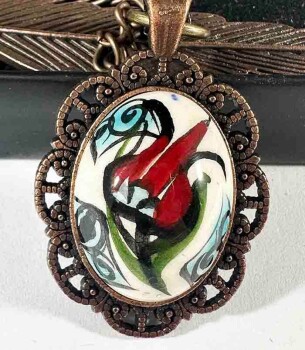
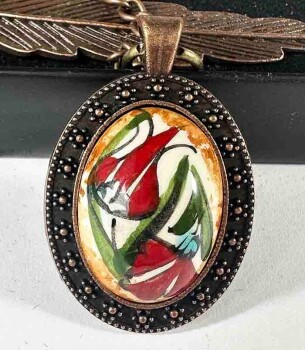
In Iznik ceramic art, the tulip is seen as a symbol of love, beauty, elegance and perfection. Because the Turkish word for tulip shares the same letters as the Arabic word Allah, it has also been associated with divine love.
Love: The tulip is often viewed as a symbol of love because of its delicate beauty and graceful form.
Beauty and elegance: As an elegant and aesthetic flower in nature, the tulip highlights the beauty and refinement of Iznik ceramic craftsmanship.
Perfection: Because of its symmetrical form and balanced petals, the tulip can symbolize perfection.
Divine meaning: Due to its letter association with the word Allah, the tulip is sometimes interpreted as a sacred or spiritual symbol.
Cycle of nature: As a herald of spring, the tulip represents awakening, renewal, rebirth and growth in nature.
Nobility and richness: During the Ottoman period, the tulip became an important symbol and was used in palaces and major buildings to express nobility, power, refinement and wealth.
Turkish culture and history: Tulips hold an important place in Turkish culture. In the Ottoman Empire, tulips were cultivated in palace gardens and became an enduring cultural symbol. Tulip motifs in Iznik ceramics represent this connection with Turkish history and culture.