Out Of Stock
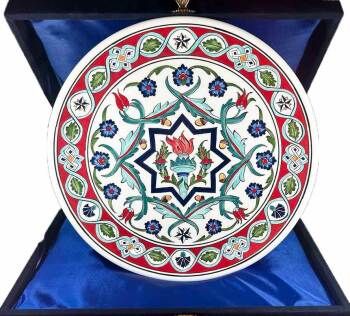
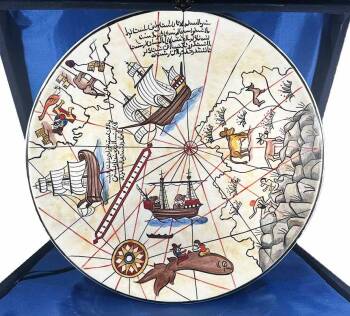
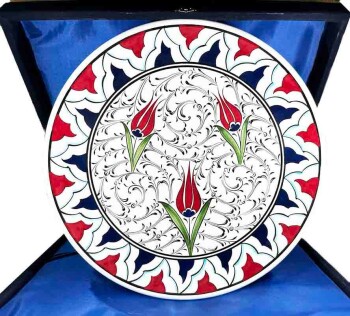
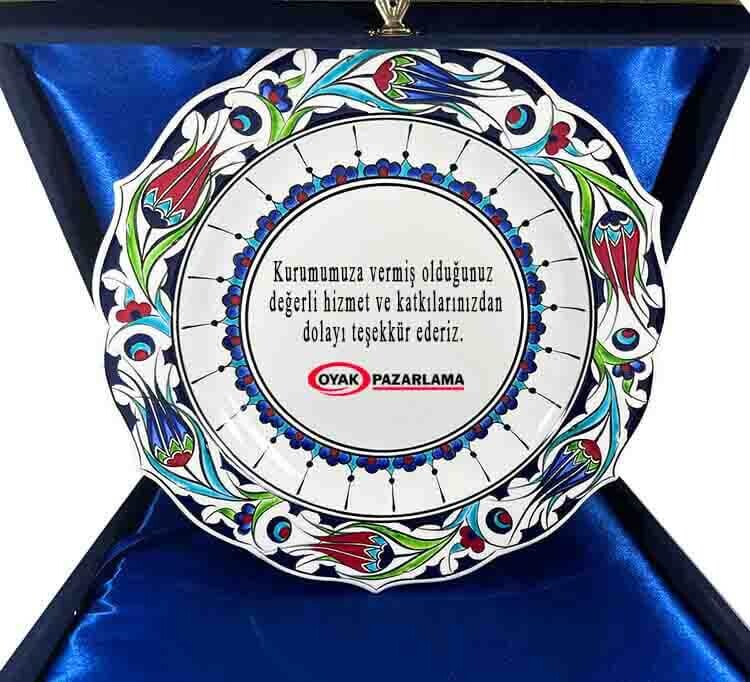
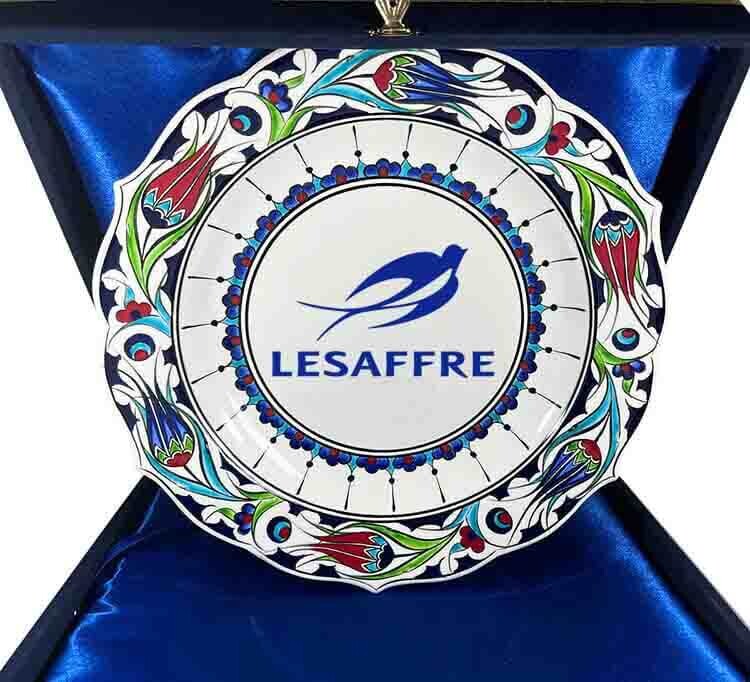
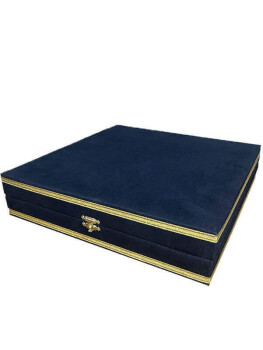
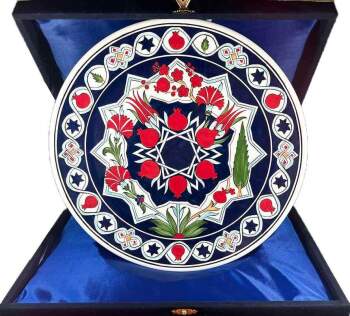
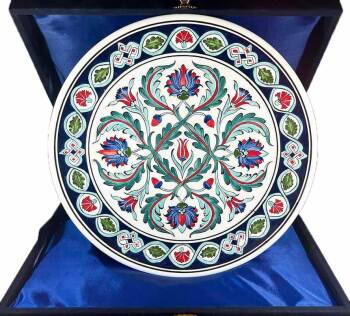
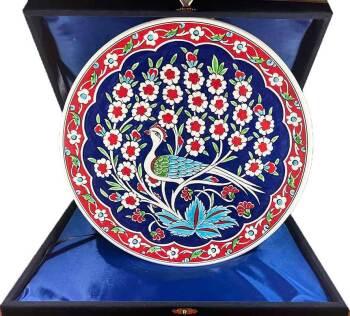
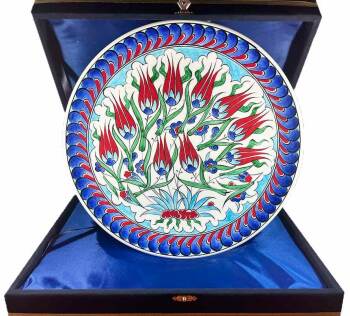
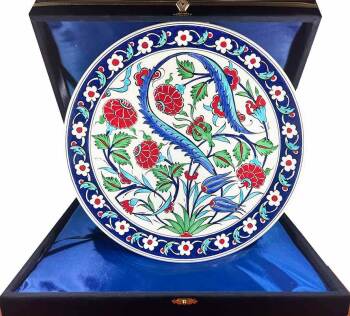
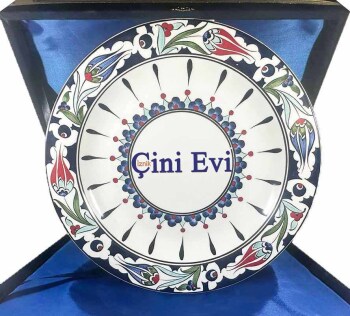
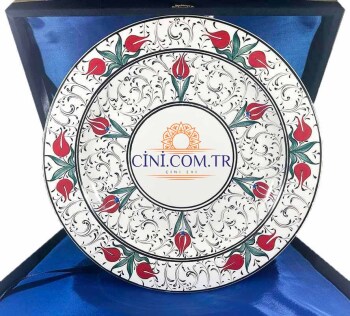
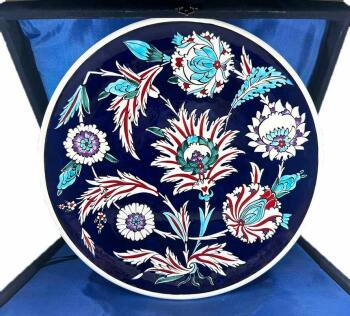
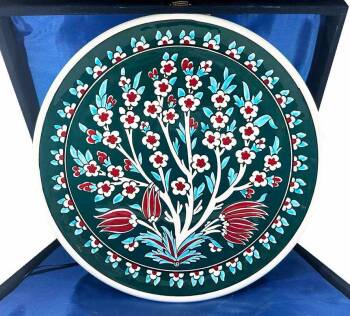
Notify me when it’s in stockThis custom logo Iznik ceramic plate is prepared for personal and corporate presentations. The edges are handmade, while the center area is printed. Your preferred name and logo can be printed in the center section.
It is designed as a lasting and prestigious gift. Production time is 5-8 days. If you send your logo together with the product name to our WhatsApp line at 5531633616, a draft can be prepared for you before your order.
Every Iznik ceramic piece is unique, just like a fingerprint. Even if the same product is produced again with the same design, it will not be exactly identical.
The exact same piece you are viewing now cannot be reproduced in precisely the same way.
Iznik ceramics are timeless cultural artworks. They do not lose their artistic value, go out of style or become obsolete; they can be kept as a heritage piece to pass from one generation to the next.
In Iznik ceramic art, the tulip is seen as a symbol of love, beauty, elegance and perfection. Because the Turkish word “lale” shares the same letters as the Arabic word “Allah,” it has also been associated with divine love.
Love: The tulip is often viewed as a symbol of love because of its delicate beauty and graceful form.
Beauty and elegance: As an elegant flower in nature, the tulip highlights the beauty and refinement of Iznik ceramic craftsmanship.
Perfection: Because of its balanced form and symmetrical structure, the tulip can symbolize perfection.
Divine meaning: Due to its letter association with the word Allah, the tulip is sometimes interpreted as a sacred or spiritual symbol.
Cycle of nature: As a herald of spring, the tulip represents awakening, renewal, rebirth and growth in nature.
Nobility and richness: During the Ottoman period, the tulip became an important symbol and was used in palaces and major buildings to express nobility, refinement, power and wealth.
Turkish culture and history: Tulips hold an important place in Turkish culture. In the Ottoman Empire, tulips were cultivated in palace gardens and became an enduring cultural symbol.
The Chintamani motif was widely used in the 15th and 16th centuries. It is a symbolic motif of Central Asian origin with a long history in Turkish culture.
The word Chintamani is associated with the idea of power, speed and intelligence. The motif is usually formed with three round elements and wavy lines repeated in a symmetrical order.
In the Ottoman Empire, the Chintamani motif was widely used because it represented strength and success. It appeared in the decoration of palaces, mosques, tombs and other important buildings, and was also seen on textiles, carpets and ceramics.
The meaning of the Chintamani motif is connected with power, speed, intelligence and success. It may also symbolize wealth, abundance and prosperity.
In Iznik ceramics, Chintamani motifs are often used for their decorative qualities, adding depth, movement and visual attraction to the surface.
This motif is considered an important part of the artistic heritage of the Ottoman Empire and continues to appear in Turkish ceramic art and design today.