Out Of Stock
Notify me when it’s in stockProduct Features
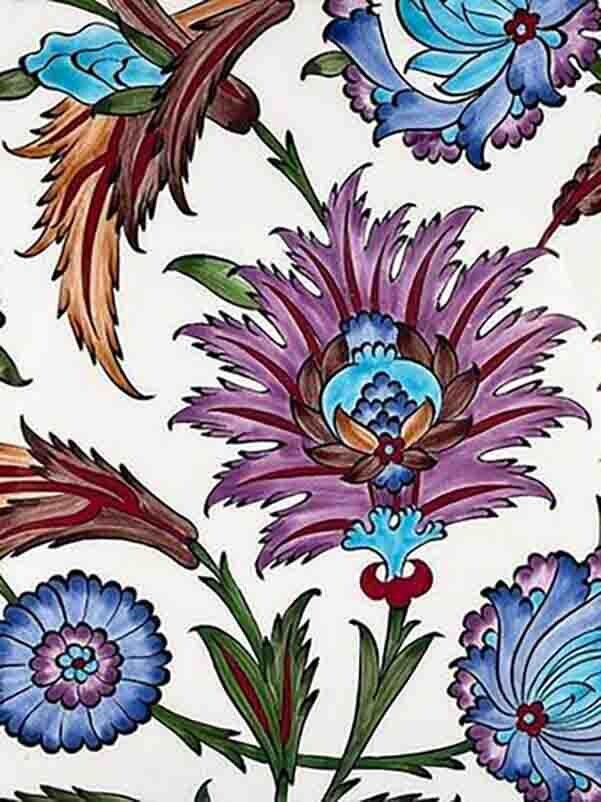
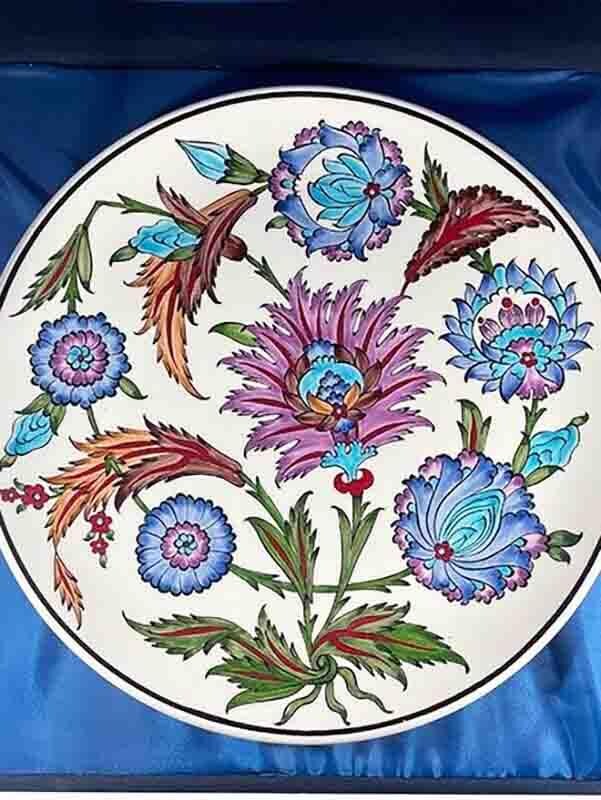
This product may have fine glaze cracks that are visible to the eye but cannot be felt by touch. This natural characteristic comes from the historical structure of Iznik ceramics; it is also seen on the tiles of Selimiye Mosque and is definitely not a defect. Traditionally called “Shahdar”, these cracks are part of the natural life process of the ceramics and add authentic value to the piece.
Each Iznik ceramic piece is unique, just like a fingerprint. Even if the same product is produced again in the same way, it will not be exactly identical.
The exact same piece you are viewing now cannot be produced again.
We recommend purchasing the product you like immediately if it meets your needs.
The value of Iznik ceramics never decreases, they never go out of fashion, and they do not become outdated. They are artistic heritage pieces that can be passed down from generation to generation.
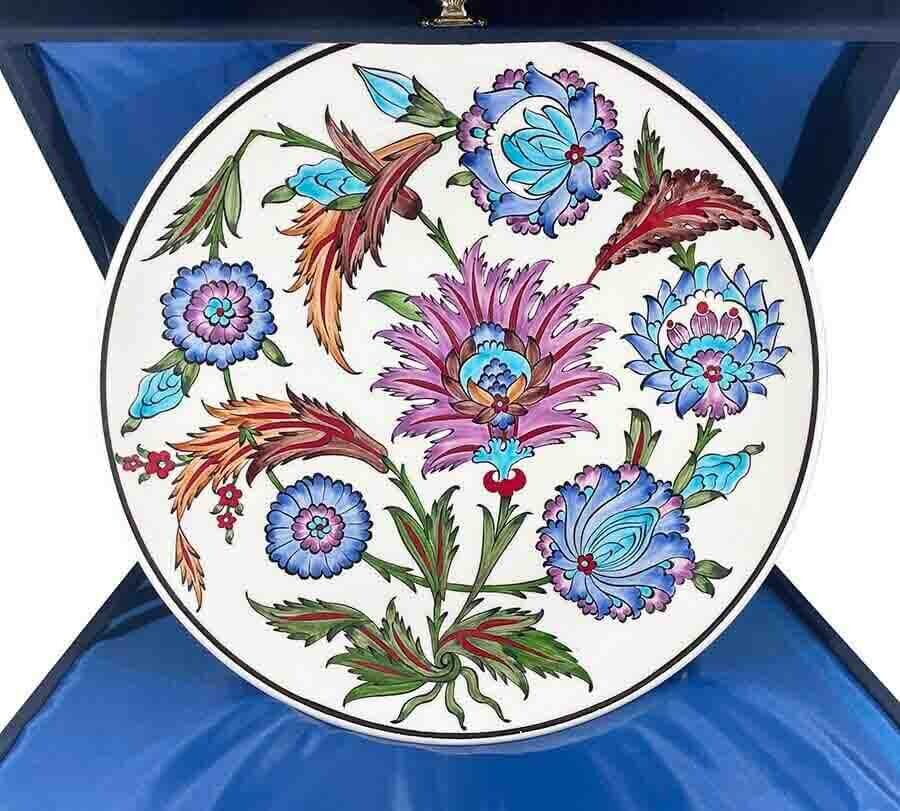
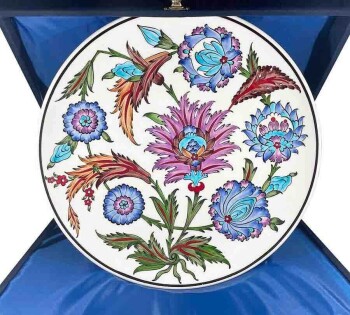
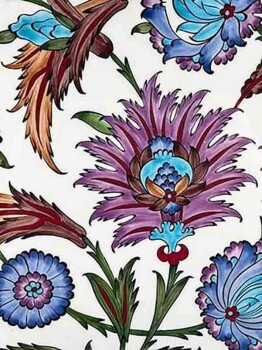
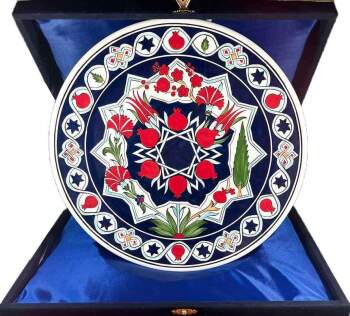
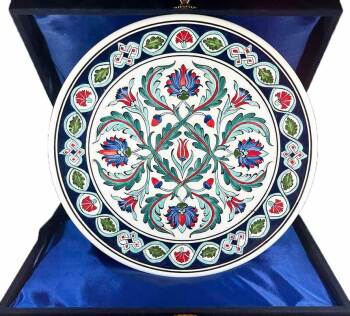
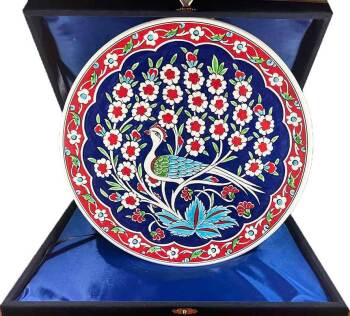
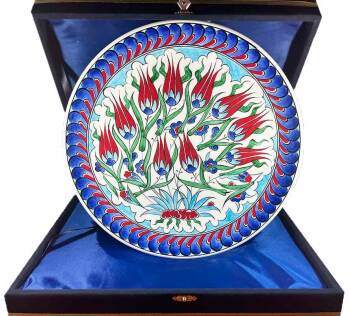
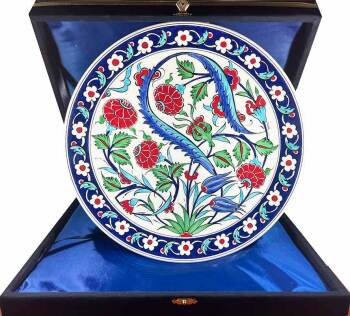
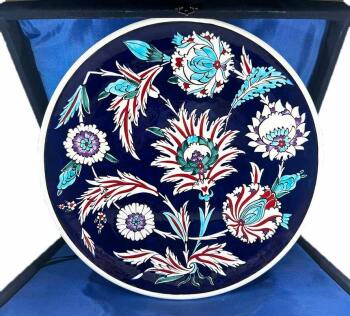
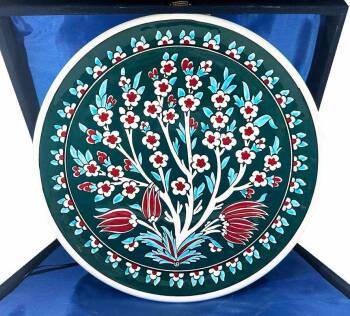
Pattern Information: Damascus Style Motif
The “Damascus style” motif in Iznik ceramics is a type of pattern characterized by the use of geometric designs and stylized flowers. It is thought to have been brought to Turkey by the Ottoman Turks in the 16th century.
The “Damascus style” motif was quickly adopted by Iznik ceramic makers and became one of the most popular styles of Iznik ceramic decoration. The style is known for its complex patterns and vivid colors, and it is often used to decorate homes, offices, and palaces.
The “Damascus style” motif represents several things, including the beauty of nature, the abundance of life, and the power of the Ottoman Empire.
Beauty of nature: The “Damascus style” motif is usually filled with stylized flowers and other motifs inspired by nature. This may suggest that the motif is a way of representing the beauty of nature.
Abundance of life: The “Damascus style” motif is often characterized by the use of vivid colors. This may suggest that the motif is a way of representing the abundance of life.
Power of the Ottoman Empire: The “Damascus style” motif was first developed during the rise of the Ottoman Empire. This may suggest that the motif is a way of representing the power of the Ottoman Empire.
The “Damascus style” motif is a beautiful and distinctive type of Iznik ceramic decoration. It is a reminder of Turkey’s rich history and culture and remains popular today.