Out Of Stock
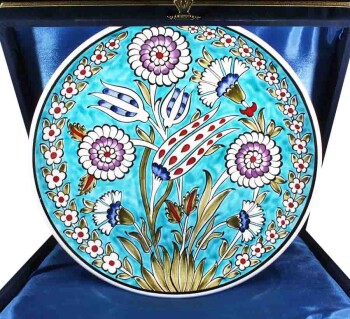
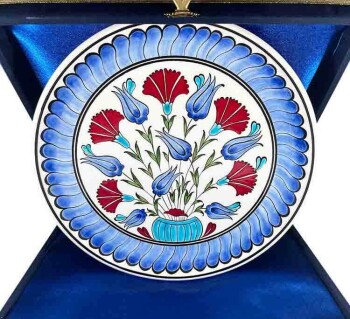
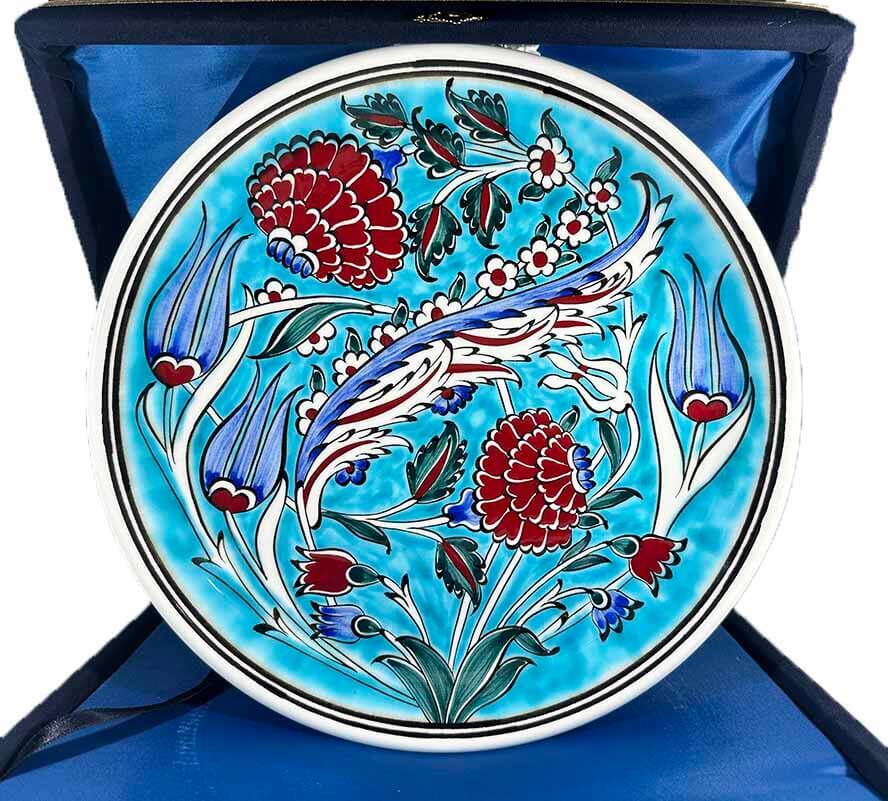
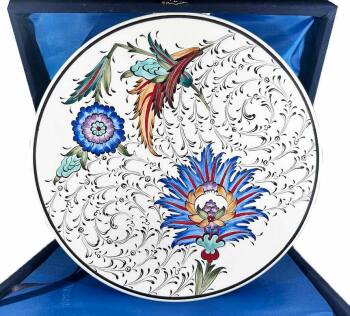
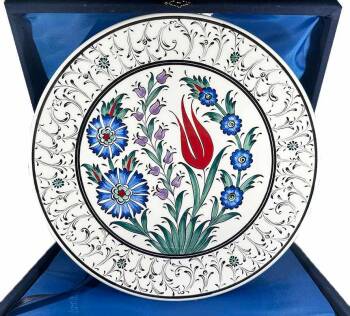
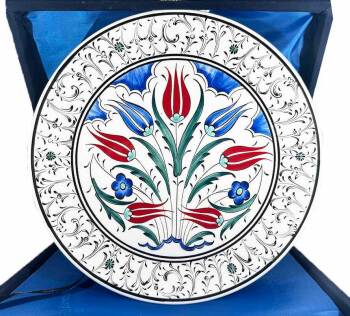
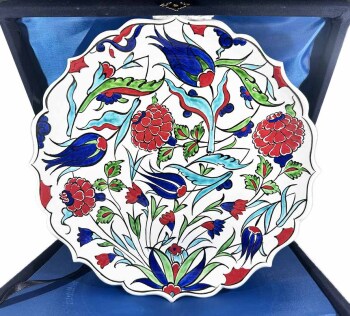
Notify me when it’s in stockThis completely handmade Iznik ceramic plate offers elegance and vitality together with tulip, carnation and spring branch motifs worked on a turquoise background. Carrying the 16th-century Ottoman aesthetic to the present, it is one of the rare examples of art and culture.
Product Features
This product may contain fine glaze cracks that are visible to the eye but cannot be felt by touch. This natural characteristic, which comes from the historical structure of Iznik ceramics, is also seen in the tiles of Selimiye Mosque and is not a defect. Traditionally known as “Shahdar,” these cracks are part of the natural life process of the ceramics and add authentic value to the piece.
Pattern Information: Tulip Motif
Love and elegance: In Ottoman art, the tulip symbolizes love, beauty and elegance.
Divine connection: Because the Turkish word for tulip shares the same letters as the Arabic word “Allah,” the tulip carries a sacred meaning.
Perfection: Its symmetrical form is accepted as a symbol of harmony and perfection.
Nobility and wealth: In Ottoman palace culture, the tulip became a symbol of power, refinement and magnificence.
Pattern Information: Carnation Motif
In Turkish culture, the carnation is associated with love, beauty and passion. It is also seen as a symbol of fertility and abundance. Its bright colors and delicate petals add a beautiful and eye-catching character to Iznik ceramic designs.
The carnation was introduced to Turkey in the 16th century and soon became a popular flower in Ottoman culture.
In Iznik ceramics, the carnation was frequently used as a symbol of love, beauty and passion.
Its strong stems and firm leaves also make it a symbol of durability and permanence.
It is frequently used in Iznik ceramics as a reminder of the rich cultural heritage of the country.
This ceramic plate is not only a decorative object; it is also a prestigious gift with deep meaning that can be preserved for generations.