Out Of Stock
Notify me when it’s in stockEvery Iznik ceramic piece is unique, just like a fingerprint. Even if the same product is produced again with the same design, it will not be exactly identical.
The exact same piece you are viewing now cannot be reproduced in precisely the same way.
If this piece matches your taste, choosing it now is recommended because each handmade ceramic item is one of a kind.
Iznik ceramics never lose their value, go out of fashion or become obsolete. They are artistic heirlooms that can be passed down from generation to generation.
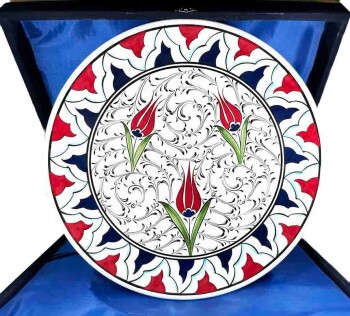
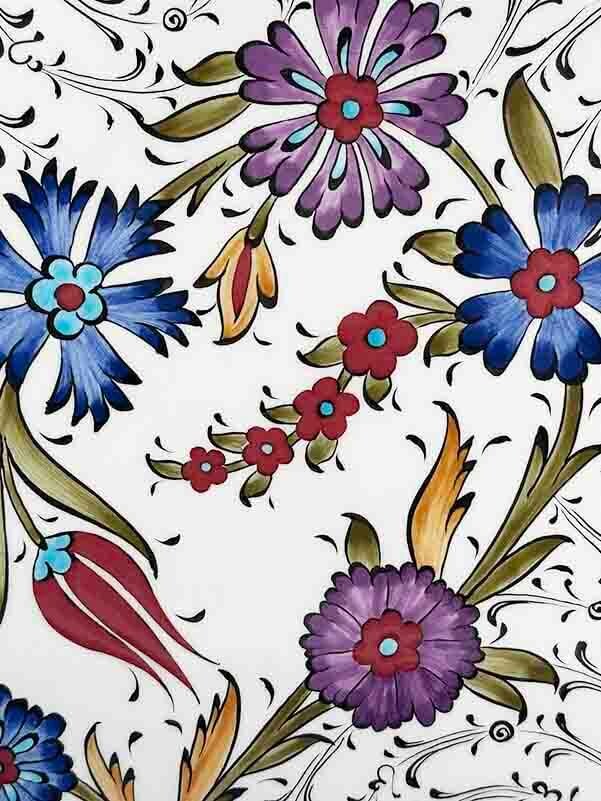
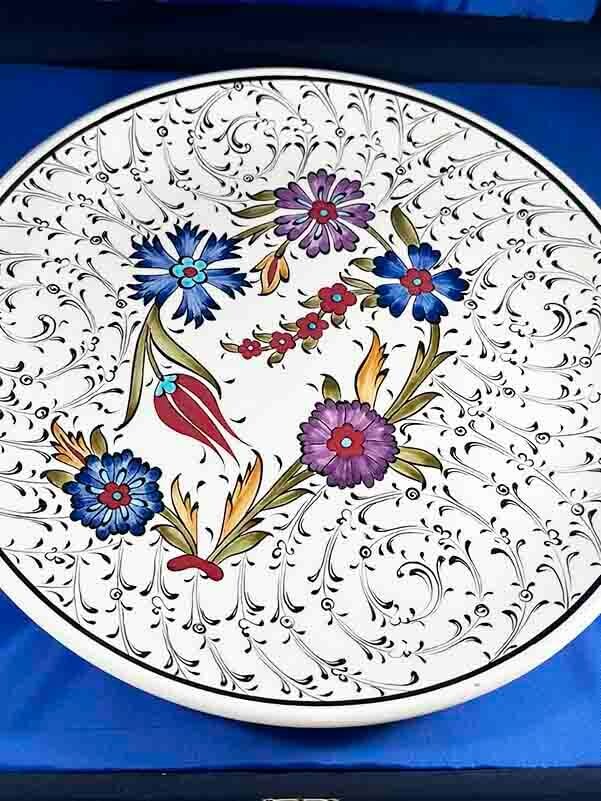
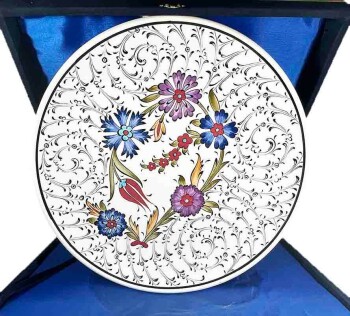
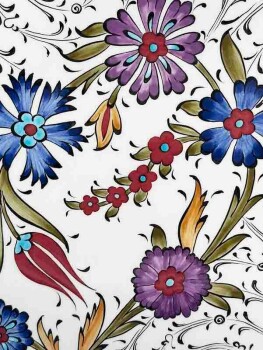
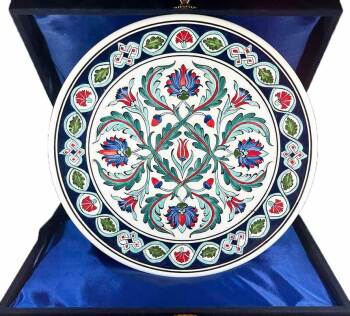
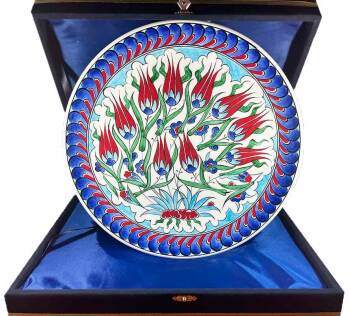
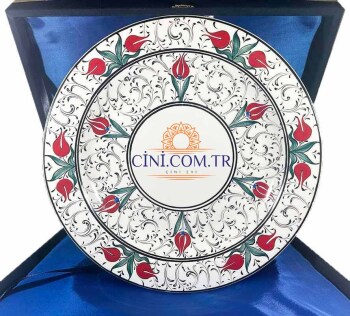
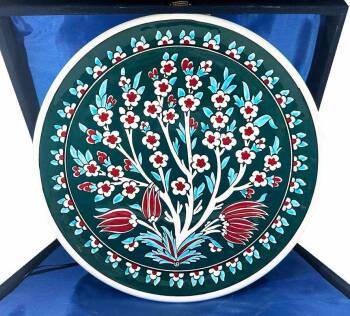
In Iznik ceramic art, the tulip is seen as a symbol of love, beauty, elegance and perfection. Because the Turkish word “lale” shares the same letters as the Arabic word “Allah,” it has also been associated with divine love.
Love: The tulip is often viewed as a symbol of love because of its delicate beauty and graceful form.
Beauty and elegance: As an elegant flower in nature, the tulip highlights the beauty and refinement of Iznik ceramic craftsmanship.
Perfection: Because of its balanced form and symmetrical structure, the tulip can symbolize perfection.
Divine meaning: Due to its letter association with the word Allah, the tulip is sometimes interpreted as a sacred or spiritual symbol.
Cycle of nature: As a herald of spring, the tulip represents awakening, renewal, rebirth and growth in nature.
Nobility and richness: During the Ottoman period, the tulip became an important symbol and was used in palaces and major buildings to express nobility, refinement, power and wealth.
Turkish culture and history: Tulips hold an important place in Turkish culture. In the Ottoman Empire, tulips were cultivated in palace gardens and became an enduring cultural symbol.
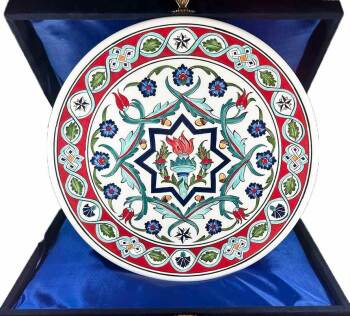
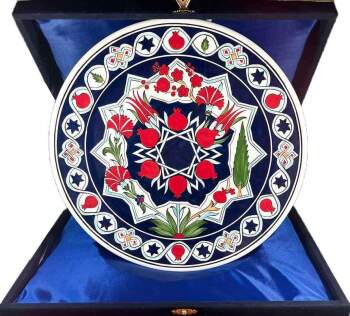
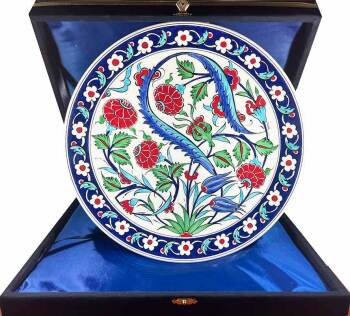
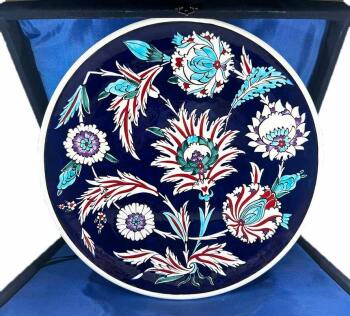
The Damascus style motif represents several ideas, including the beauty of nature, the abundance of life and the power of the Ottoman Empire.
Beauty of nature: The Damascus style motif is generally filled with stylized flowers and other nature-inspired forms. This suggests that the motif is a way of representing the beauty of nature.
Abundance of life: The Damascus style motif is often characterized by the use of vivid colors. This can be interpreted as a way of expressing the abundance and vitality of life.
Power of the Ottoman Empire: The Damascus style motif first developed during the rise of the Ottoman Empire. For this reason, it can also be understood as a symbol of Ottoman strength and cultural richness.
The Damascus style motif is a beautiful and distinctive type of Iznik ceramic decoration. It is a reminder of Turkey’s rich history and culture, and it continues to be popular today.
Damascus ware is the name given to a group of ceramic vessels produced in Iznik in the mid-16th century.
Because the earliest examples were taken to Europe from Damascus toward the end of the 19th century, Western collectors gave them this name, and it was accepted for many years.
Recent research has shown that these vessels were not produced in Damascus but in Iznik, and that they form one of the most accomplished groups of Iznik ceramic art. Today these ceramics are also referred to as pomegranate-artichoke ware because of the decorative motifs on them.
One of their most striking features is the addition of sage green, followed by eggplant purple and black outlines, to the blue, white and turquoise colors seen in Iznik ceramics from the late 15th and early 16th centuries.
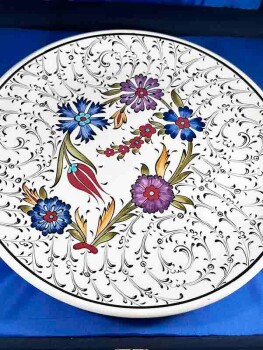
In Damascus ware, the dense compositional approach of earlier periods gives way to a more open layout and more restrained use of motifs. Large plants reminiscent of pomegranates or artichokes, covered with scale-like ornaments, are often arranged freely or symmetrically on a mostly white background.
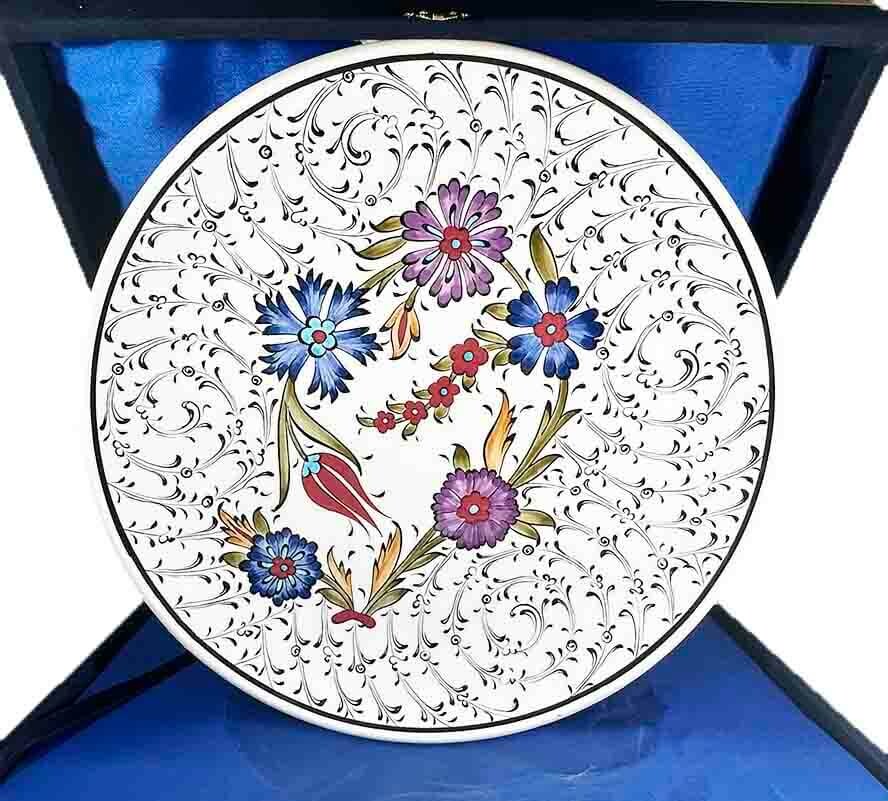
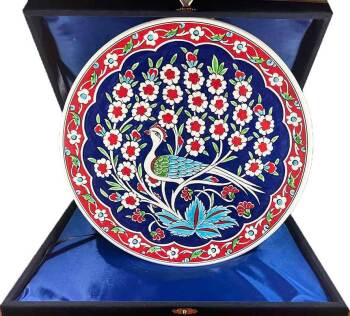
Besides these motifs, tulips, roses, carnations, trees and saz leaves are also used in the decoration.