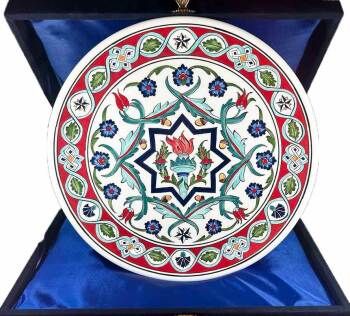
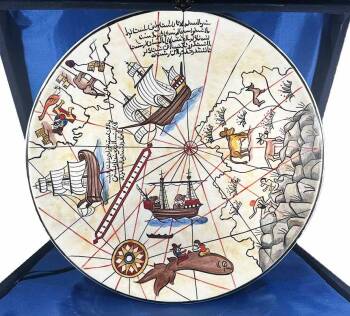
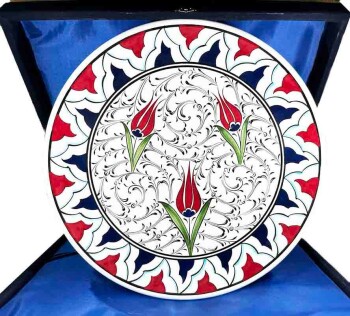
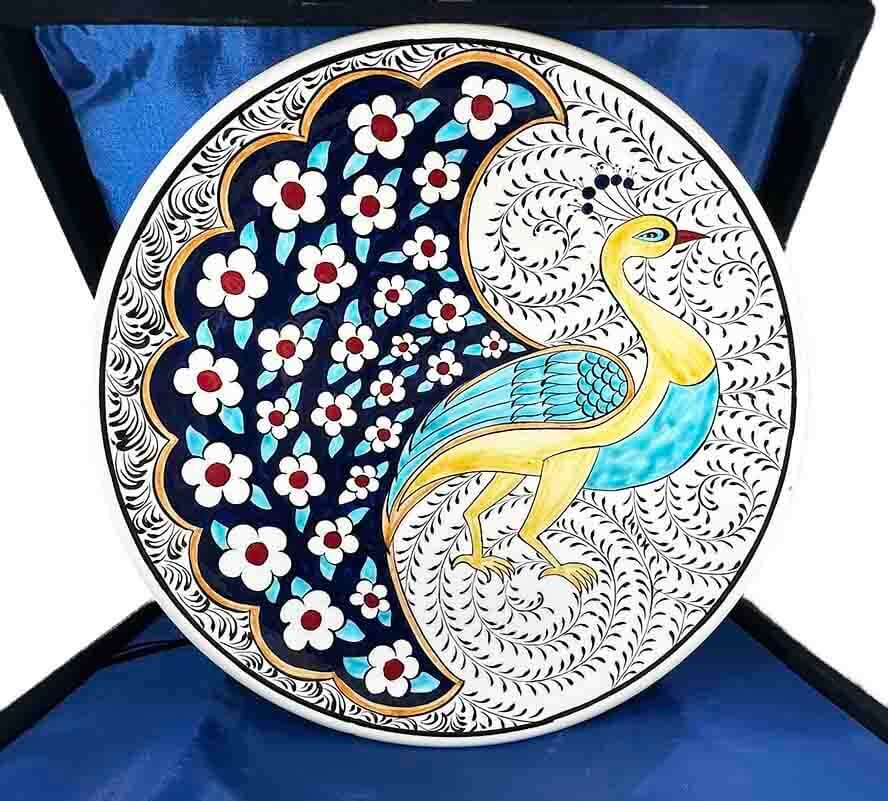
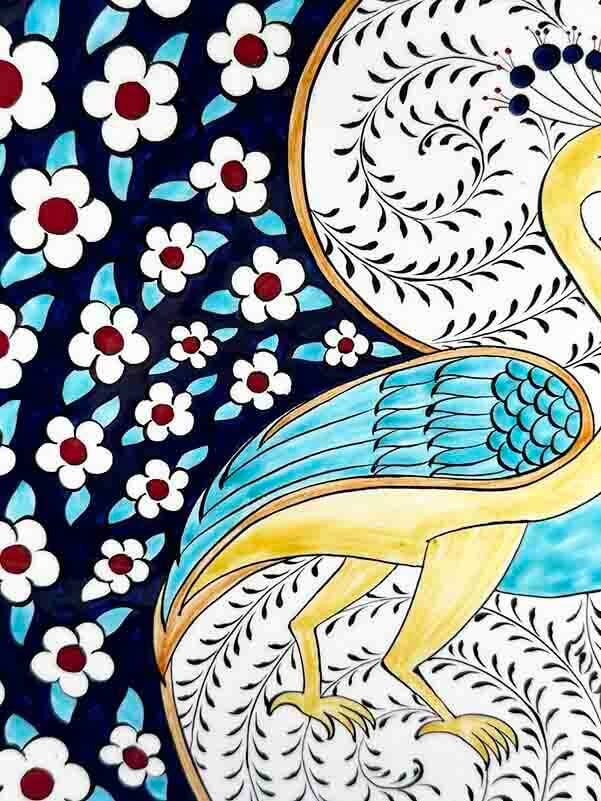
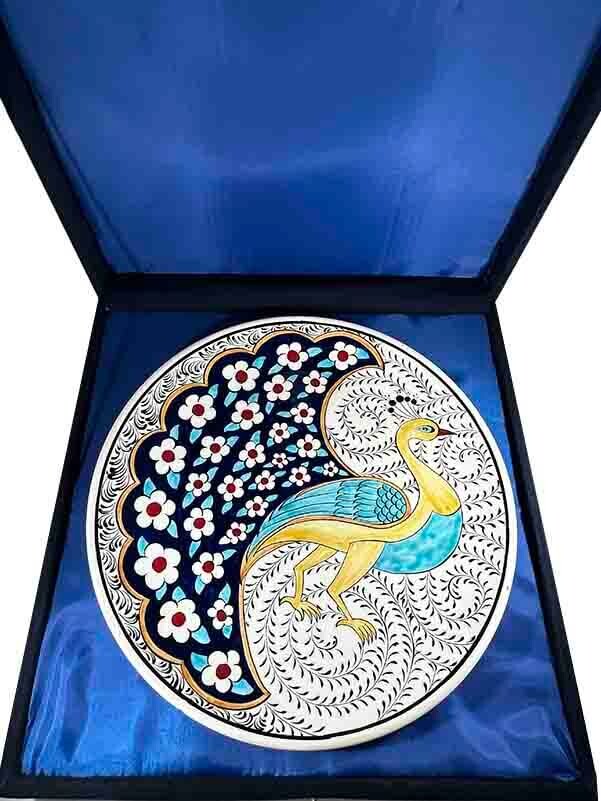
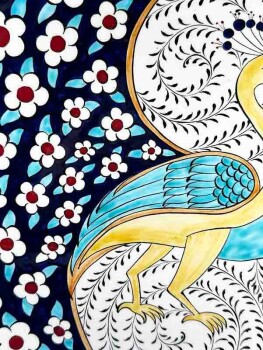
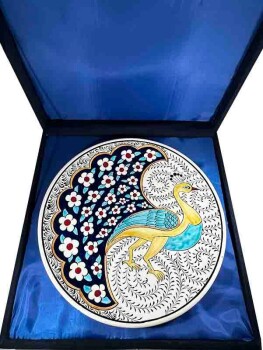
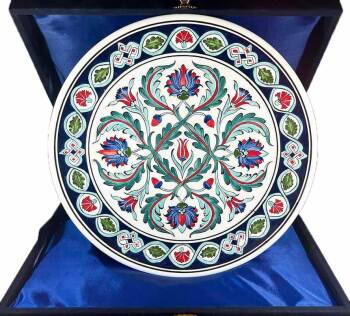
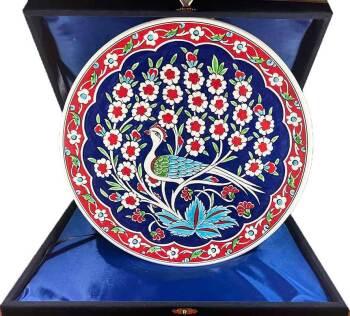
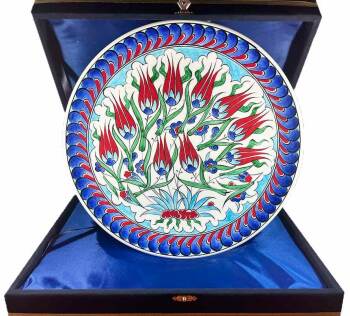
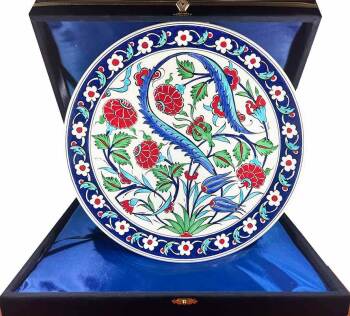
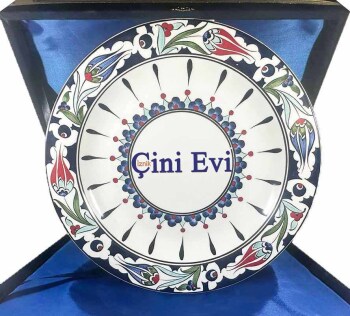
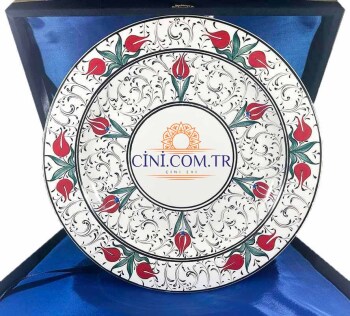
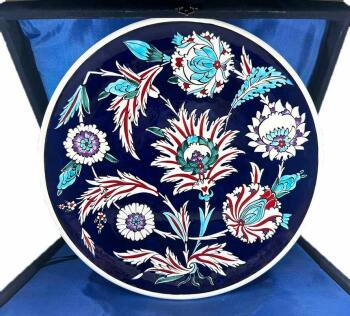
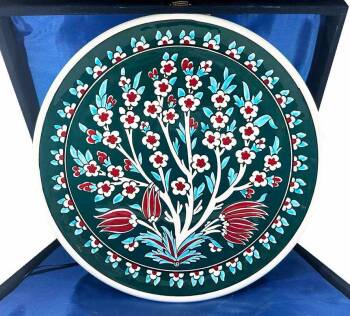
This 30 cm special design Iznik ceramic plate features a peacock motif depicting the garden of paradise among Halic patterns that symbolize abundance and prosperity.
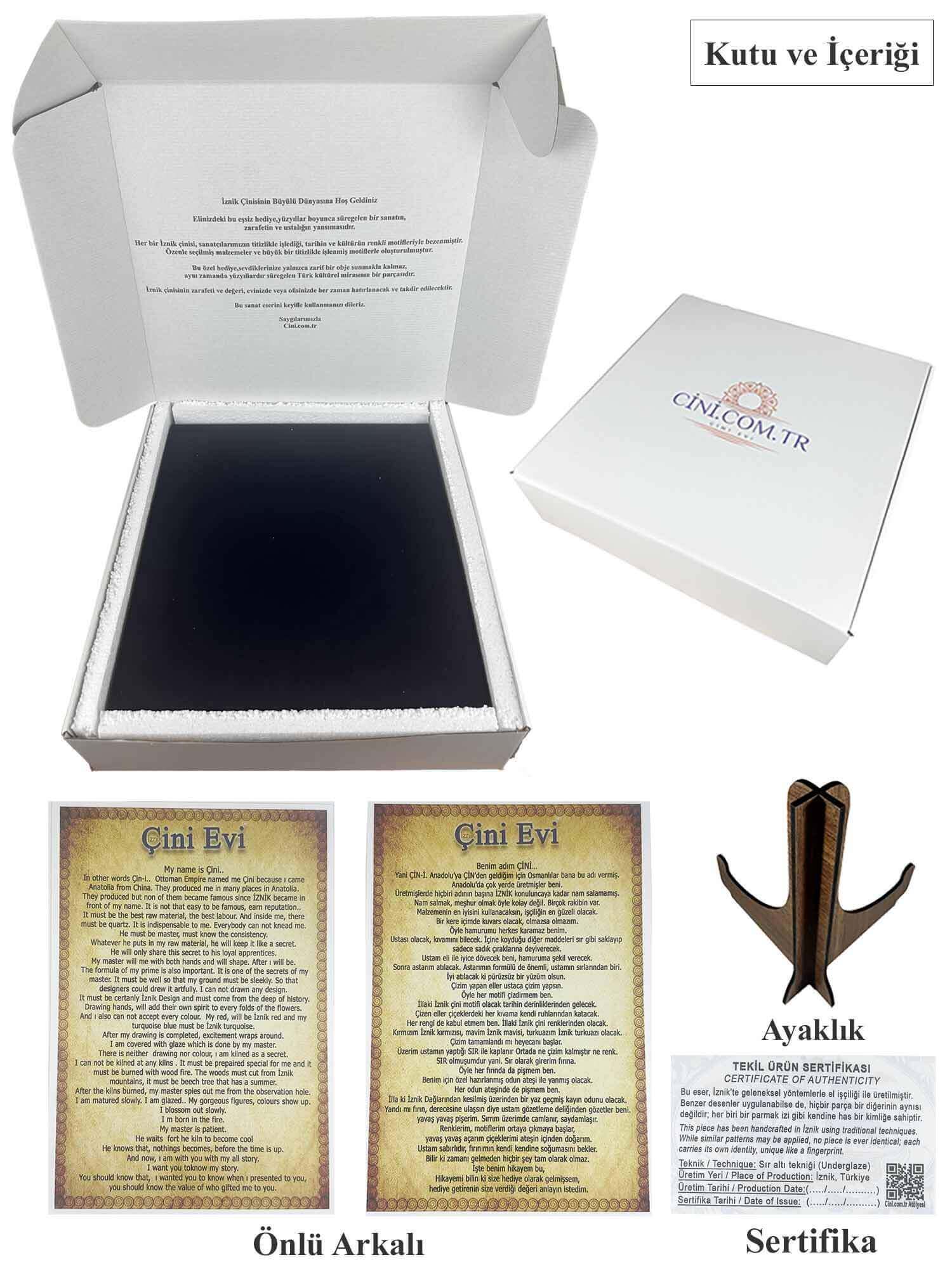
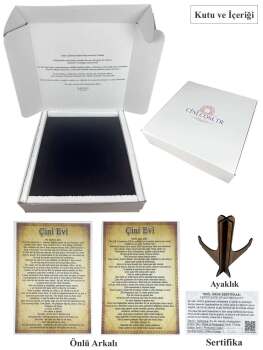
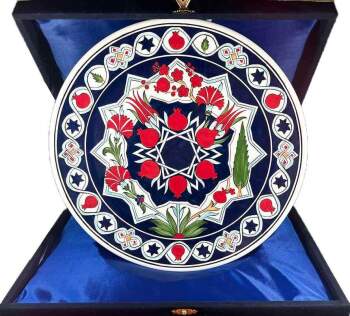
As a lasting global gift, it brings together traditional Iznik ceramic art, strong symbolic meaning and a prestigious VIP boxed presentation.
Every Iznik ceramic piece is unique, just like a fingerprint. Even if the same product is produced again with the same design, it will not be exactly identical.
The exact same piece you are viewing now cannot be reproduced in precisely the same way.
If this piece matches your taste and need, choosing it now is recommended because each handmade ceramic item is one of a kind.
Iznik ceramics never lose their value, go out of fashion or become obsolete. They are artistic heirlooms that can be passed down from generation to generation.
The peacock motif in Iznik ceramics carries several positive meanings.
Beauty: The peacock is a beautiful bird with a colorful tail and is often used as a symbol of beauty in art and design.
Immortality: The peacock is said to shed and renew its feathers each year, making it a symbol of renewal and rebirth.
Royalty: The peacock has often been used as a symbol of royalty and magnificence. Its tail is associated with power and splendor.
Because it symbolizes beauty, immortality and royal dignity, the peacock motif is a popular design element in Iznik ceramics.
The tree of life motif is used as a symbol of fertility, abundance and good fortune. It is often seen as a symbol of the connection between paradise and the earthly world, and it can also represent the cycle of life, death and rebirth.
In Iznik ceramics, the tree of life is generally depicted with a strong trunk and spreading branches. The branches are filled with flowers, fruits and leaves, and the motif is commonly seen in blue, white and red tones.
This motif is frequently used in Iznik ceramics to decorate homes, offices and special spaces. It is popular because it carries many positive meanings such as fertility, prosperity, good fortune and the connection between heaven and earth.
Fertility: The tree of life symbolizes fertility because it is a living form that grows and bears fruit.
Abundance: It symbolizes abundance because it provides food, shelter and continuity.
Good fortune: It recalls the cycle of life, death and rebirth and is therefore associated with good luck.
Connection between paradise and earth: Since the tree reaches upward with its branches and downward with its roots, it symbolizes the bond between the heavens and the earth.
In Turkish cultural understanding, the tree of life is also connected with family, lineage and the idea of a family tree.
The Halic motif first appeared in Iznik ceramics in the 16th century. It is connected with the Golden Horn area of Istanbul and became a distinctive decorative style.
Halic is often seen as a symbol of prosperity, abundance and good fortune. The natural beauty and strategic location of the Golden Horn made it an important trade and commercial center during the Ottoman period.
Sea and water: Since the Golden Horn is a body of water in Istanbul, Halic motifs symbolize the sea and water. Water is regarded as a source of life and a cleansing power.
Symbol of Istanbul: Halic motifs represent the historical and cultural importance of Istanbul and emphasize the city’s connection with the sea.
Decoration and aesthetics: Halic motifs add aesthetic value to Iznik ceramics and reflect the visual appeal of the ceramics and the skill of the artisans.
Overall, Halic motifs reflect the flow of water, the beauty of the sea, the symbolic value of Istanbul and the aesthetic value of Iznik ceramics.