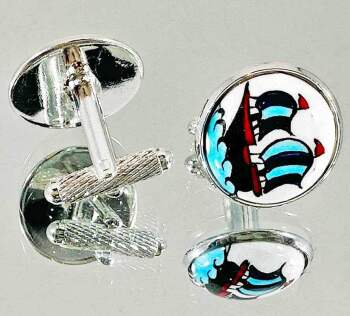
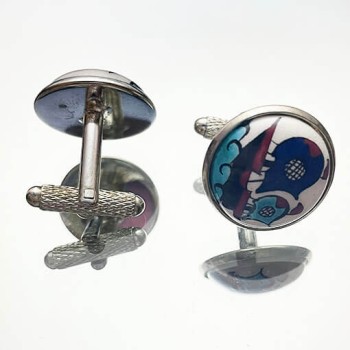
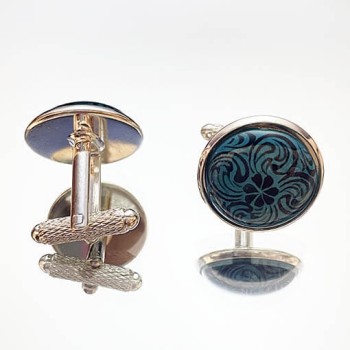
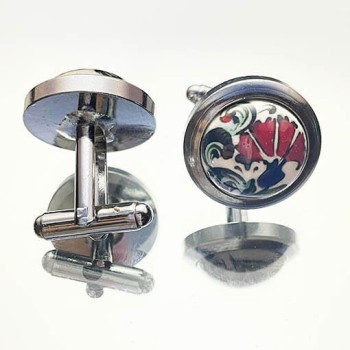
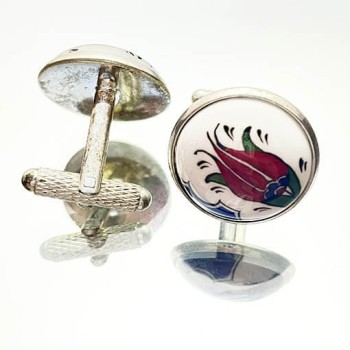
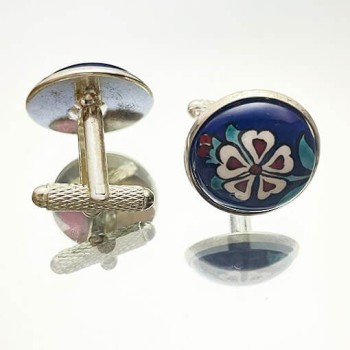
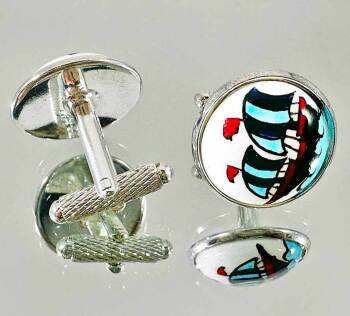
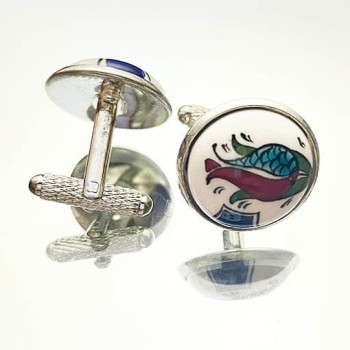
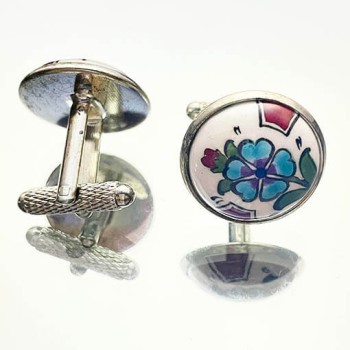
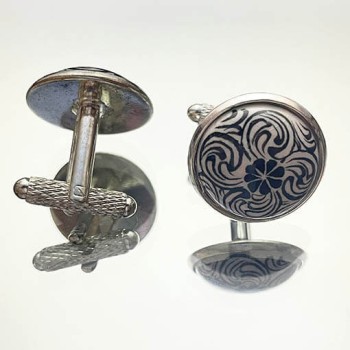
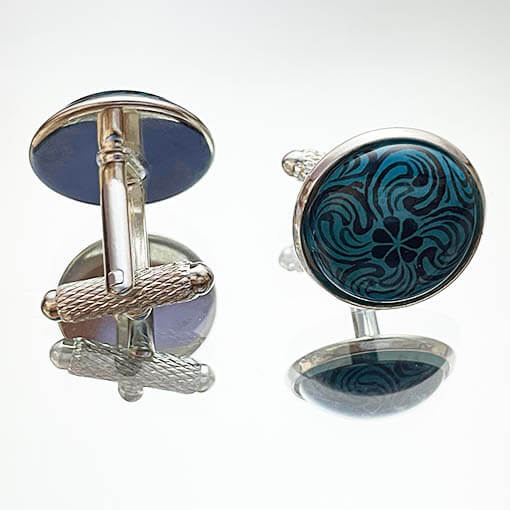
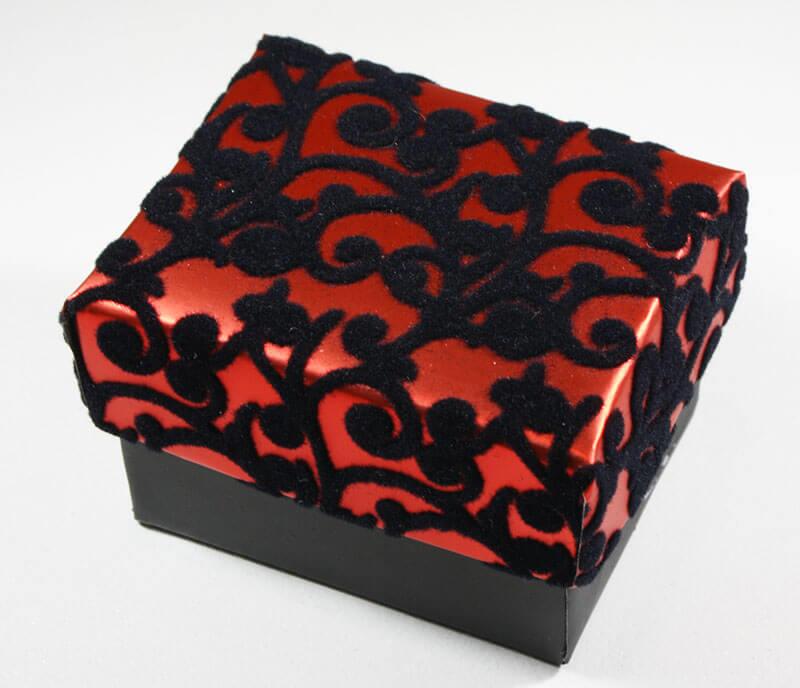
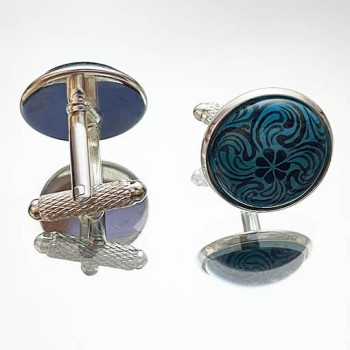
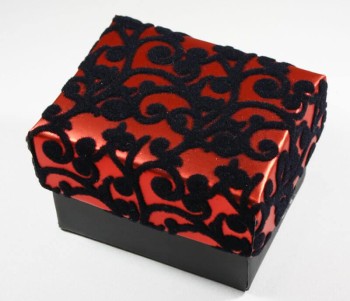
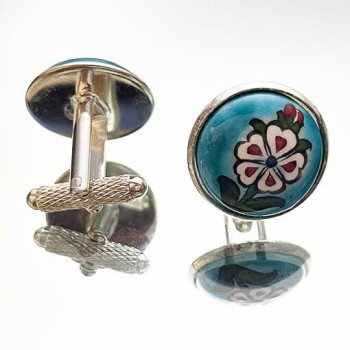
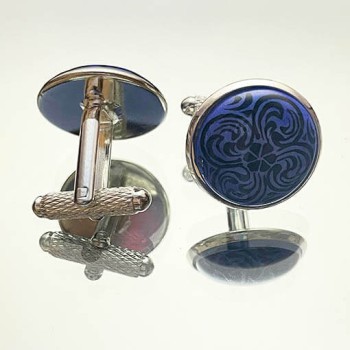
Silver-plated Iznik ceramic cufflinks in a velvet box.
Product Features:
Pattern Information: Meaning of the Halic Motif:
The Halic motif first appeared in Iznik ceramics in the 16th century. The ceramics were made in the city of Iznik, located near the Golden Horn.
The Golden Horn is generally seen as a symbol of prosperity, abundance, and good fortune.
The natural beauty and strategic location of the Golden Horn made it an important trade and commerce center during the Ottoman Empire.
The Halic motif is popular in Iznik ceramics for many reasons, including its symbolic meaning, beauty, and durability.
Sea and water: The Golden Horn is a body of water in Istanbul, and Halic motifs in Iznik ceramics symbolize the sea and water. Water is accepted as the source of life and a cleansing power. These motifs reflect the flow of water, the movement of waves, and the captivating beauty of the sea.
Symbol of Istanbul: The Golden Horn is one of the symbols of the city of Istanbul. Halic motifs in Iznik ceramics represent Istanbul’s historical and cultural importance. These motifs emphasize Istanbul’s connection with the sea and its historical past.
Decoration and aesthetics: Halic motifs are one of the decorative elements of Iznik ceramics and add aesthetic value to the ceramics. These motifs reflect the visual appeal of the ceramics and the skill of the craftsmen.
In general, Halic motifs in Iznik ceramics reflect the flow of water, the beauty of the sea, the symbolic value of Istanbul, and the aesthetic value of ceramics.