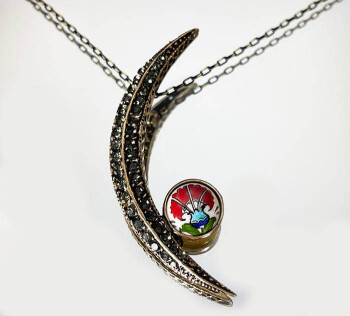
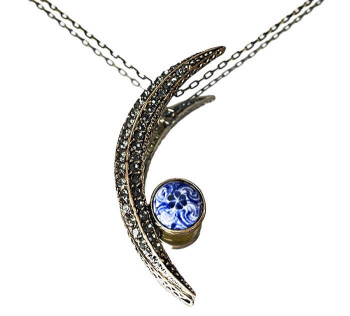
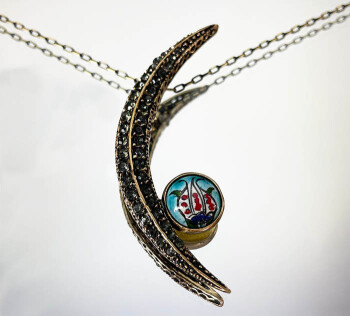
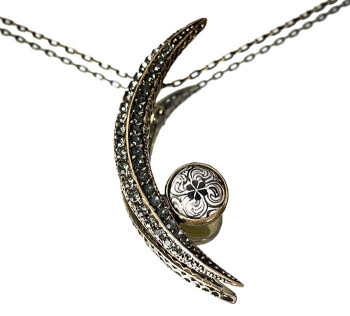
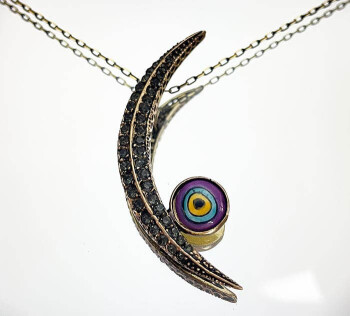
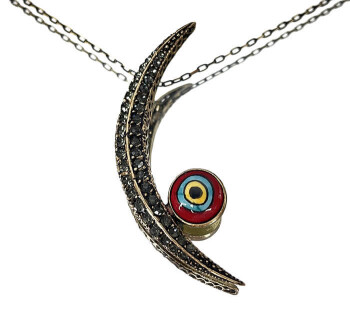
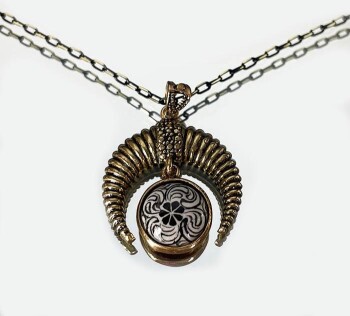
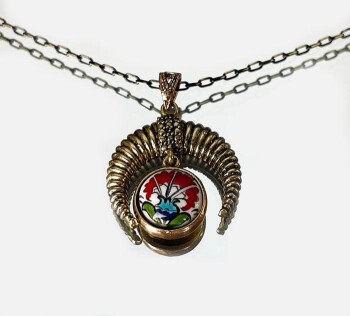
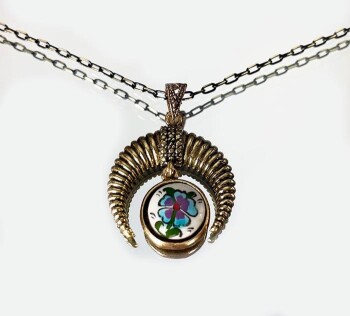
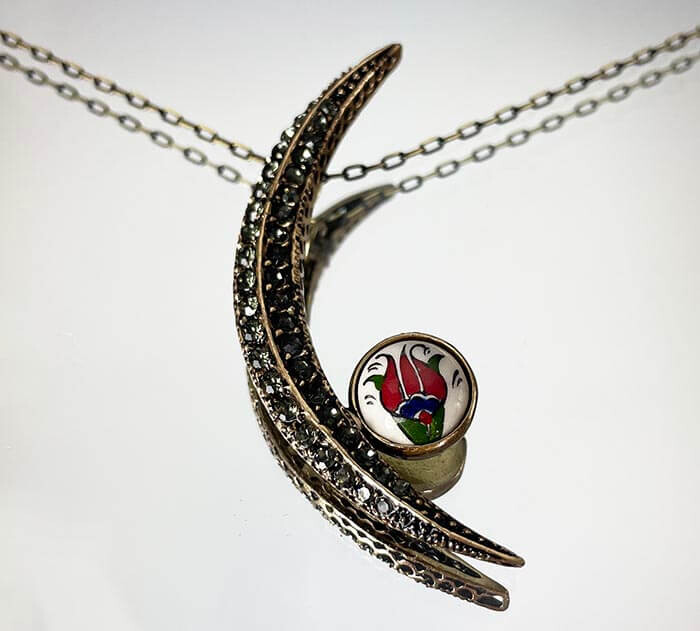
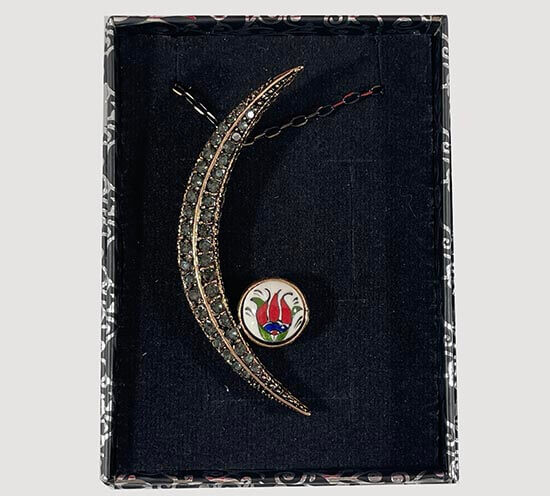
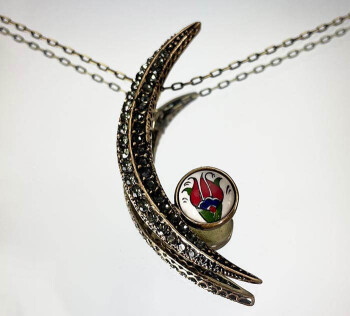
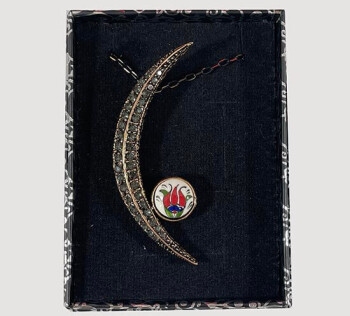
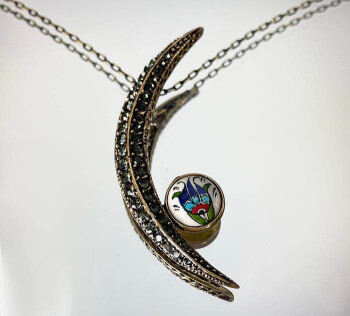
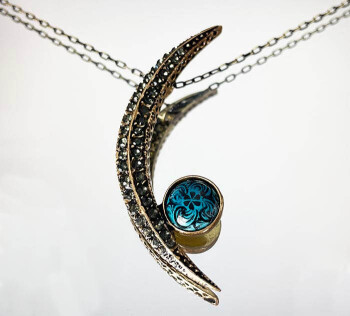
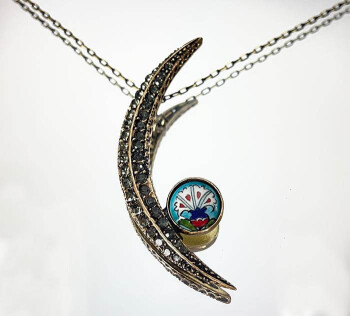
A meaningful half moon bronze necklace that can be preferred as a gift for a friend, prepared with a handmade Iznik ceramic stone.
In Iznik ceramic art, the tulip is seen as a symbol of love, beauty, elegance and perfection. Because the Turkish word “lale” shares the same letters as the Arabic word “Allah,” it has also been associated with divine love.
Love: The tulip is often viewed as a symbol of love because of its delicate beauty and graceful form.
Beauty and elegance: As an elegant flower in nature, the tulip highlights the beauty and refinement of Iznik ceramic craftsmanship.
Perfection: Because of its balanced form and symmetrical structure, the tulip can symbolize perfection.
Divine meaning: Due to its letter association with the word Allah, the tulip is sometimes interpreted as a sacred or spiritual symbol.
Cycle of nature: As a herald of spring, the tulip represents awakening, renewal, rebirth and growth in nature.
Nobility and richness: During the Ottoman period, the tulip became an important symbol and was used in palaces and major buildings to express nobility, refinement, power and wealth.
Turkish culture and history: Tulips hold an important place in Turkish culture. In the Ottoman Empire, tulips were cultivated in palace gardens and became an enduring cultural symbol.
The pomegranate motif in Iznik ceramics symbolizes fertility, abundance and good fortune. The many seeds of the pomegranate represent abundance, while its bright red color is associated with luck and vitality.
In Ottoman culture, the pomegranate was also connected with religious and cultural symbolism. Its many seeds were interpreted as representing abundance and spiritual richness, while its vivid color gave the motif a strong visual presence.
The pomegranate motif first appeared in Iznik ceramics in the 16th century and became popular for its symbolic meaning, beauty and durability.
Today, the pomegranate motif continues to be appreciated and appears in museum collections and private collections around the world.