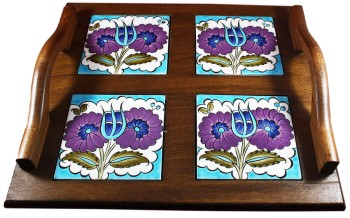
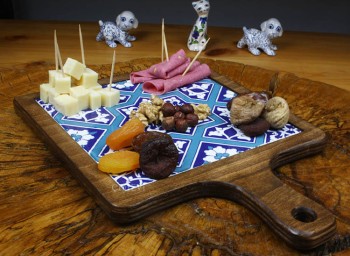
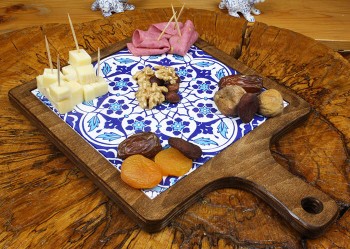
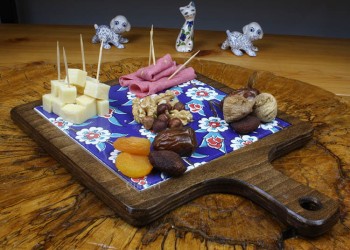
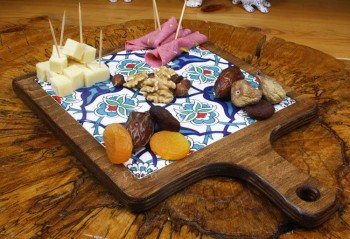
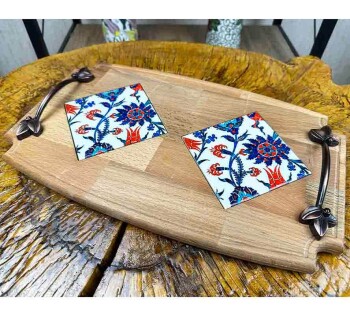
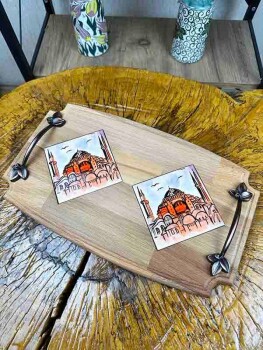
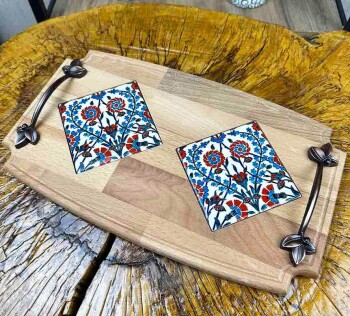
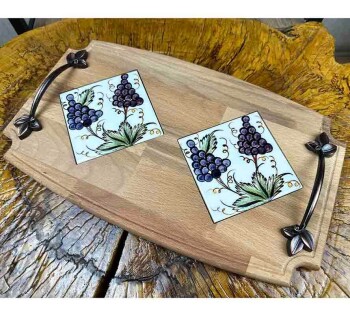
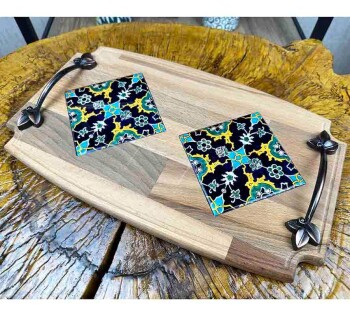
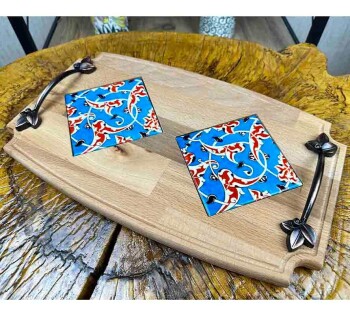
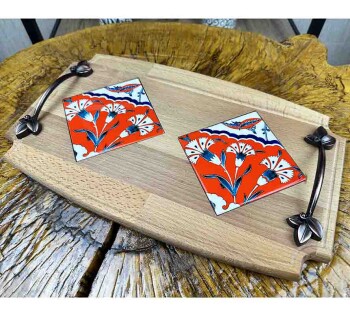
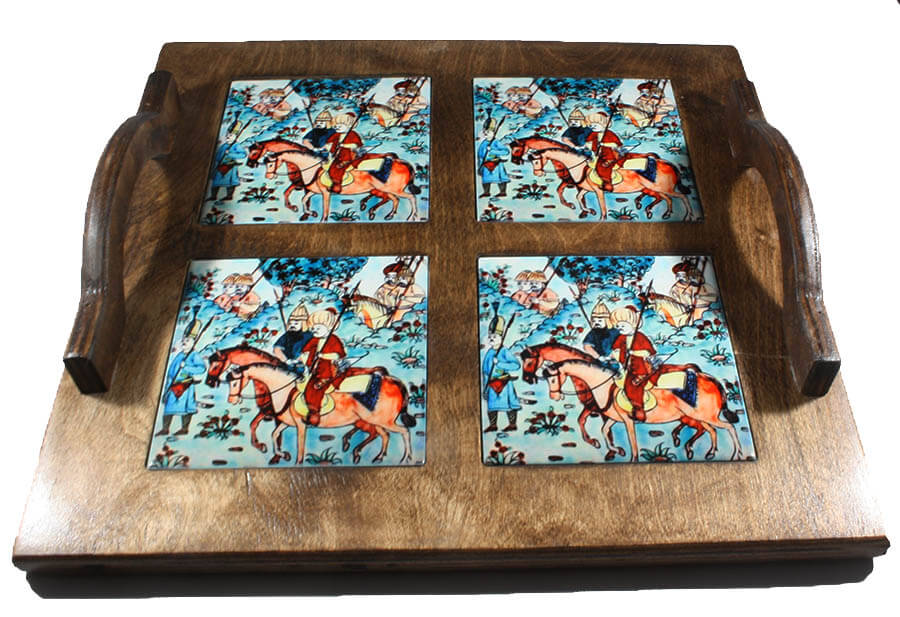
A stylish wooden tray consisting of 4 ceramic tiles measuring 10 x 10 cm.
Product Features
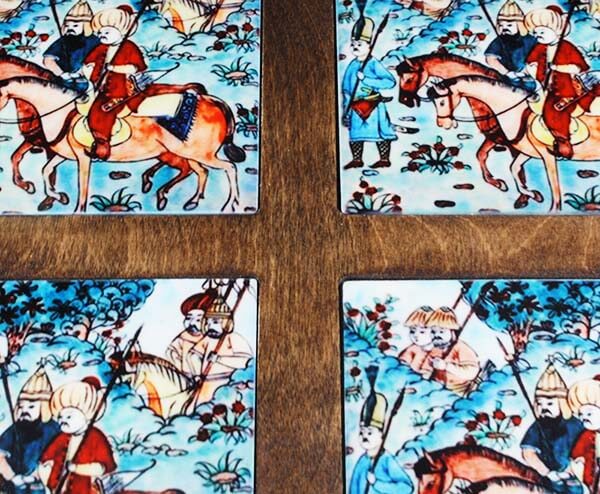
Meaning of the Ottoman Military Hunting Scene Motif
In traditional works of art such as Iznik ceramics, this motif carries both aesthetic and cultural meanings. Its meaning includes the lifestyle of the period, the importance of hunting in Ottoman society, and the way art reflected the values of the era.
Power and competence: Hunting scenes symbolize the physical strength, agility, and combat skills of Ottoman soldiers. In the Ottoman world, hunting was not only a sport but also considered part of the art of war. Such motifs represent the courage and mastery of Ottoman soldiers.
Harmony with nature: Nature was a frequently used theme in Ottoman art. Hunting scene motifs emphasize the Ottoman connection with nature and respect for the order of nature. In this context, animals, plants, and people are depicted in harmony.
Social and cultural life: Hunting was an important activity in the Ottoman palace and served both entertainment and military preparation purposes. As a reflection of palace life, these motifs offer clues about the daily life of the Ottoman elite.
Artistic depth and storytelling: Hunting scene motifs display the storytelling abilities of the craftsmen. Soldiers, horses, game animals, and natural elements on the ceramic are rendered in a detailed composition, offering both artistic depth and a historical story.
Power and prestige of sovereignty: These motifs symbolize the power and prestige of the Ottoman sultan. Hunting was also seen as a symbolic action reflecting the ruler's control over nature and society.
The use of such motifs in Iznik ceramics shows how art was valued as both a decorative and meaningful tool. These motifs are valuable historical heritages that carry the cultural richness and aesthetic understanding of the Ottoman world to the present day.