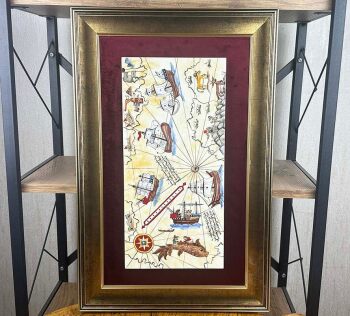
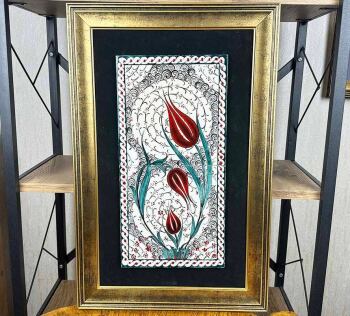
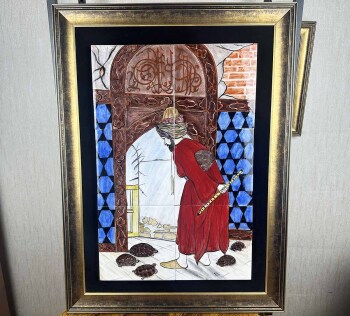
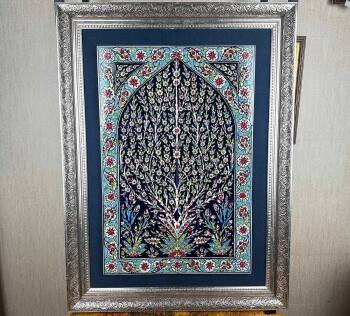
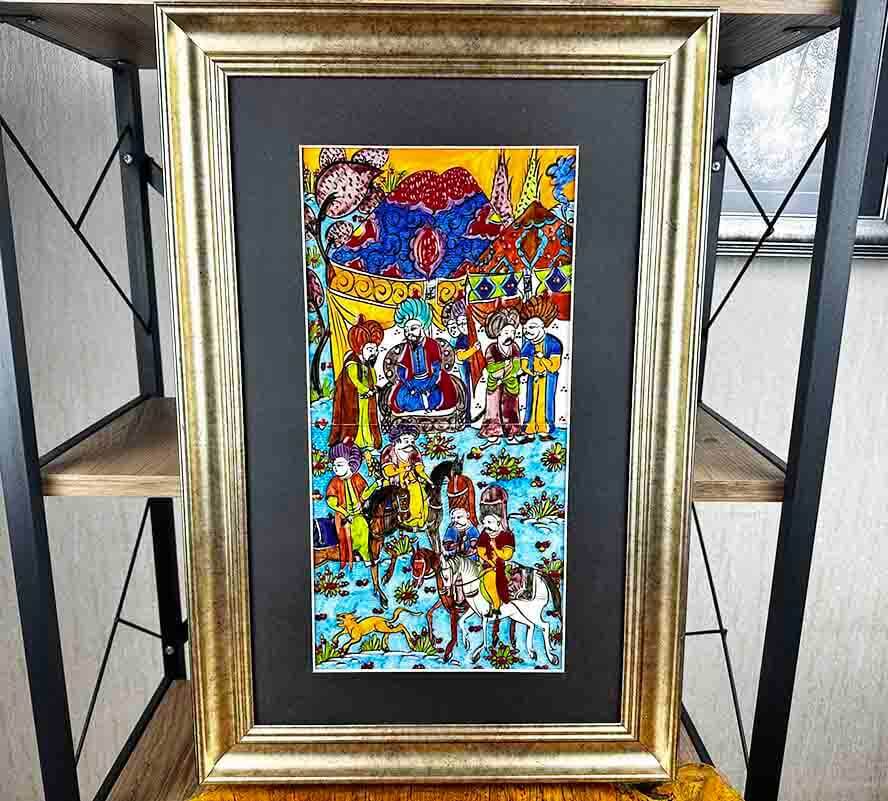
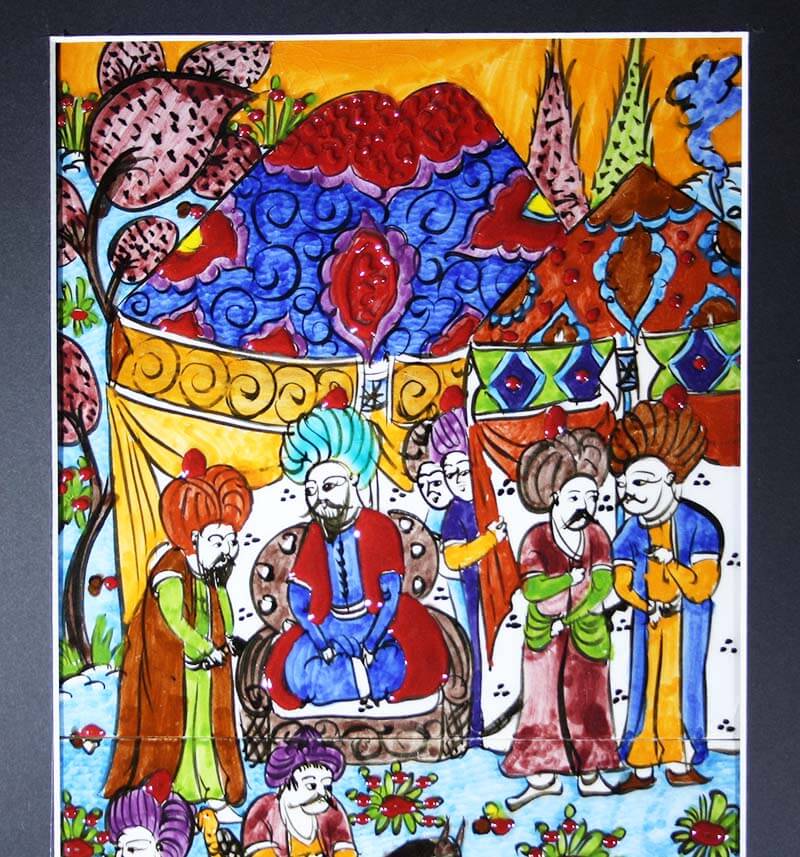
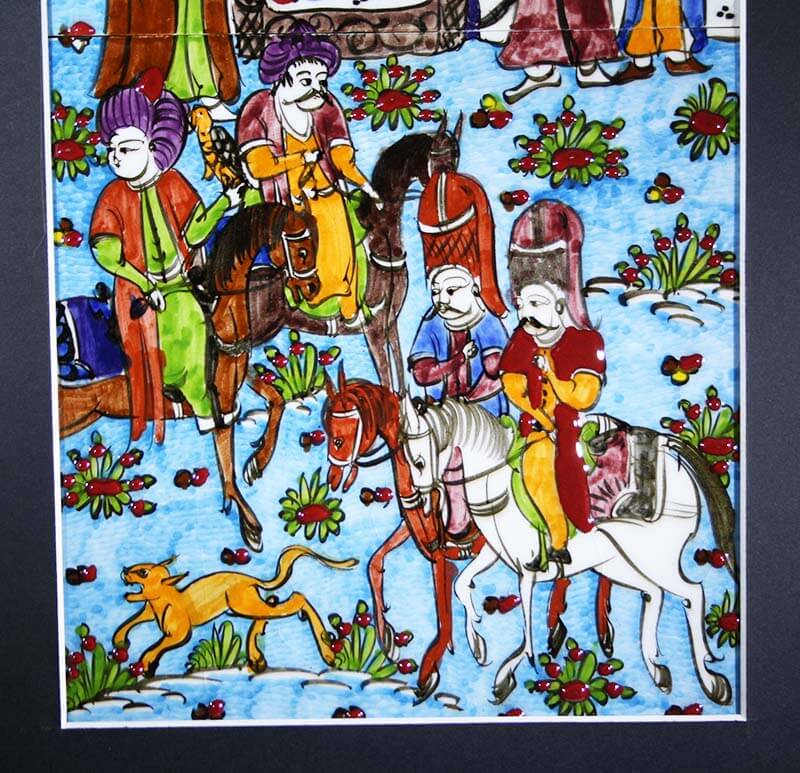
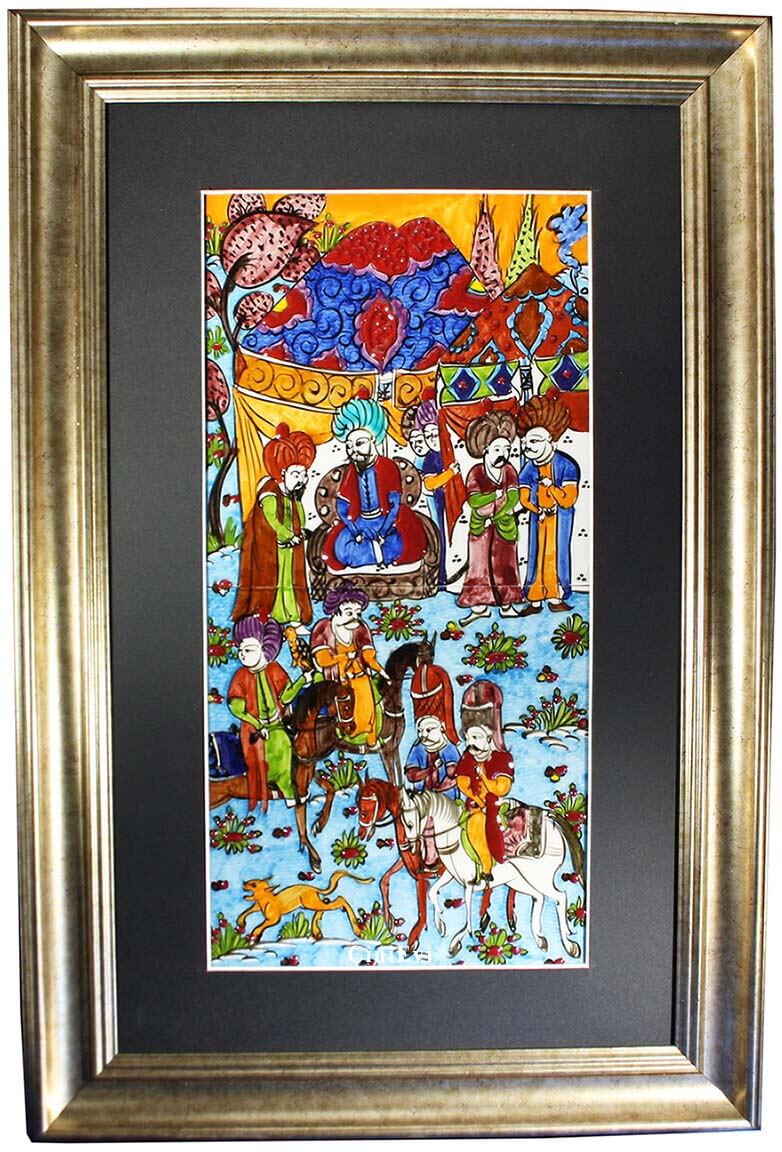
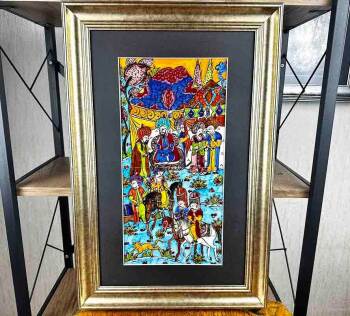
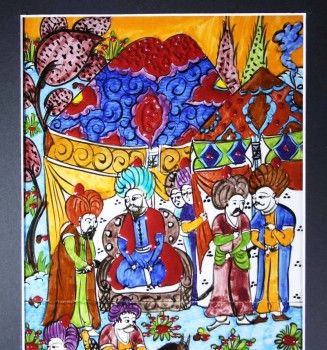
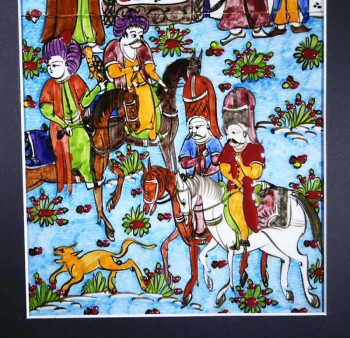
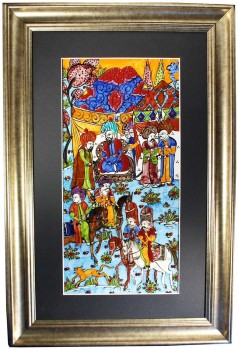
This is a specially produced Iznik ceramic panel featuring an Ottoman hunting scene.
The hunting scene motif is a popular subject in Iznik ceramics and appears on 16th and 17th century ceramic works. The scene is usually depicted in a realistic manner, showing the hunter and the prey in great detail.
In Ottoman ceramic art, the hunting scene is often connected with the power and authority of the Ottoman sultan, who may be represented as a hunter. It can also be interpreted as a sign of dominance over nature.
Power and authority: The hunting scene was commonly used to represent the strength, command and prestige of the ruler. The sultan as a hunter reflects courage, command and masculine power in the symbolic language of the period.
Leisure and luxury: Hunting was also an important leisure activity among the Ottoman elite. These scenes may reflect outdoor pleasure, court life, social status and the refined lifestyle of the palace environment.
Popular subject: Hunting was a familiar activity in the Ottoman Empire, and the hunting scene also became a popular decorative theme. It allowed artists to show the beauty of the natural world, animals, movement and narrative detail.
In traditional artworks such as Iznik ceramics, the Ottoman military hunting scene carries both aesthetic and cultural meanings. It reflects the lifestyle of the period, the importance of hunting in Ottoman society, and the way art expresses the values of its time.
Strength and competence: Hunting scenes symbolize the physical strength, agility and combat skills of Ottoman soldiers. In the Ottoman world, hunting was not only a sport but also a part of martial training.
Harmony with nature: Nature is a frequently used theme in Ottoman art. Hunting scene motifs emphasize the Ottoman connection with nature and respect for the order of the natural world, where animals, plants and people are represented in harmony.
Social and cultural life: Hunting was an important activity in the Ottoman palace, serving both entertainment and military preparation. These motifs offer clues about court life and the daily world of Ottoman elites.
Artistic depth and storytelling: Hunting scenes display the artist’s ability to tell a story. Soldiers, horses, game animals and natural elements are worked into a detailed composition, creating both artistic depth and a historical narrative.
Power and prestige of rulership: These motifs symbolize the power and prestige of the Ottoman sultan. Hunting was also seen as a symbolic act reflecting the ruler’s control over nature and society.
The use of such motifs in Iznik ceramics shows how ceramic art functions not only as decoration but also as a carrier of meaning. These motifs bring the cultural richness and aesthetic understanding of the Ottoman world into the present as valuable historical heritage.