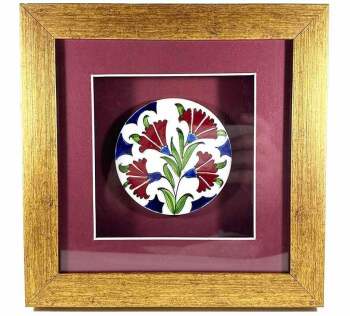
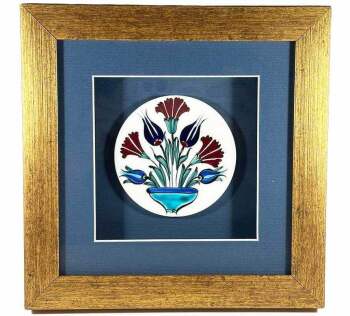
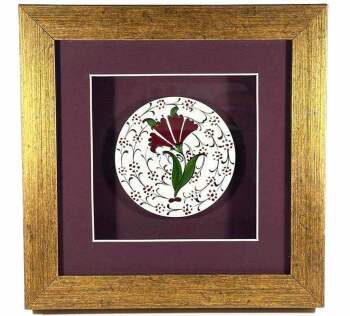
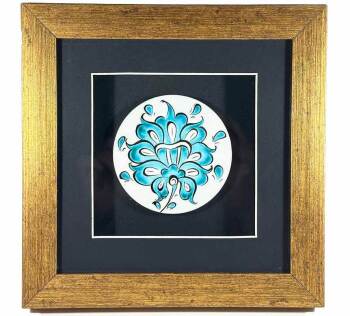
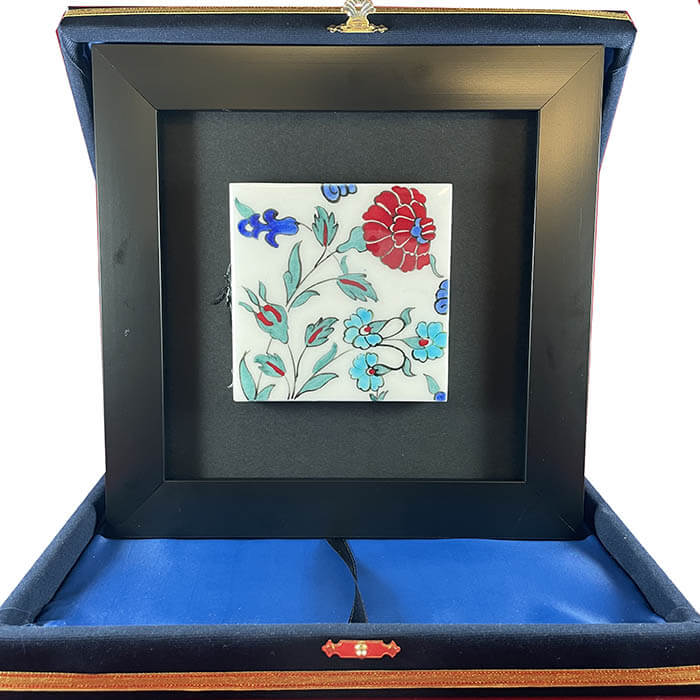
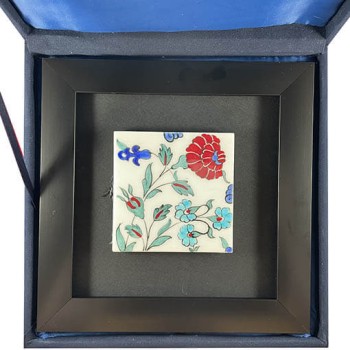
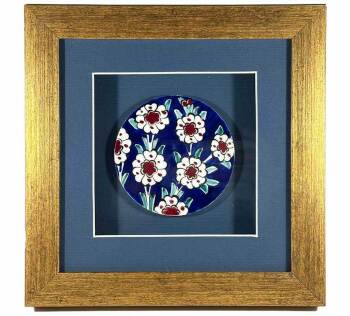
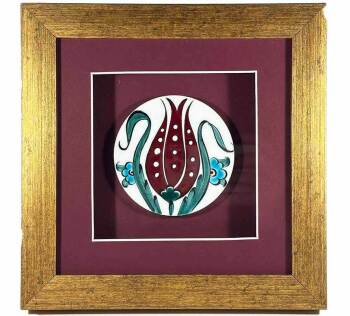
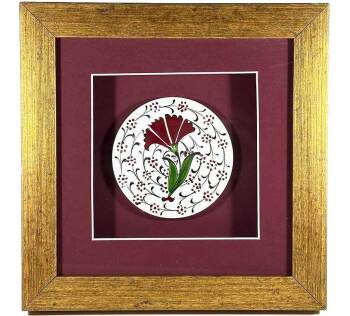
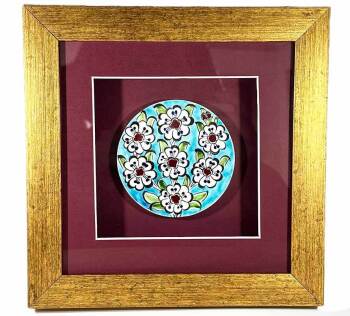
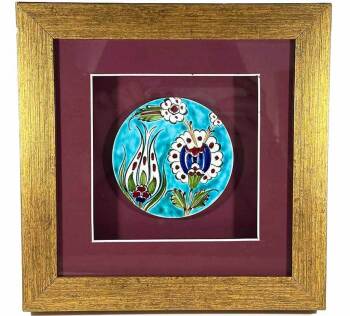
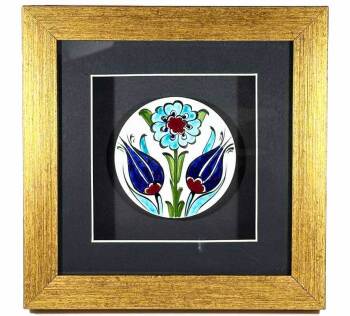
Every Iznik ceramic piece is unique, just like a fingerprint. Even if the same product is produced again with the same design, it will not be exactly identical.
The exact same piece you are viewing now cannot be reproduced in precisely the same way.
If this piece matches your taste, choosing it now is recommended because each handmade ceramic item is one of a kind.
Iznik ceramics never lose their value, go out of fashion or become obsolete. They are artistic heirlooms that can be passed down from generation to generation.
The pomegranate motif in Iznik ceramics symbolizes fertility, abundance and good fortune. The many seeds of the pomegranate represent abundance, while its bright red color is associated with luck and vitality.
In Ottoman culture, the pomegranate was also connected with religious and cultural symbolism. Its many seeds were interpreted as representing abundance and spiritual richness, while its vivid color gave the motif a strong visual presence.
The pomegranate motif first appeared in Iznik ceramics in the 16th century and became popular for its symbolic meaning, beauty and durability.
Today, the pomegranate motif continues to be appreciated and appears in museum collections and private collections around the world.