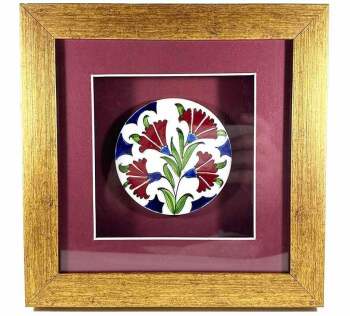
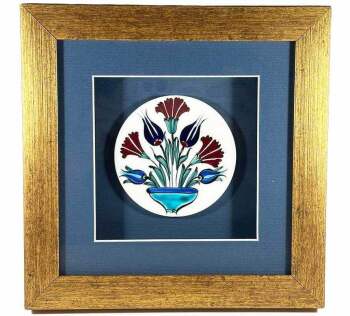
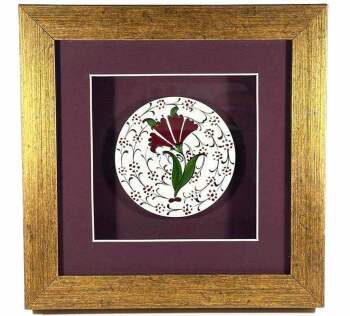
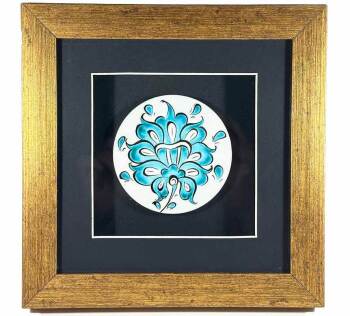
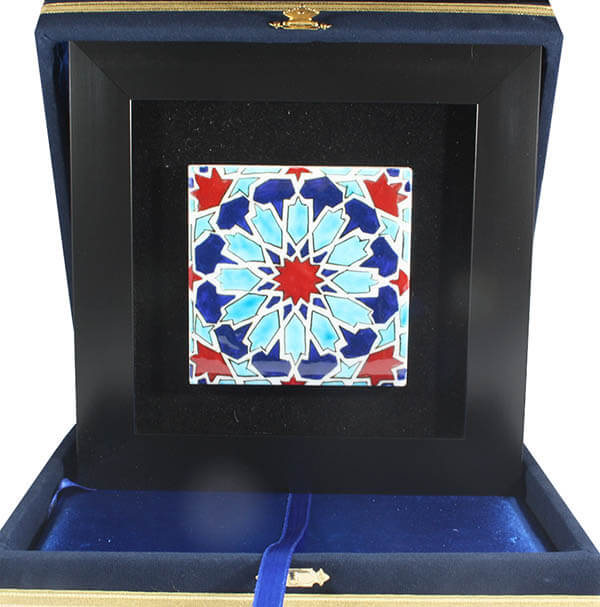
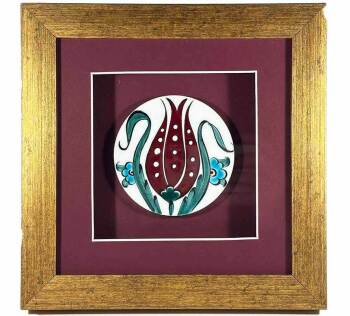
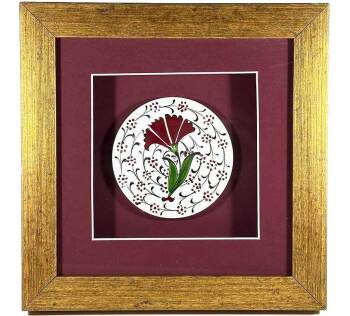
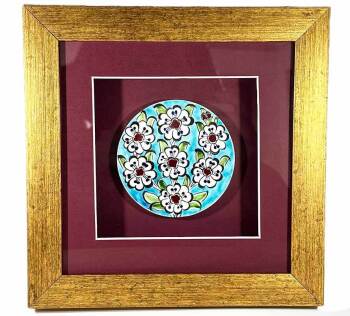
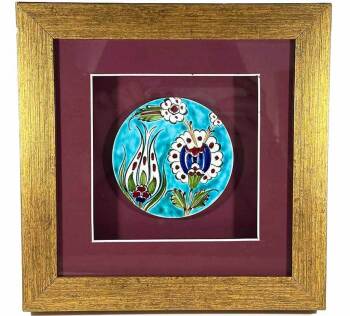
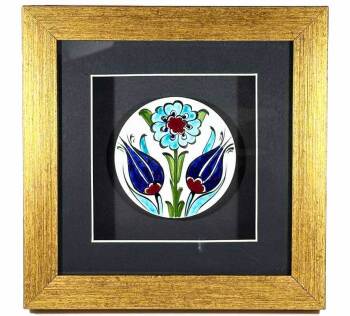
The Seljuk star motif in Iznik ceramics is associated with the Seljuk Empire, a powerful and influential empire in the Middle East from the 11th to the 13th century.
The Seljuks were known for beautiful and intricate ceramic workmanship, and the Seljuk star is one of their most recognized designs.
The Seljuk star motif has several meanings. It is often seen as a symbol of the Seljuk Empire and is also interpreted within the symbolic language of Islamic art.
The motif is a beautiful and timeless design that has been used for centuries to decorate homes and public buildings. It recalls the Seljuk Empire and its rich culture, while also carrying associations with Islamic artistic tradition.
In addition, the Seljuk star motif is sometimes seen as a symbol of hope and good fortune. It has also been interpreted as a talismanic form believed to bring luck and protection.
The motif reflects the rich culture and history of the Seljuk Empire and can represent hope, luck and prosperity. Seljuk star motifs are among the characteristic elements often seen in Iznik ceramics.
Geometry and symmetry: Seljuk star motifs represent a complex arrangement based on geometry and symmetry, which can symbolize mathematical precision and order.
Universal order: Geometric patterns can represent cosmic balance and universal order. Stars may remind us of the beauty and order of the sky.
Symbols of Islamic art: Geometric patterns are frequently used in Islamic art and can represent the unity and infinity of God.
Ornament and aesthetics: Seljuk star motifs add decorative and aesthetic value to Iznik ceramics, emphasizing their richness and visual appeal.