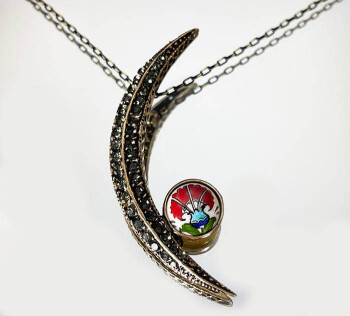
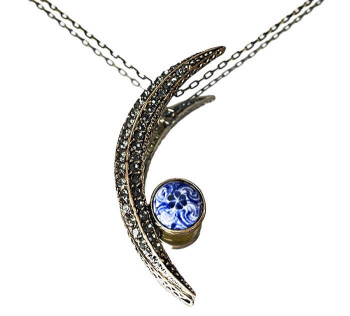
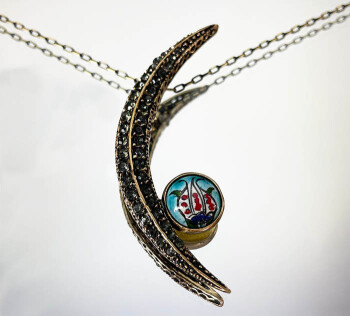
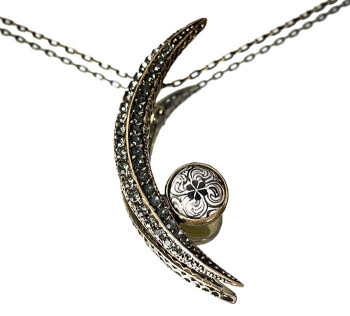
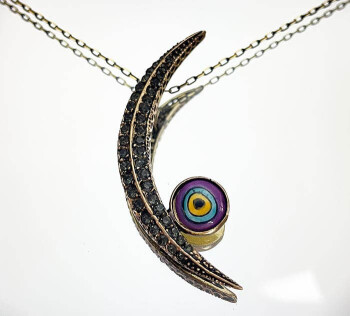
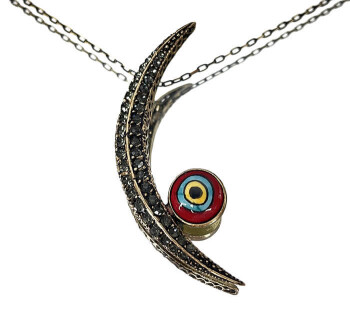
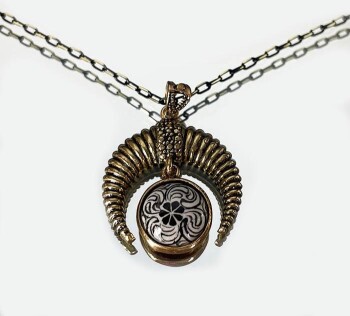
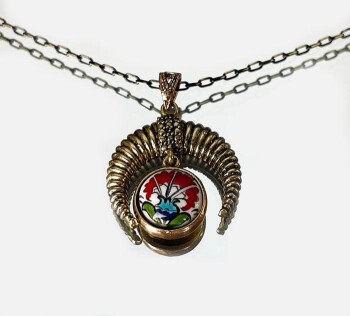
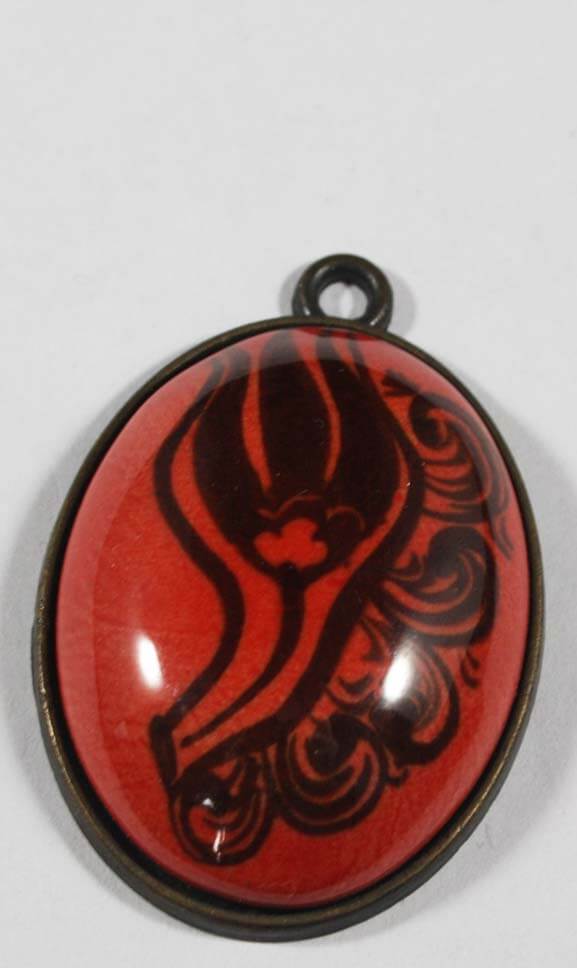
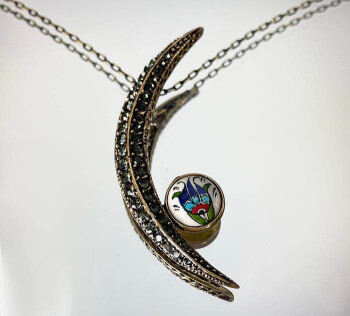
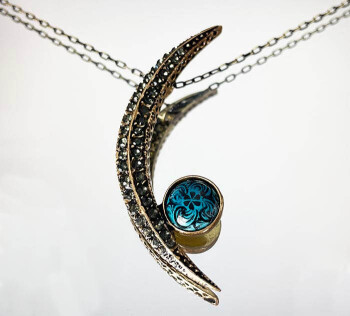
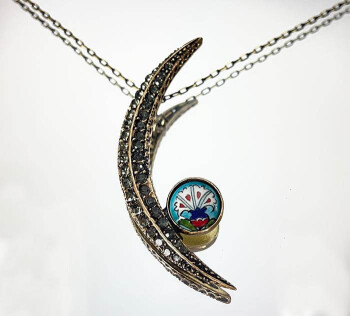
Pendant with a black tulip on a red background.
Product Features
Pattern Information: Tulip Motif
In Iznik ceramics, the tulip is seen as a symbol of love, beauty, and perfection. Because the Turkish word for tulip shares the same letters as the Arabic word for God, it has also been associated with divine love. The motif became especially important in the 16th century.
Love: The tulip is often seen as a symbol of love because of its delicate beauty and graceful form.
Beauty and elegance: The tulip is known in nature as an elegant and aesthetic flower. In Iznik ceramics, tulip motifs emphasize the beauty and elegance of ceramic craftsmanship.
Perfection: The tulip is often seen as a symbol of perfection because of its symmetrical shape and balanced petals.
Divine meaning: The tulip is sometimes seen as a divine symbol because of its similarity to the Arabic word for God.
Cycle of nature: The tulip is accepted as a herald of spring. In Iznik ceramics, tulip motifs symbolize natural cycles such as the revival of nature, rebirth, and growth.
Nobility and wealth: The tulip became an important symbol during the Ottoman Empire. Tulip motifs were used in Ottoman palaces and other important buildings, symbolizing nobility, power, refinement, and wealth.
Turkish culture and history: The tulip has an important place in Turkish culture and history. In the Ottoman Empire, tulips were grown in palace gardens and adopted as a symbol. Tulip motifs in Iznik ceramics represent the connection to Turkish history and culture.
Pattern Information: Meaning of the Halic Motif
The Halic motif first appeared in Iznik ceramics in the 16th century. The ceramics were made in the city of Iznik, located near the Golden Horn.
The Golden Horn is generally seen as a symbol of prosperity, abundance, and good fortune.
The natural beauty and strategic location of the Golden Horn made it an important trade and commerce center during the Ottoman Empire.
The Halic motif became popular in Iznik ceramics for many reasons, including its symbolic meaning, beauty, and durability.
Sea and water: The Golden Horn is a body of water in Istanbul, and Halic motifs in Iznik ceramics symbolize the sea and water. Water is accepted as the source of life and a cleansing power. These motifs reflect the flow of water, the movement of waves, and the captivating beauty of the sea.
Symbol of Istanbul: The Golden Horn is one of the symbols of Istanbul. Halic motifs in Iznik ceramics represent the historical and cultural importance of Istanbul and emphasize the city’s connection with the sea and its historical past.
Decoration and aesthetics: Halic motifs are one of the decorative elements of Iznik ceramics and add aesthetic value to the pieces. These motifs reflect the visual appeal of the ceramics and the skill of the craftsmen.
In general, Halic motifs in Iznik ceramics reflect the flow of water, the beauty of the sea, the symbolic value of Istanbul, and the aesthetic value of ceramic art.