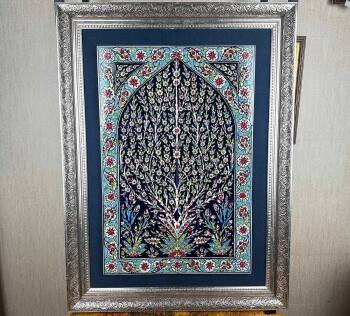
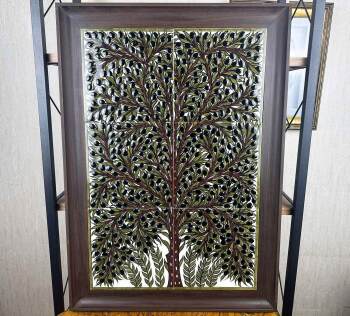
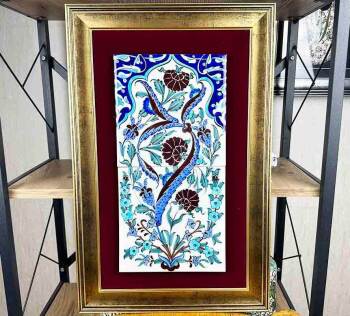
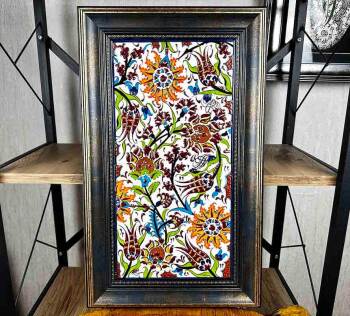
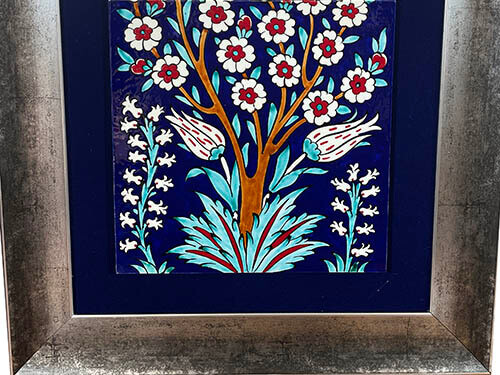
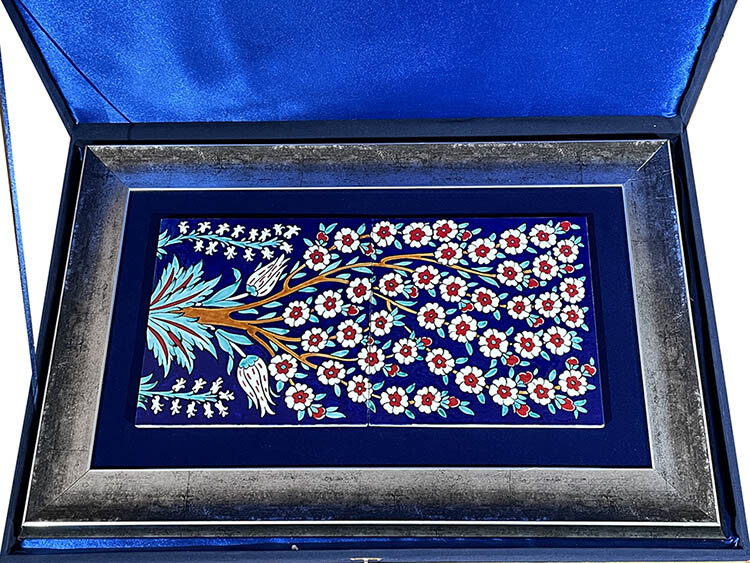
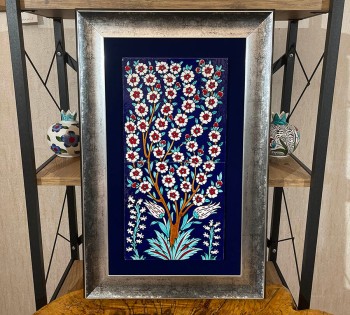
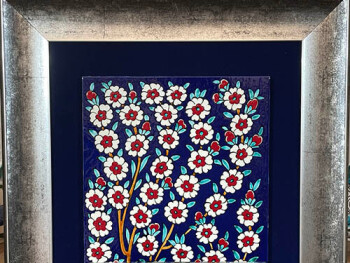
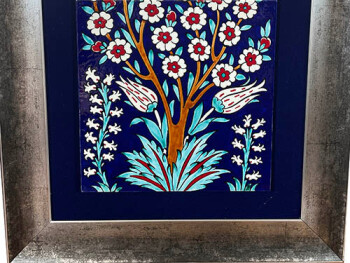
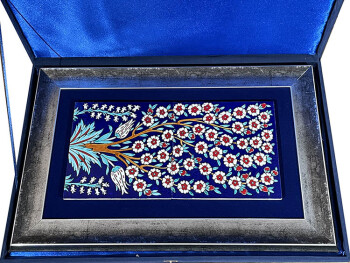
The tree of life motif is used as a symbol of fertility, abundance and good luck. It is often seen as a symbol of the connection between heaven and earth, and it can also represent the cycle of life, death and rebirth.
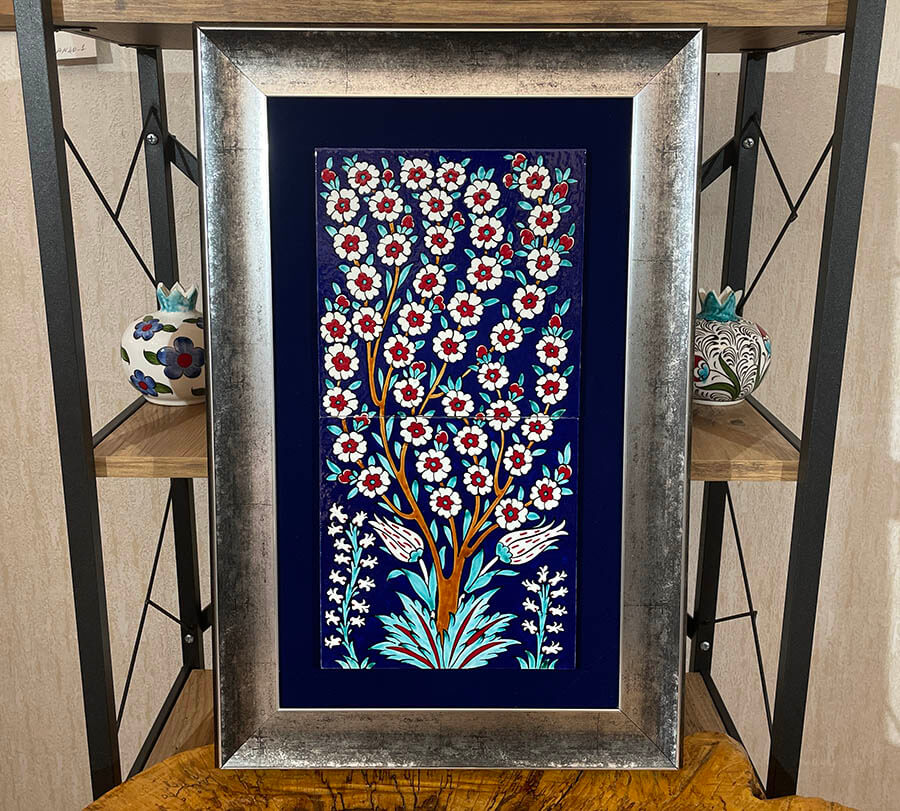
In Iznik ceramics, the tree of life is often depicted with a large trunk and spreading branches. The branches are filled with flowers, fruits and leaves. The tree of life can be shown in various colors, but the most common colors are blue, white and red.
The tree of life motif is frequently used in Iznik ceramics to decorate special buildings, offices and homes. It is a popular design element because it symbolizes many positive meanings, such as fertility, abundance, good luck and the connection between heaven and earth.
Fertility: The tree of life is a symbol of fertility because it is a living being that grows and bears fruit.
Abundance: The tree of life is a symbol of abundance because it is a source of food and shelter.
Good luck: The tree of life is a symbol of good fortune because it reminds us of the cycle of life, death and rebirth.
Connection between heaven and earth: The tree of life symbolizes the connection between heaven and earth because it reaches upward with its branches and downward with its roots.
Because the tree of life motif symbolizes many positive meanings, it is a popular design element in Iznik ceramics.
In addition, in Turkish culture the tree of life holds firmly to the earth and worldly life with its roots, while its branches reach toward the sky and spiritual life. The tree of life also symbolizes family and lineage.
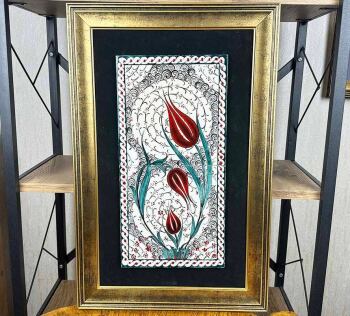
In Iznik ceramics, the tulip is regarded as a symbol of love, beauty and perfection. Because the Turkish word “lale” shares the same letters as the Arabic word “Allah,” it has also been associated with divine love.
Love: The tulip is often seen as a symbol of love because of its delicate beauty and graceful form.
Beauty and grace: The tulip is known in nature as an elegant and aesthetic flower. Tulip motifs in Iznik ceramics emphasize the beauty and refinement of ceramic craftsmanship.
Perfection: Because of its symmetrical form and balanced petals, the tulip is often interpreted as a symbol of perfection.
Spiritual meaning: Because of its similarity to the Arabic word Allah, the tulip is sometimes considered a spiritual symbol.
Cycle of nature: The tulip is accepted as a herald of spring. In Iznik ceramics, tulip motifs symbolize the revival of nature, rebirth and growth.
Nobility and richness: During the Ottoman Empire, the tulip became an important symbol. Tulip motifs were used in Ottoman palaces and important buildings, representing nobility, power, refinement and wealth.
Turkish culture and history: The tulip holds an important place in Turkish culture and history. In the Ottoman Empire, tulips were grown in palace gardens and adopted as a symbolic flower. Tulip motifs in Iznik ceramics represent this connection with Turkish history and culture.