Out Of Stock
Notify me when it’s in stockEvery Iznik ceramic piece is unique, just like a fingerprint. Even if the same product is produced again with the same design, it will not be exactly identical.
The exact same piece you are viewing now cannot be reproduced in precisely the same way.
If this piece matches your taste, choosing it now is recommended because each handmade ceramic item is one of a kind.
Iznik ceramics are timeless cultural artworks. They do not lose their artistic value, go out of style or become obsolete; they can be kept as a lasting piece for many years.
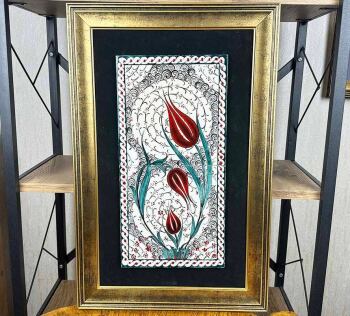
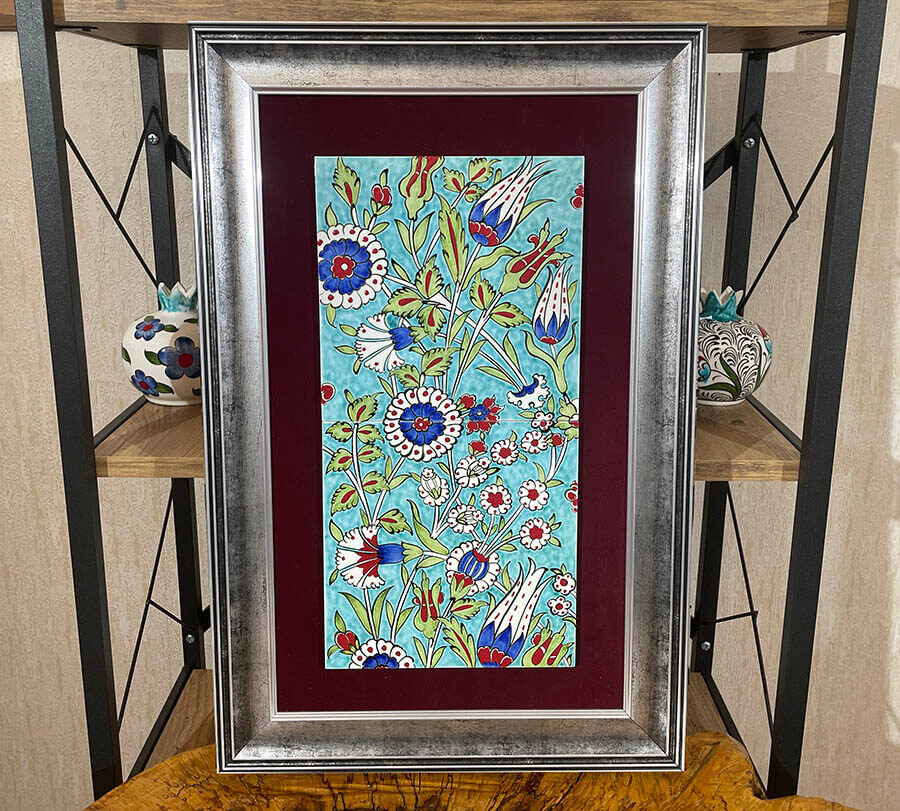
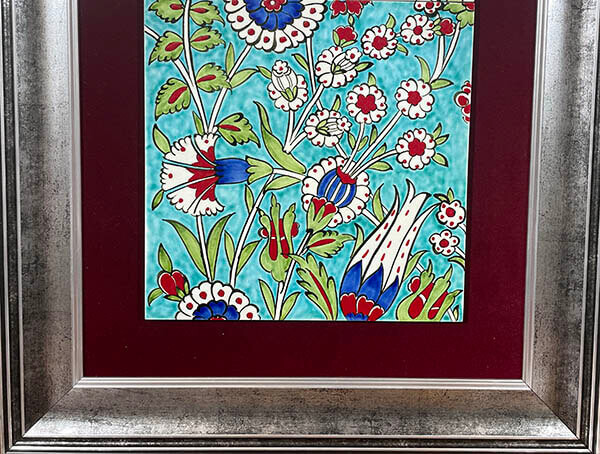
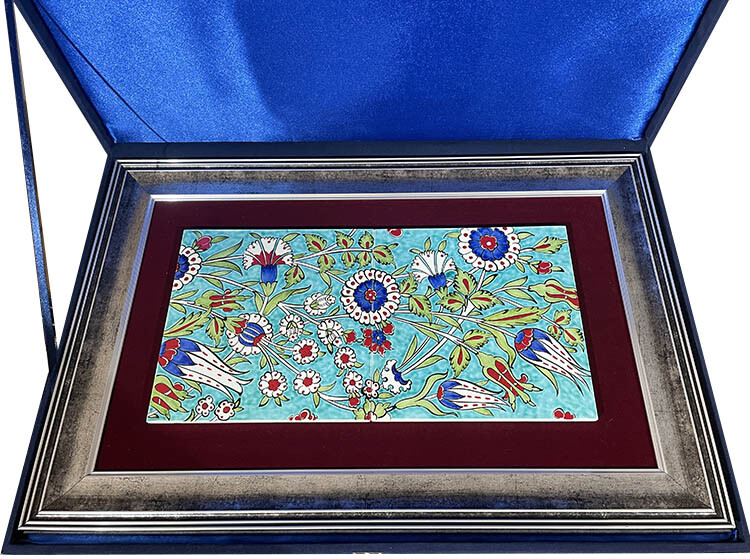
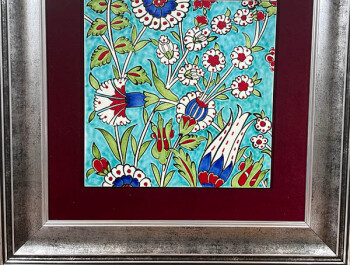
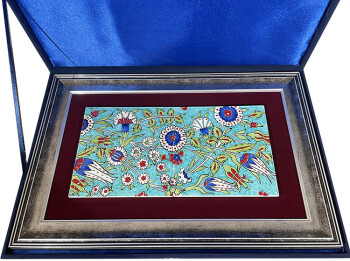
In Iznik ceramics, the tulip is regarded as a symbol of love, beauty and perfection. Because the Turkish word “lale” shares the same letters as the Arabic word “Allah,” it has also been associated with divine love.
Love: The tulip is often seen as a symbol of love because of its delicate beauty and graceful form.
Beauty: The tulip is also seen as a symbol of beauty because of its bright colors and intricate petals.
Perfection: Because of its symmetrical form and balanced petals, the tulip is often interpreted as a symbol of perfection.
Spiritual meaning: Because of its similarity to the Arabic word Allah, the tulip is sometimes considered a spiritual symbol.
Ottoman Empire: The tulip was often used as a symbol of the Ottoman Empire because of its association with wealth, power and refinement.
Because of its aesthetic value, the tulip motif is frequently used today in home and office decoration and in the decoration of important spaces.
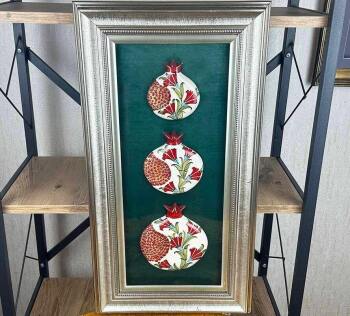
In Turkish culture, the carnation is associated with love, beauty and passion. It is also seen as a symbol of fertility and abundance. With its bright colors and delicate petals, the carnation adds a beautiful and eye-catching character to Iznik ceramic designs.
The carnation was first introduced to Turkey in the 16th century and soon became a popular flower in Ottoman culture.
In Iznik ceramics, carnations have often been used as symbols of love, beauty and passion.
The bright colors and delicate petals of the carnation make it a beautiful and striking addition to Iznik ceramic designs.
The strong stems and durable petals of the carnation make it a lasting and long-lived decorative motif.
It is frequently used in Iznik ceramics as a reminder of the country’s rich cultural heritage.