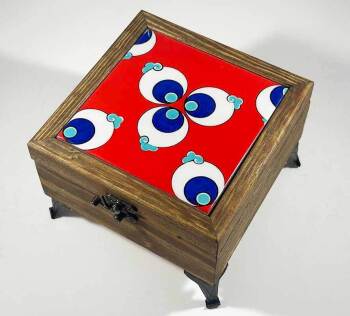
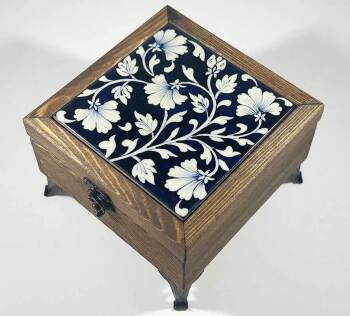
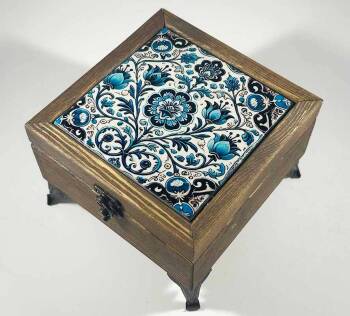
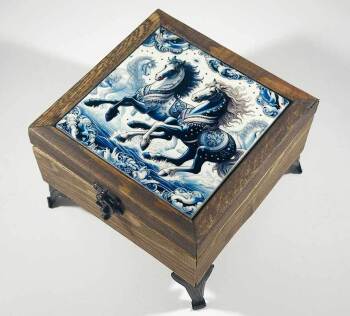
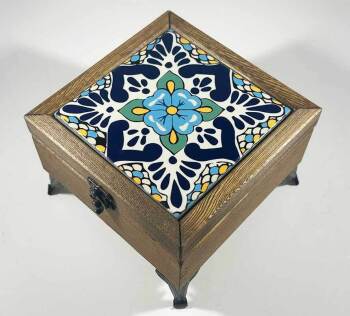
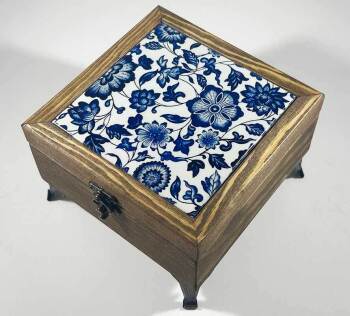
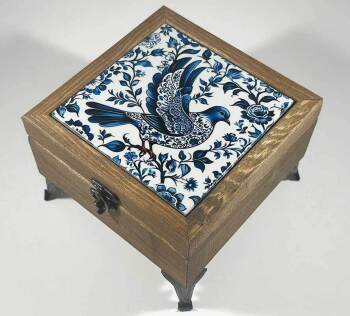
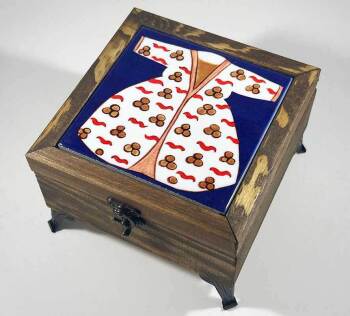
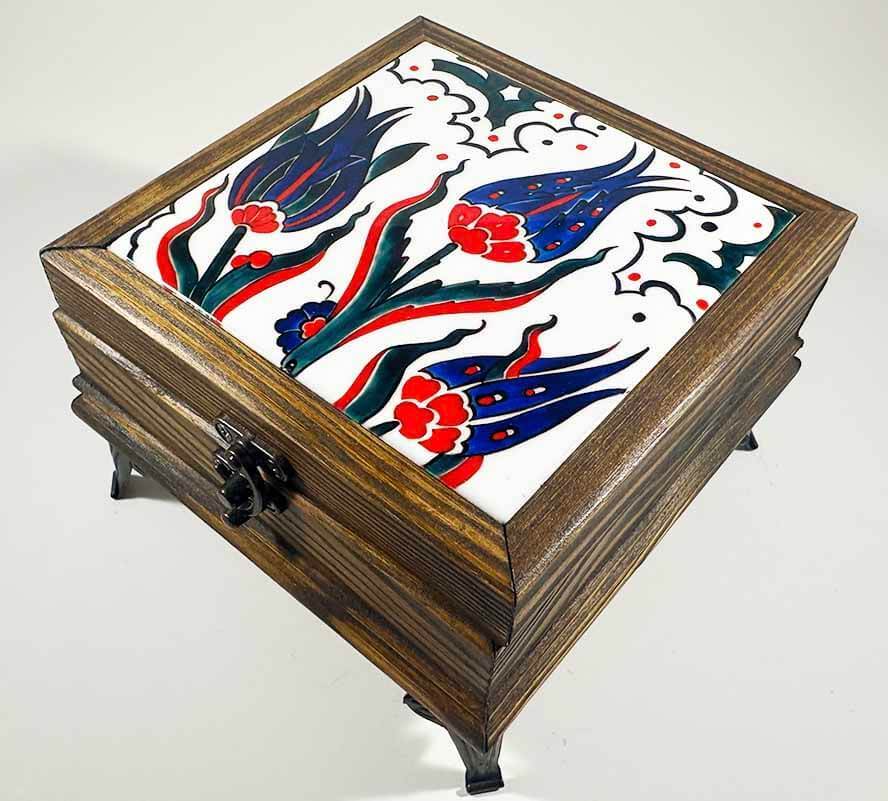
Designed to express love with timeless elegance, this three-tulip motif wooden jewelry box adds a special meaning to anniversary celebrations.
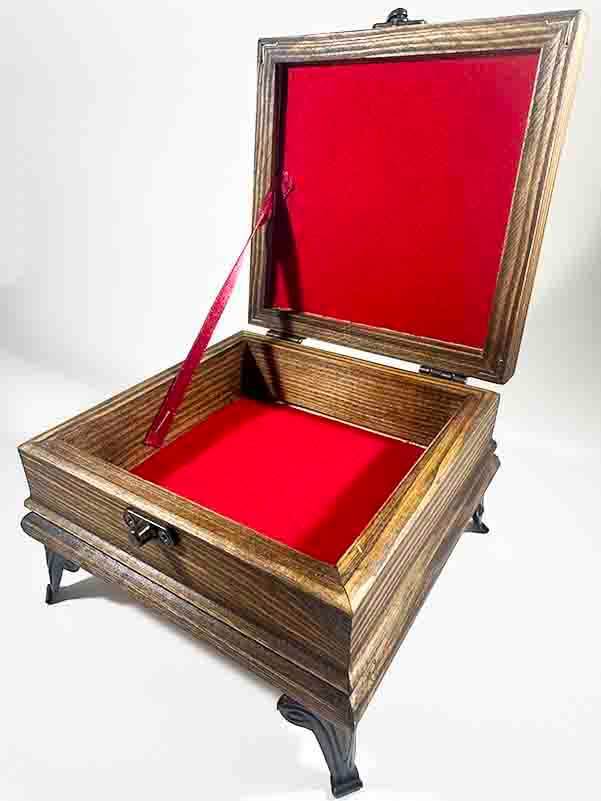
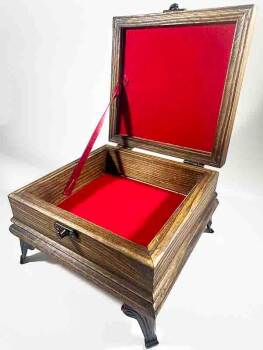
The three tulip motifs on the lid symbolize affection and devotion, while the wooden body provides a practical area for necklaces, rings, earrings and other jewelry.
It can also be displayed as an elegant decorative object and kept for many years as a meaningful memory.
In Iznik ceramics, the tulip is seen as a symbol of love, beauty and perfection. Because the Turkish word for tulip shares the same letters as the Arabic word Allah, it has also been associated with divine love.
Love: The tulip is often viewed as a symbol of love because of its delicate beauty and elegant form.
Beauty and elegance: As an elegant and aesthetic flower in nature, the tulip emphasizes the beauty and refinement of Iznik ceramic craftsmanship.
Perfection: Because of its symmetrical shape and balanced petals, the tulip can symbolize perfection.
Divine meaning: Due to its letter association with the word Allah, the tulip is sometimes interpreted as a sacred or spiritual symbol.
Cycle of nature: As a herald of spring, the tulip represents awakening, rebirth and growth in nature.
Nobility and richness: During the Ottoman period, the tulip became an important symbol and was used in palaces and major buildings to express nobility, power, refinement and wealth.
Turkish culture and history: Tulips hold an important place in Turkish culture. In the Ottoman Empire, tulips were cultivated in palace gardens and became an enduring cultural symbol.