Out Of Stock
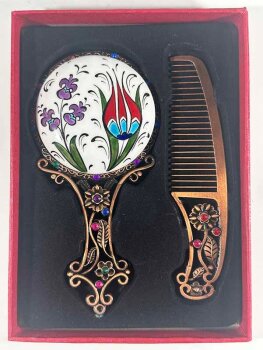
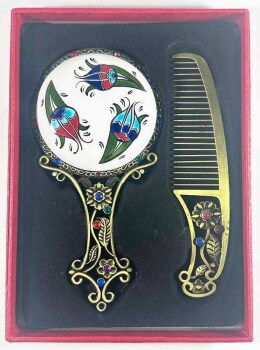
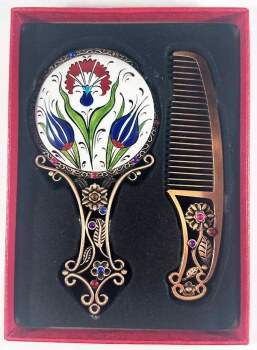
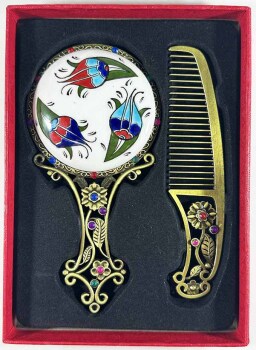
Notify me when it’s in stockHandcrafted İznik Ceramic Mirror Gift Set – Symbol of Love and Elegance
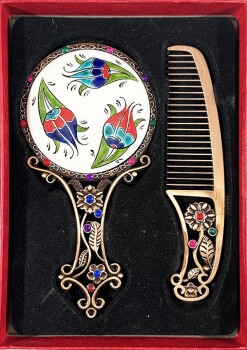
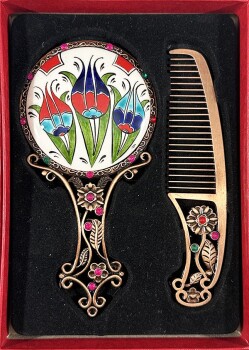
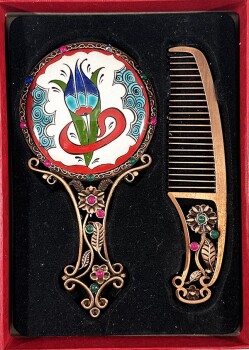
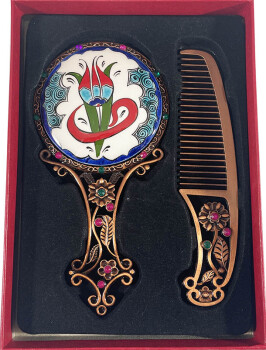
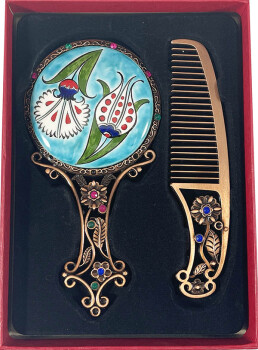
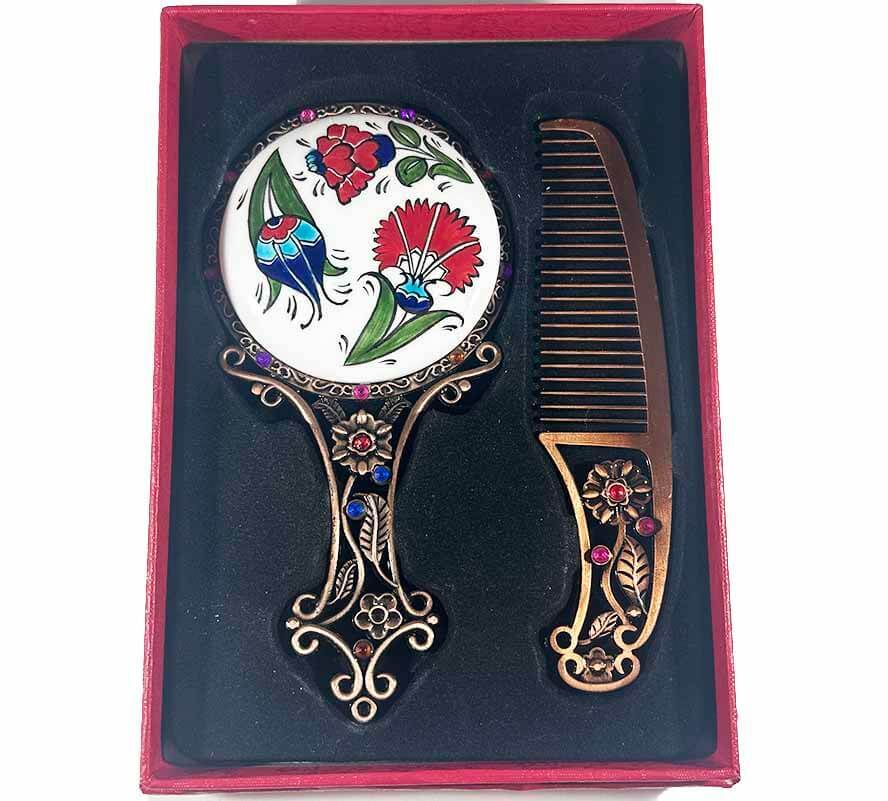
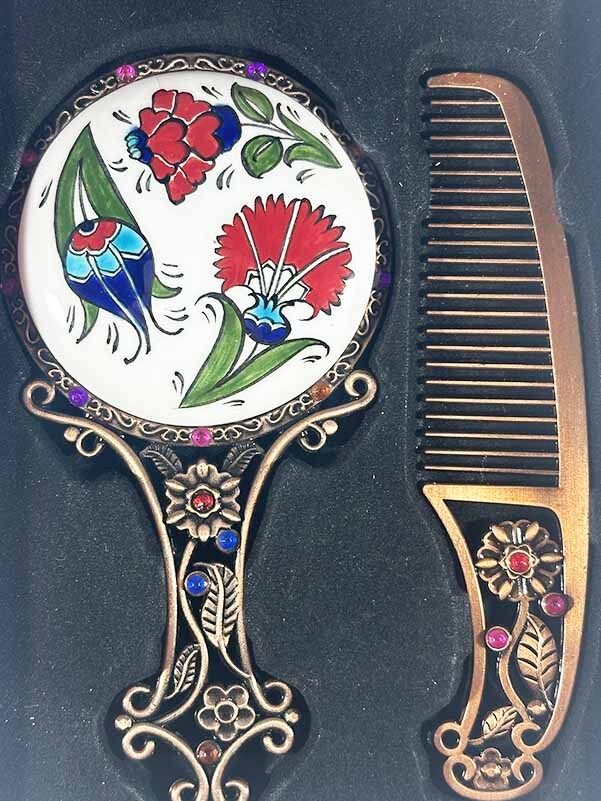
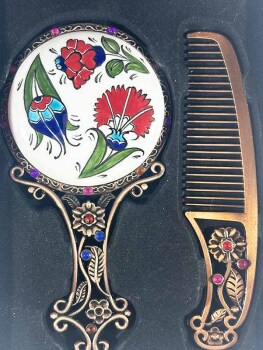
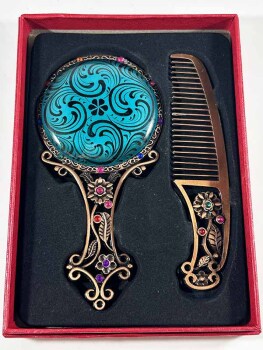
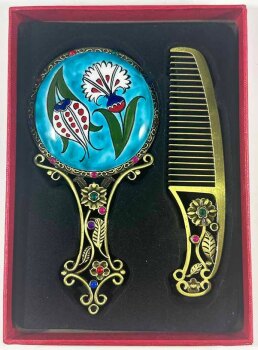
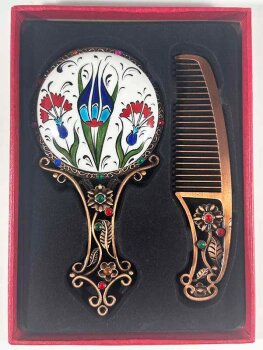
In the Ottoman era, one of the most meaningful gifts men would present to women was a mirror. This symbolic gesture conveyed the message: “I couldn’t find anything more beautiful than you.” Today, this timeless tradition continues with this elegant İznik ceramic mirror and comb set, a perfect gift for birthdays or special occasions.
Product Features:
Handcrafted metal detailing
Decorated with bright ornamental stones
Elegant, practical, and durable design
Comes in its original gift box – ships the same day
Product Dimensions:
Mirror length: 15.4 cm (6.06 in) (including handle)
Comb length: 12.2 cm (4.80 in)
Gift box size: 17 x 11.5 x 2.8 cm (6.69 x 4.52 x 1.10 in)
Each İznik tile is a one-of-a-kind masterpiece — just like a fingerprint. Even if reproduced, no two pieces are ever identical. The item you see is entirely unique and will never be made in the exact same way again. We recommend purchasing it while available, as İznik ceramics retain their artistic and collectible value for generations — never going out of style.
Tulip Pattern
In İznik ceramics, the tulip symbolizes love, beauty, and divine perfection. The Turkish word “lale” shares the same letters as the Arabic word “Allah”, linking the flower to spiritual devotion.
Love: Represents affection and romantic devotion
Beauty & Grace: Embodies elegance and aesthetic refinement
Perfection: Its symmetry symbolizes flawless harmony
Divinity: A reflection of divine beauty
Nature’s Renewal: Sign of rebirth and spring’s arrival
Nobility & Prosperity: Associated with Ottoman royalty and sophistication
Cultural Heritage: Deeply rooted in Turkish art and history
Carnation Pattern
The carnation represents love, passion, beauty, and abundance in Turkish culture. Introduced to Ottoman art in the 16th century, it became a favorite symbol of vitality and prosperity.
Symbol of Passion and Elegance
Vibrant Colors & Fine Petals: Add beauty to İznik tile art
Durability: Strong stems symbolize endurance
Cultural Continuity: Reflects the richness of Ottoman heritage
Pomegranate Pattern
A timeless emblem of fertility, abundance, and good fortune, the pomegranate holds deep spiritual meaning in Ottoman art.
Fertility & Prosperity: Countless seeds signify abundance
Good Luck: Red color symbolizes vitality and blessing
Faith & Symbolism: In Islam, the pomegranate represents divine wisdom and life
Cultural Significance: Popular since the 16th century, admired for its beauty and symbolic depth
Legacy of İznik Art: Still featured in museums and private collections worldwide