Product Features
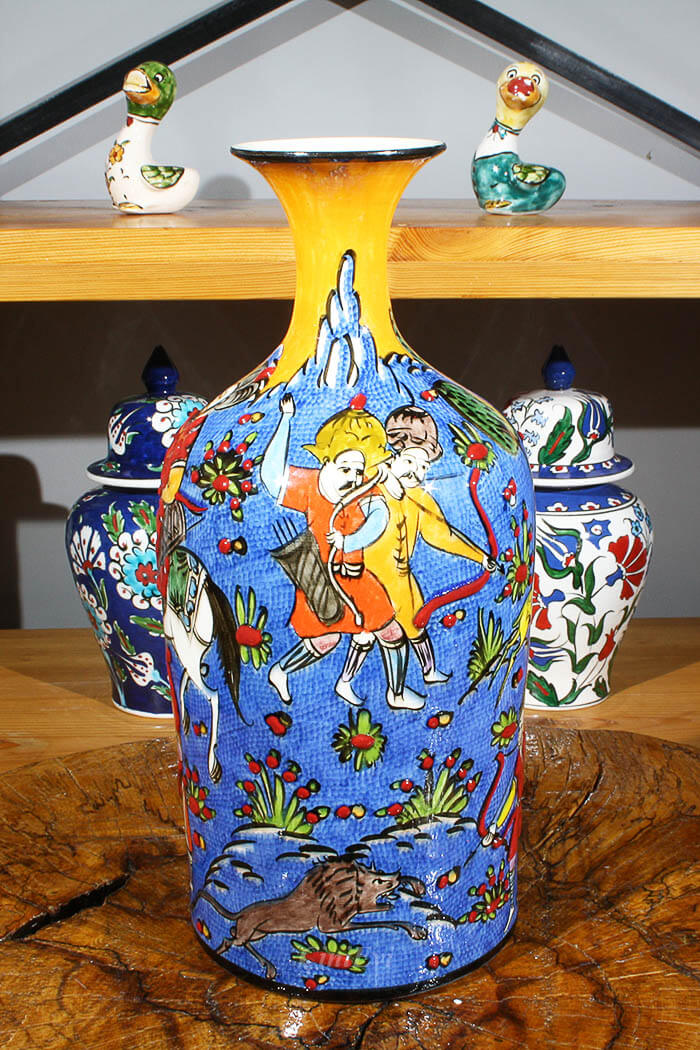
Pattern Information: Hunting Scene Motif
The hunting scene motif is a popular pattern in Iznik ceramics and appears in 16th and 17th century ceramics. The hunting scene is usually depicted realistically, showing the hunter and the prey in great detail. The hunting scene motif generally represents the power and authority of the Ottoman sultan, who is depicted as a hunter.
Some of the meanings of the “hunting scene” motif in Iznik ceramics are as follows:
Power and authority: The hunting scene motif was often used to represent the power and authority of the Ottoman sultan. The sultan was usually depicted as a hunter, which was seen as a sign of his power and masculinity. The hunting scene can also be seen as a way of proving the sultan’s dominance over nature.
Leisure and luxury: The hunting scene motif can also be seen as a representation of the Ottoman ideal of leisure and luxurious life. Hunting was a popular pastime among the Ottoman elite and was seen as a way to enjoy the outdoors and escape the hustle and bustle of city life. The hunting scene can also be seen as a way of displaying the wealth and status of the Ottoman elite.
Popular entertainment: The hunting scene motif in Iznik ceramics was also simply a popular subject. Hunting was a common activity in the Ottoman Empire and something people could relate to. The hunting scene can also be seen as a way of depicting the beauty of the natural world.
Meaning of the Ottoman Military Hunting Scene Motif
In traditional works of art such as Iznik ceramics, it carries both aesthetic and cultural meanings. The meaning of this motif includes the lifestyle of the period, the importance of hunting within Ottoman society, and the way art reflected the values of the era:
Power and competence: Hunting scenes symbolize the physical strength, agility, and combat skills of Ottoman soldiers. In the Ottoman world, hunting was not only a sport, but also considered part of the art of war. Such motifs represent the courage and mastery of Ottoman soldiers.
Harmony with nature: Nature has often been a theme in Ottoman art. Hunting scene motifs emphasize the Ottoman bond with nature and respect for the order of nature. In this context, animals, plants, and people are depicted in harmony.
Social and cultural life: Hunting was an important activity in the Ottoman palace and served both entertainment and military preparation. As a reflection of palace life, these motifs offer clues about the daily life of the Ottoman elite.
Artistic depth and storytelling: Hunting scene motifs display the artists’ ability to tell stories. Soldiers, horses, game animals, and natural elements on the ceramic are worked into a detailed composition, offering both artistic depth and a historical story.
Power and prestige of sovereignty: These motifs symbolize the power and prestige of the Ottoman sultan. Hunting was also seen as a symbolic act reflecting the ruler’s control over nature and society.
The use of such motifs in Iznik ceramics shows how art was valued as a tool that was both decorative and meaningful. These motifs are valuable historical heritages that carry the Ottoman Empire’s cultural richness and aesthetic understanding to the present day.