Out Of Stock
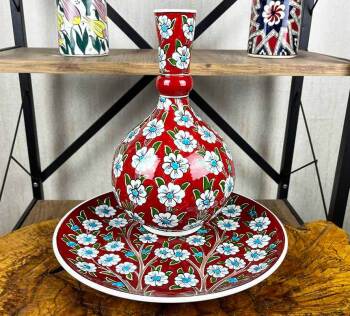
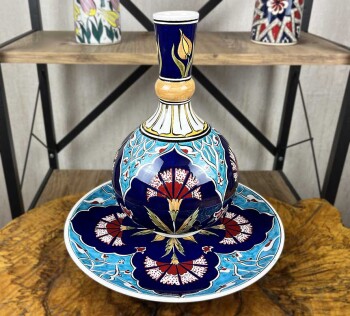
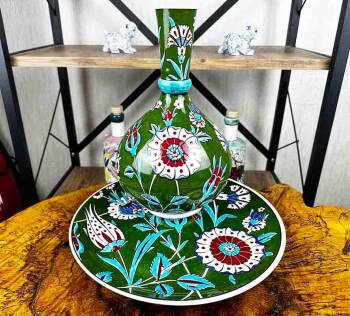
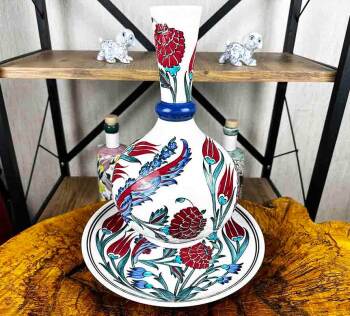
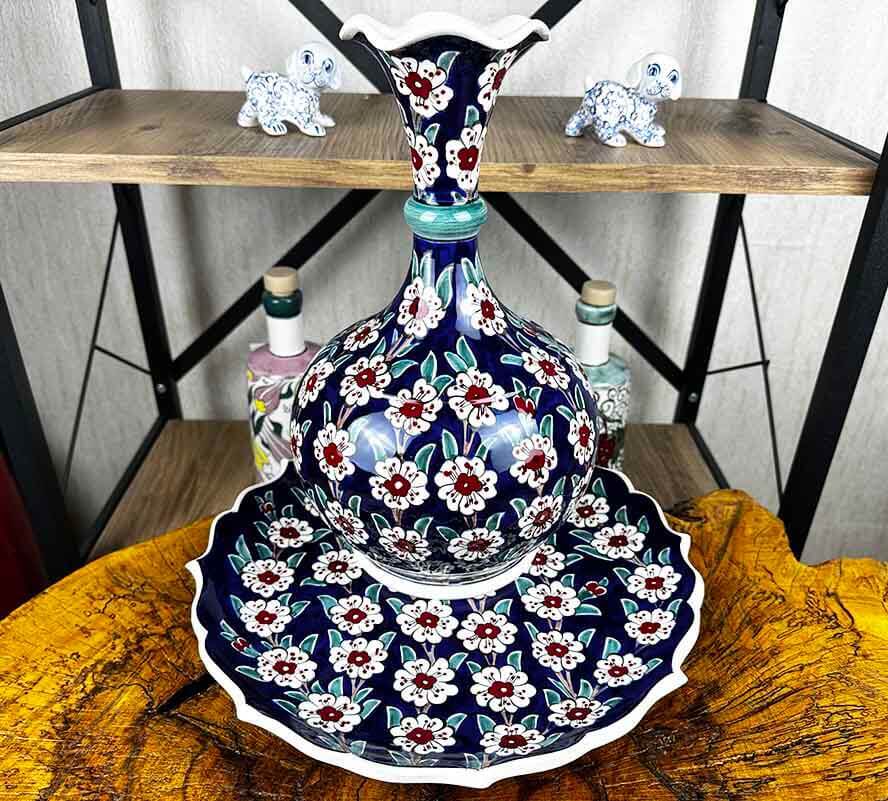
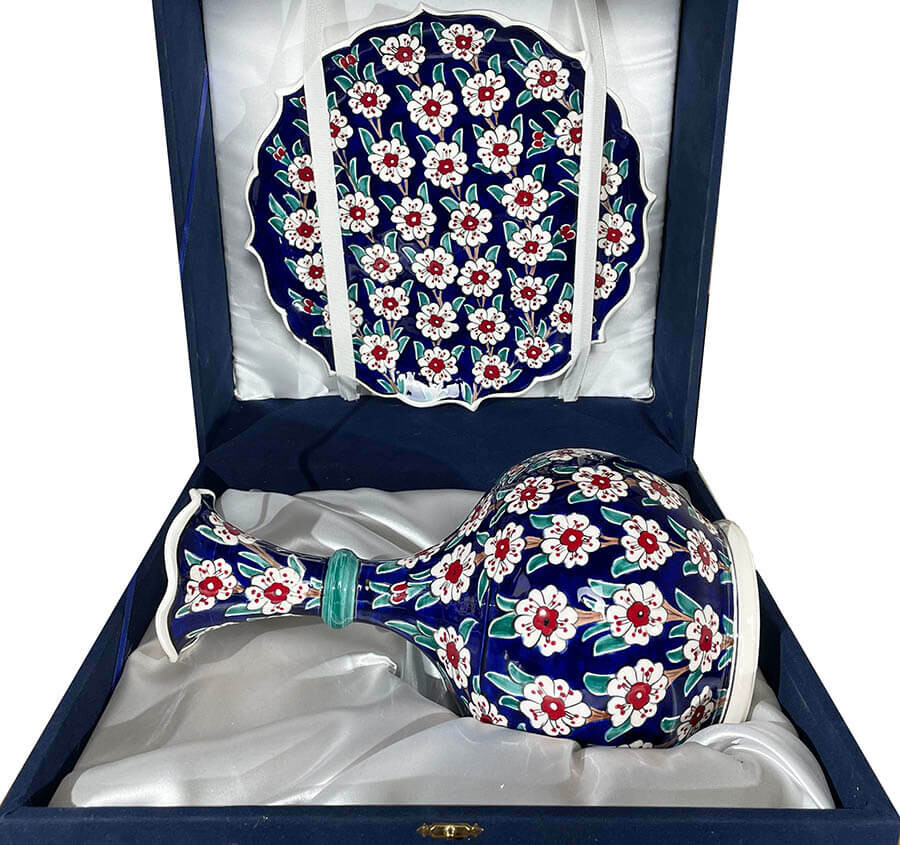
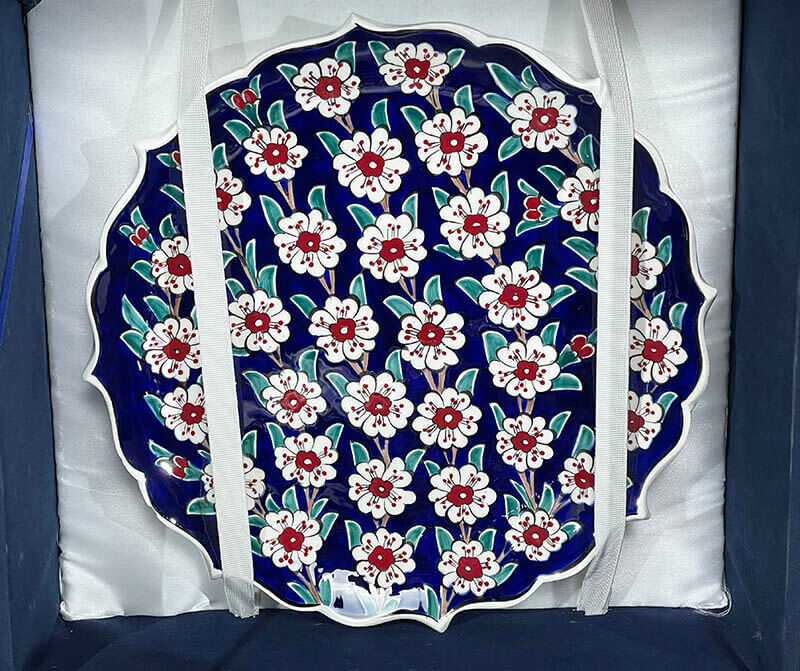
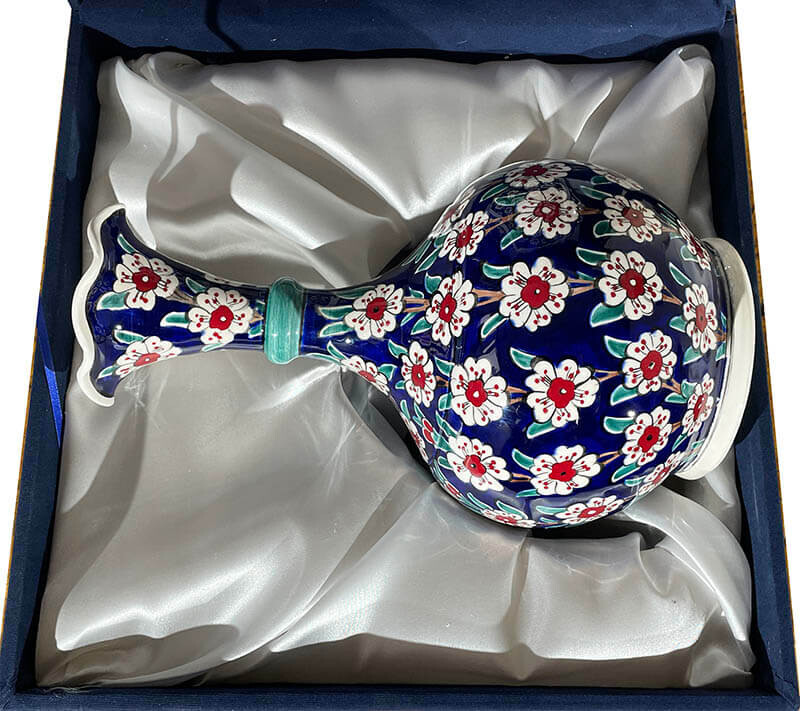
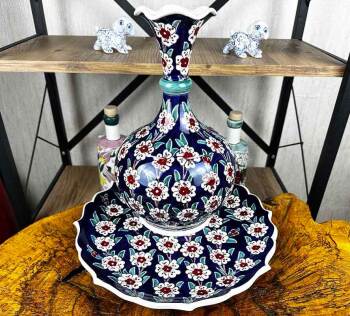
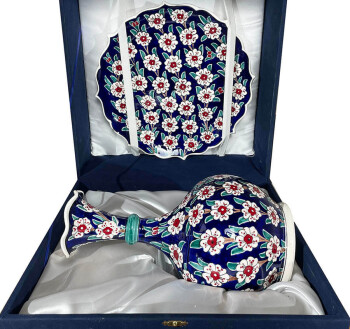
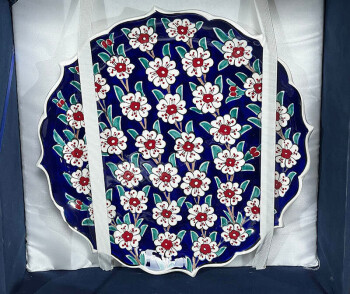
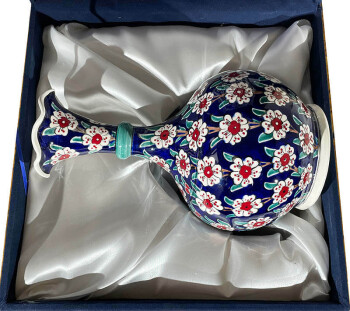
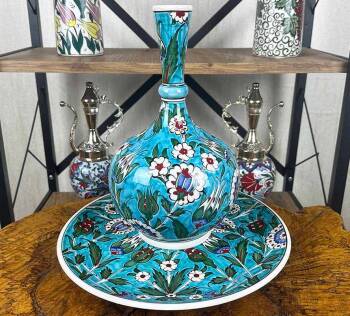
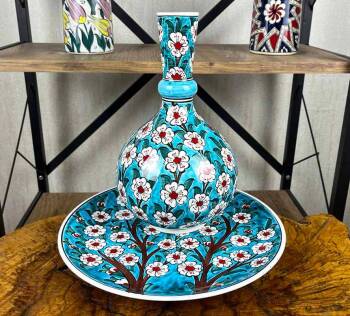
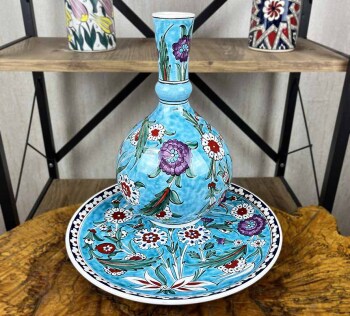
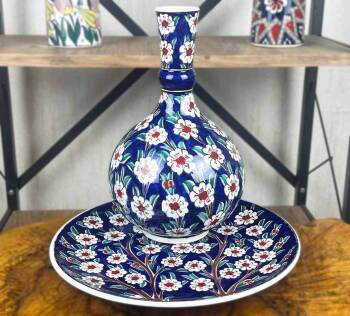
Notify me when it’s in stockA first-class handmade Iznik ceramic vase and plate set decorated with the meaningful Tree of Life pattern.
The tree of life motif is used as a symbol of fertility, abundance and good luck. It is often seen as a symbol of the connection between heaven and earth, and it can also represent the cycle of life, death and rebirth.
In Iznik ceramics, the tree of life is often depicted with a large trunk and spreading branches. The branches are filled with flowers, fruits and leaves. The tree of life can be shown in various colors, but the most common colors are blue, white and red.
The tree of life motif is frequently used in Iznik ceramics to decorate special buildings, offices and homes. It is a popular design element because it symbolizes many positive meanings, such as fertility, abundance, good luck and the connection between heaven and earth.
Fertility: The tree of life is a symbol of fertility because it is a living being that grows and bears fruit.
Abundance: The tree of life is a symbol of abundance because it is a source of food and shelter.
Good luck: The tree of life is a symbol of good fortune because it reminds us of the cycle of life, death and rebirth.
Connection between heaven and earth: The tree of life symbolizes the connection between heaven and earth because it reaches upward with its branches and downward with its roots.
Because the tree of life motif symbolizes many positive meanings, it is a popular design element in Iznik ceramics.
In addition, in Turkish culture the tree of life holds firmly to the earth and worldly life with its roots, while its branches reach toward the sky and spiritual life. The tree of life also symbolizes family and lineage.
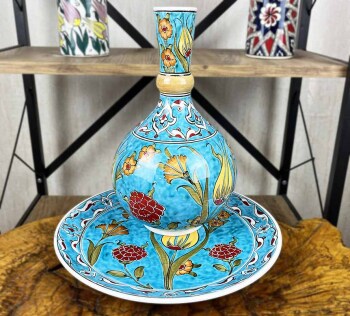
The pomegranate motif in Iznik ceramics is a symbol of fertility, abundance and good fortune. The many seeds of the pomegranate are associated with plenty and prosperity, while its bright red color is often seen as a sign of good luck.
In Ottoman culture, the pomegranate was also associated with religious and cultural symbolism. Its many seeds were interpreted as representing abundance, unity and continuity.
The pomegranate motif first appeared in Iznik ceramics in the 16th century and became popular because of its symbolic meaning, beauty and durable decorative character.
Today, the pomegranate motif continues to be appreciated and appears in ceramic works, museums and private collections around the world.