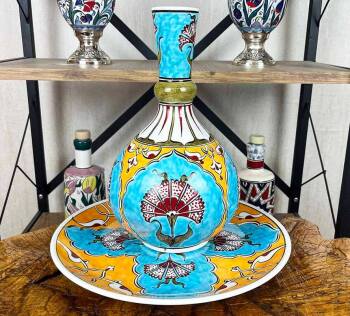
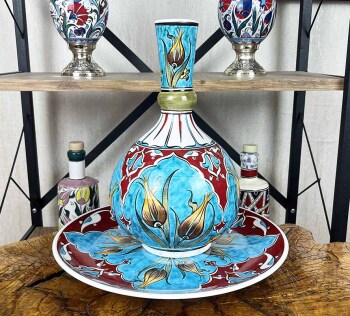
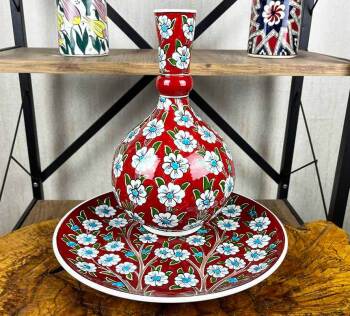
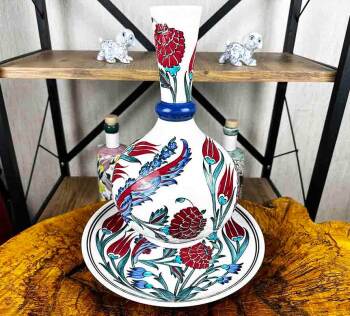
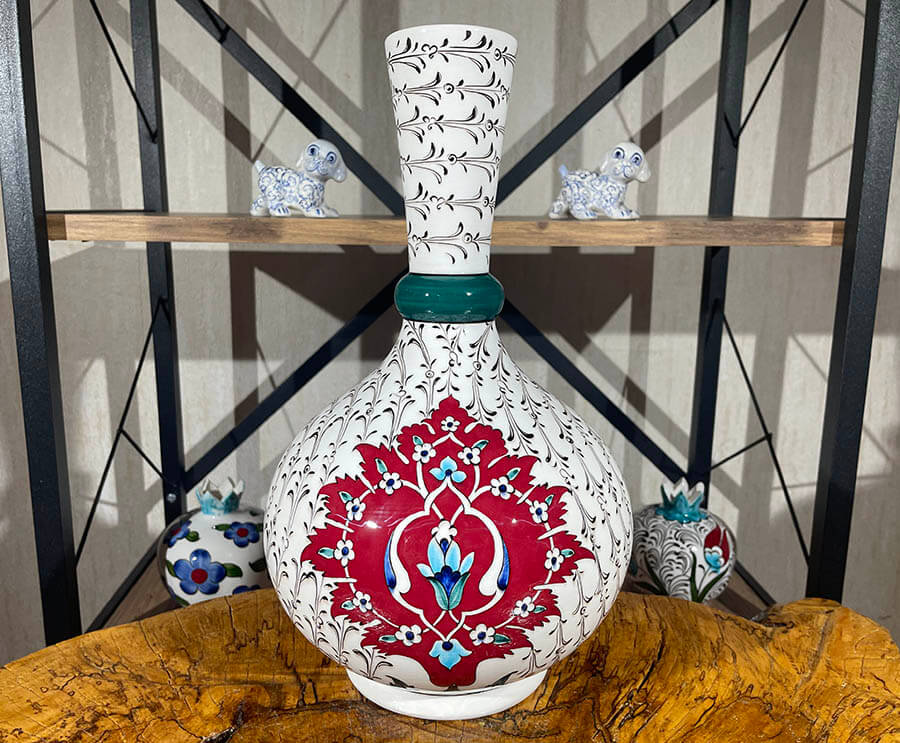
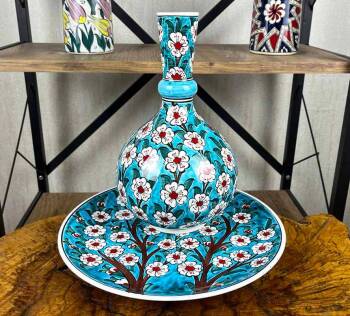
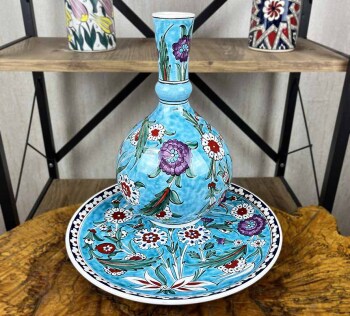
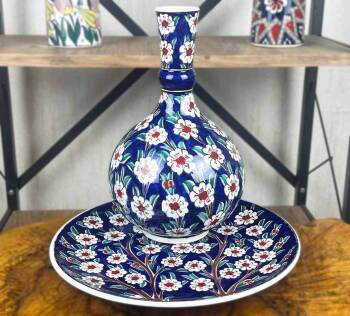
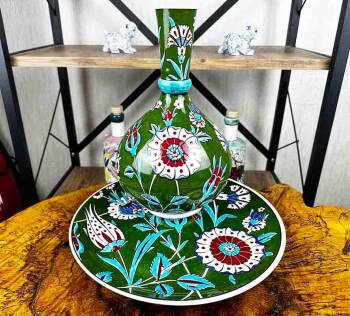
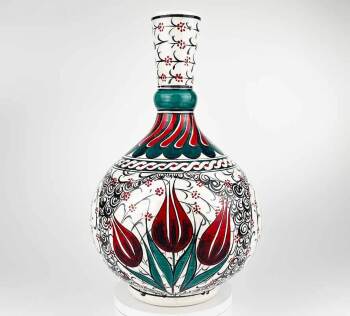
Iznik tear-drop vase with red lotus flower motif.
Product Features
Each Iznik ceramic piece is unique, just like a fingerprint. Even if the same product is produced again in the same way, it will not be exactly identical.
The exact same piece you are viewing now cannot be produced again.
We recommend purchasing the product you like immediately if it meets your needs.
The value of Iznik ceramics never decreases, they never go out of fashion, and they do not become outdated. They are artistic heritage pieces that can be passed down from generation to generation.
Pattern Information: Lotus Flower
Purity and cleanliness: The lotus flower usually grows in marshes, rises from the mud, and opens in a striking way, turning into a beautiful flower with pure white petals. For this reason, the lotus flower is seen as a symbol of cleanliness, purity, and purification. Lotus flowers in Iznik ceramics carry the meaning of pure, beautiful, and refined beauty.
Ascent and spiritual development: The lotus flower is known for rising above the water. Therefore, lotus flower motifs symbolize spiritual development, enlightenment, and progress on the path of ascent. Because the lotus rises with its beauty after overcoming difficulties, it can represent inner transformation. Since the lotus also blooms from a seed planted in mud, it is a symbol of rebirth.
Endurance and resilience: The lotus flower can grow even in marshy environments and adapt to difficult conditions. Therefore, lotus flower motifs carry the meaning of endurance, resilience, and overcoming difficulties.
Aesthetics and ornamentation: The lotus flower motif is a beautiful and timeless design used for centuries to decorate homes and public buildings. The motif is a reminder of the beauty, purity, and enlightenment that can be found in the world around us.
The lotus flower is also accepted as a symbol of beauty and grace. Lotus flower motifs in Iznik ceramics emphasize the aesthetic beauty and ornamentation of the ceramics.
Lotus flower motifs in Iznik ceramics are important symbols representing meanings such as cleanliness, purity, spiritual development, endurance, aesthetic beauty, and overcoming difficulties.
The lotus flower motif is also a popular design in Islamic art. The lotus flower is seen as a symbol of the beauty and perfection of God. It is also seen as a symbol of life after death, as it is believed that the souls of believers will be reborn in paradise in a lotus flower.
In addition to the above, the lotus flower is also seen as a symbol of fertility and abundance. It is often depicted with many buds, symbolizing growth and the potential for new life. Because the lotus blooms even in the most difficult conditions, it is also seen as a symbol of hope.
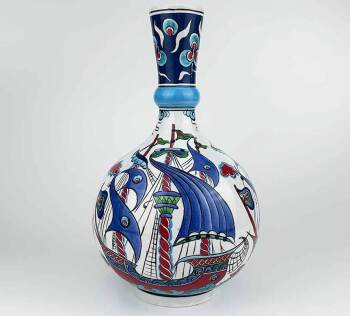
Pattern Information: Halic Motif
The Halic motif first appeared in Iznik ceramics in the 16th century. The ceramics were made in the city of Iznik, located near the Golden Horn.
The Golden Horn is generally seen as a symbol of prosperity, abundance, and good fortune.
The natural beauty and strategic location of the Golden Horn made it an important trade and commerce center during the Ottoman Empire.
The Halic motif became popular in Iznik ceramics for many reasons, including its symbolic meaning, beauty, and durability.
Sea and water: The Golden Horn is a body of water in Istanbul, and Halic motifs in Iznik ceramics symbolize the sea and water. Water is accepted as the source of life and a cleansing power. These motifs reflect the flow of water, the movement of waves, and the captivating beauty of the sea.
Symbol of Istanbul: The Golden Horn is one of the symbols of Istanbul. Halic motifs in Iznik ceramics represent the historical and cultural importance of Istanbul and emphasize the city’s connection with the sea and its historical past.
Decoration and aesthetics: Halic motifs are one of the decorative elements of Iznik ceramics and add aesthetic value to the pieces. These motifs reflect the visual appeal of the ceramics and the skill of the craftsmen.
In general, Halic motifs in Iznik ceramics reflect the flow of water, the beauty of the sea, the symbolic value of Istanbul, and the aesthetic value of ceramic art.