Out Of Stock
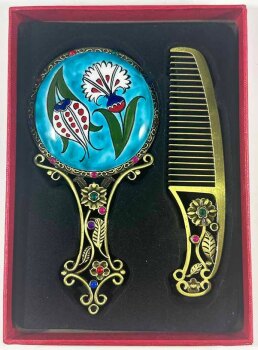
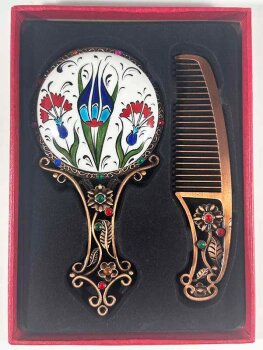
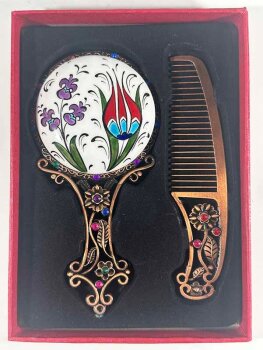
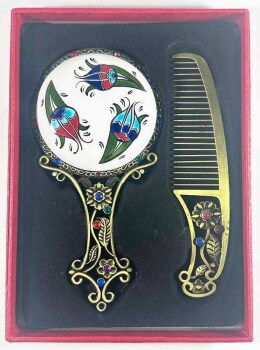
Notify me when it’s in stockHyacinth & Carnation Patterned Mirror and Comb Set – Ottoman-Inspired Iznik Ceramic Design
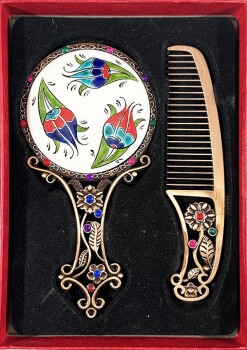
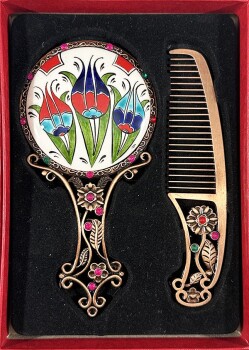
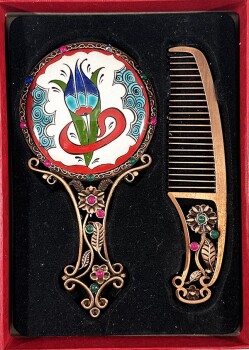
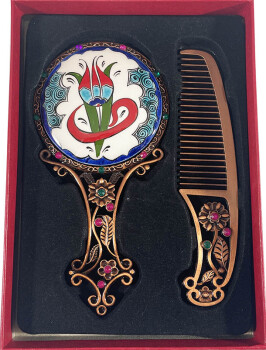
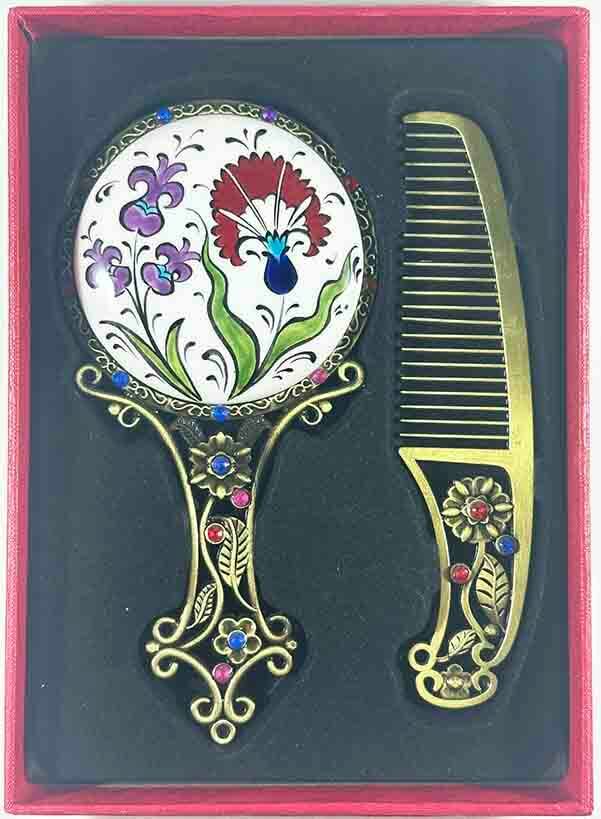
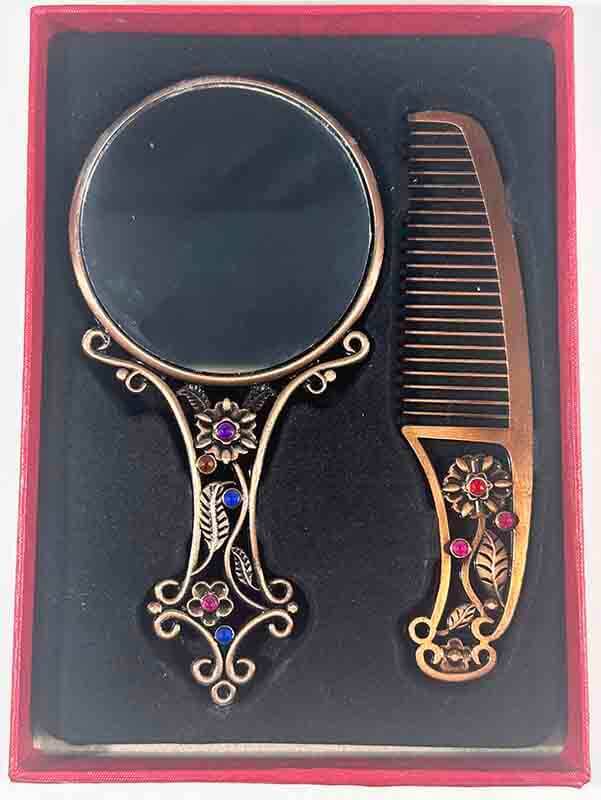
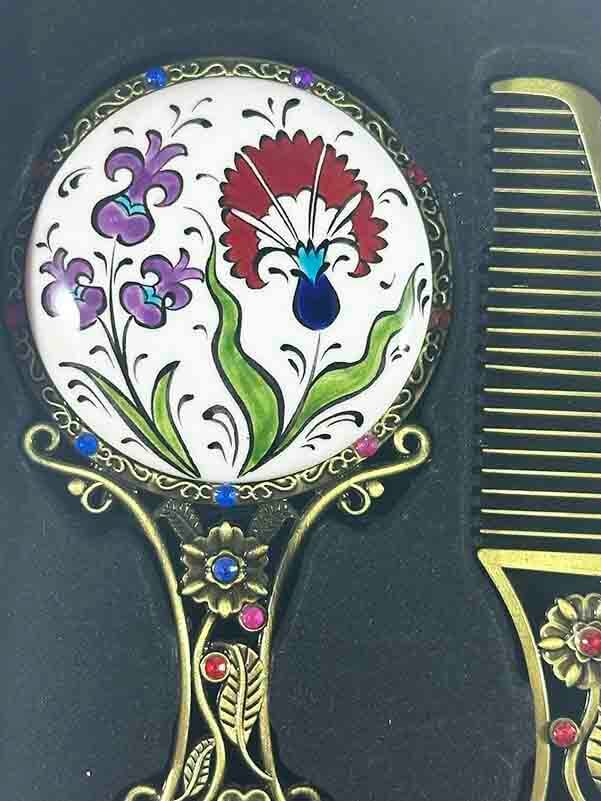
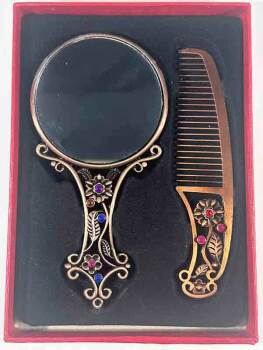
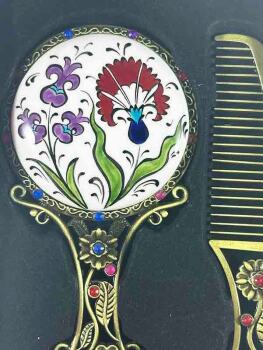
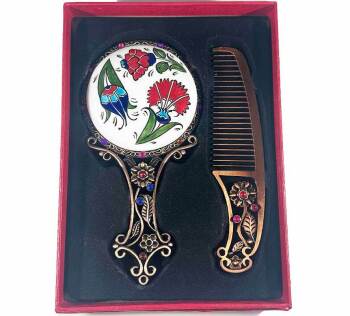
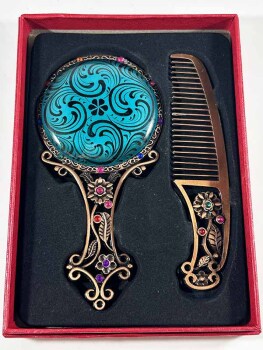
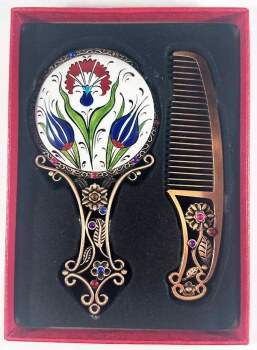
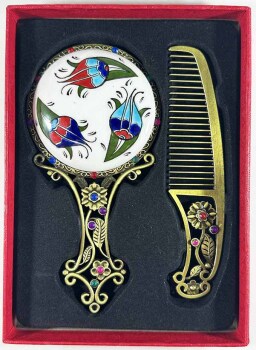
This elegant mirror and comb set is adorned with hyacinth and carnation motifs—two of the most cherished floral patterns in traditional Turkish Iznik ceramic art. With exquisite metal detailing and shimmering stones, the set blends practicality with rich cultural symbolism, making it a timeless gift of beauty and meaning.
Product Features:
Intricately crafted with ornate Ottoman-style metalwork
Embellished with bright decorative stones
Elegant, functional, and durable
Comes with the gift box shown – ships the same day
Product Dimensions:
Mirror length (with handle): 15.4 cm (6.06 inches)
Comb length: 12.2 cm (4.80 inches)
Gift box size: 17 cm (6.69 inches) x 11.5 cm (4.53 inches) x 2.8 cm (1.10 inches)
Every Iznik ceramic piece is as unique as a fingerprint — no two are exactly alike. This set you’re viewing is a one-of-a-kind item that may never be produced in the same way again. We recommend securing it while still available.
Iznik tiles never lose their value, charm, or relevance. They are timeless heirlooms meant to be passed on from one generation to the next — combining craftsmanship with cultural legacy.
Motif Meaning – Carnation:
The carnation symbolizes love, beauty, passion, and abundance in Turkish tradition. First introduced to Anatolia in the 16th century, it became a beloved motif in Ottoman decorative arts.
Emotional Depth: Associated with affection and vibrant expression
Visual Appeal: Bright colors and fine petals enhance the beauty of tile compositions
Endurance: Strong stems symbolize resilience and longevity
Cultural Symbolism: Represents fertility, prosperity, and the richness of Ottoman aesthetics
Motif Meaning – Hyacinth:
In Iznik ceramics, the hyacinth represents love, loyalty, grace, and spiritual beauty. It is also seen as a symbol of renewal and new beginnings, especially in Islamic art.
Love and Devotion: A flower of heartfelt affection and loyalty
Spiritual Significance: Often linked to divine love and the human connection to God
Seasonal Symbol: Marks the arrival of spring and the cycle of rebirth
Artistic Harmony: Frequently combined with tulips, carnations, and roses to depict the beauty and abundance of nature