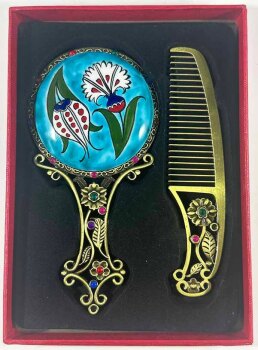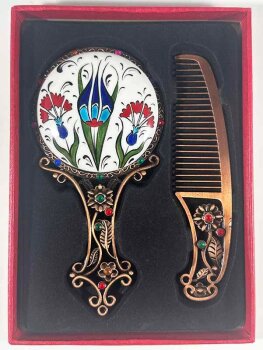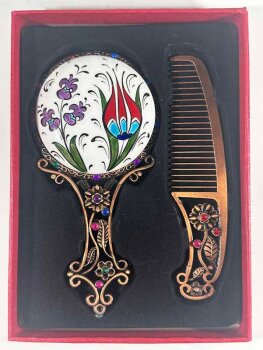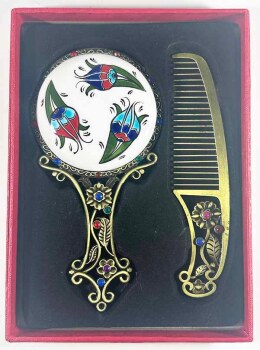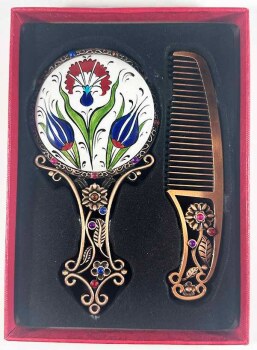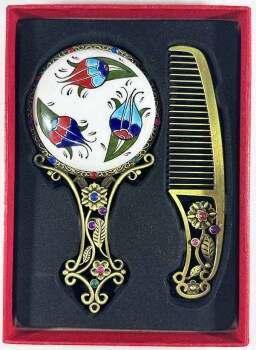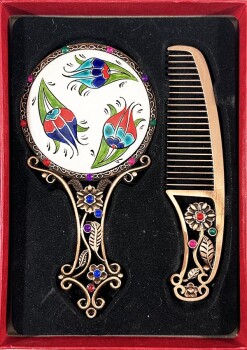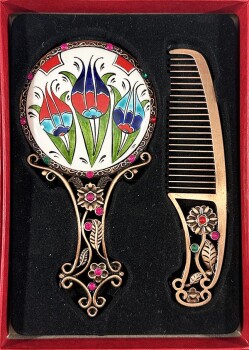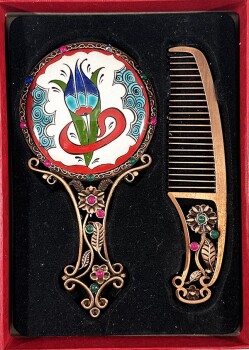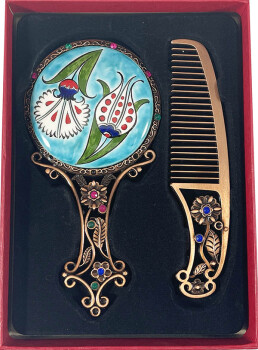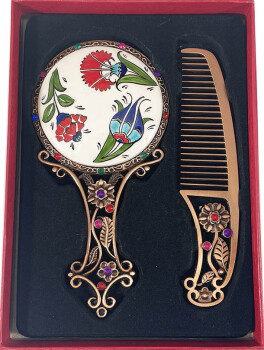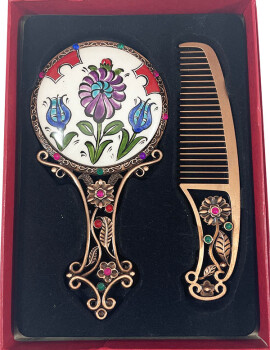


Spring and Tulip Motif Iznik Ceramic Mirror Set
Out Of Stock
Notify me when it’s in stockSpring and Tulip Motif Iznik Ceramic Mirror Set
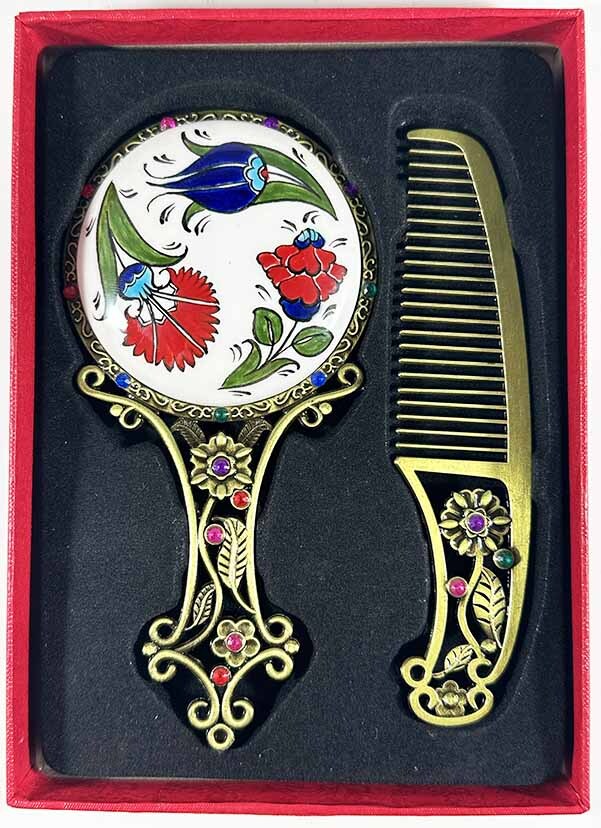
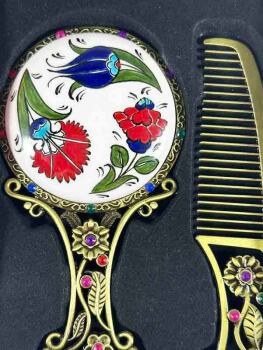
Prepared with the elegant harmony of spring and tulip motifs, this Iznik ceramic mirror set represents new beginnings, hope, grace and a loving memory.
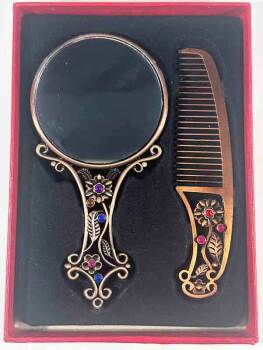
The set consists of a mirror and comb, offering a meaningful gift alternative for a lover, fiancee, spouse or anyone beginning a new chapter in life.
The liveliness of the spring pattern and the elegance of the tulip motif give the product both a romantic and positive character.
Product Features
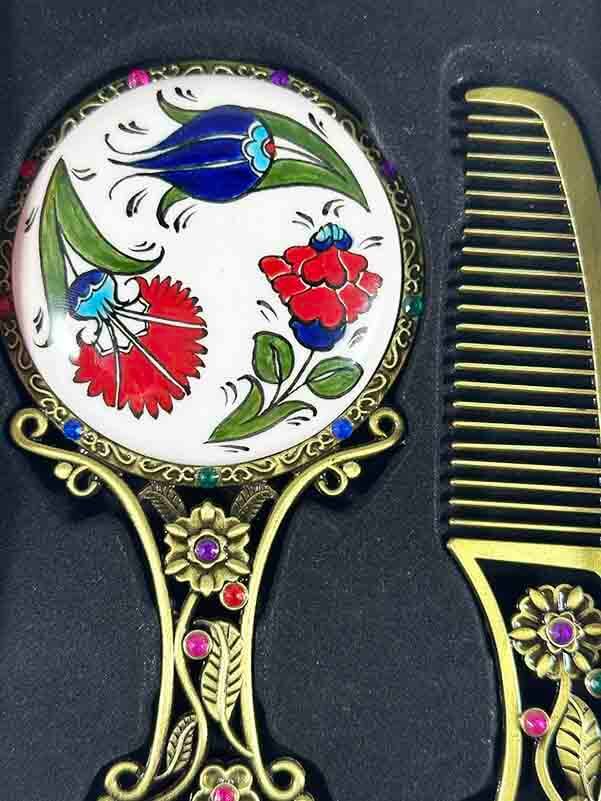
- It has elegant Iznik ceramic details with spring and tulip motifs.
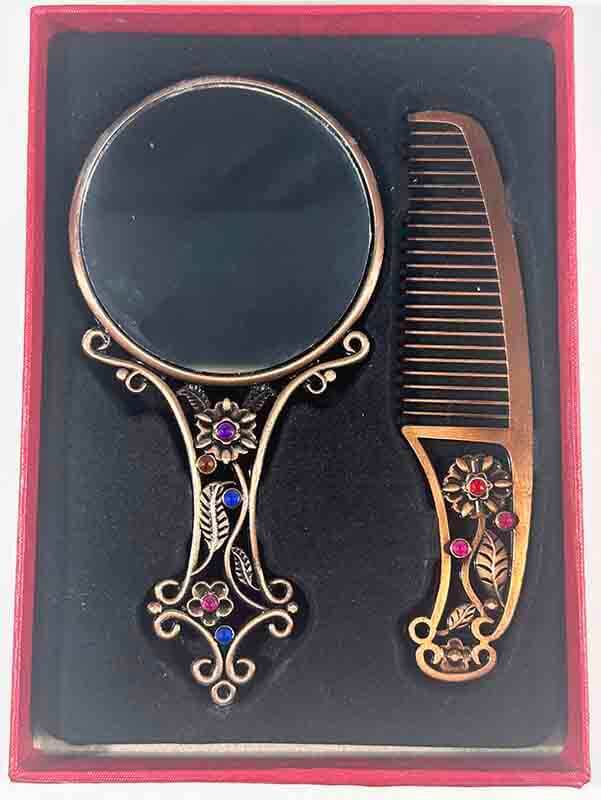
- Designed with special metal workmanship.
- Decorated with shiny stones.
- Consists of a mirror and comb set.
- Practical, high-quality and elegant for both use and display.
- Sent in the gift box shown in the image and prepared for same-day cargo.
- Mirror length: 15.4 cm (6.06 in), including the handle.
- Comb length: 12.2 cm (4.80 in).
- Gift box size: 17 cm (6.69 in) x 11.5 cm (4.53 in) x 2.8 cm (1.10 in).
- For international orders, your product is handed over to the shipping carrier with ultra-protective special packaging. Estimated delivery time is 3-7 business days for European countries and the United States, and 4-9 business days for other countries. Delivery times may vary depending on the shipping carrier, customs procedures, public holidays, and local delivery processes.
The Meaning of Giving a Mirror
In traditional narratives from the Ottoman period, giving a mirror as a gift is expressed with the message: 'I could not find a gift more beautiful than you.' For this reason, a mirror gift carries a romantic, elegant and symbolic meaning.
Every Iznik Ceramic Piece Is Unique
Each Iznik ceramic piece has its own character, like a fingerprint. Even when the same pattern is created again, the color transitions, placement and craftsmanship details make every piece special.
Gift of New Beginnings and Hope
The spring motif symbolizes the revival of nature, renewal, abundance and hopeful beginnings. Combined with the tulip, it turns the set into a lasting memory that carries good wishes and delicate emotions.
Pattern Information: Tulip Motif
In Iznik ceramic art, the tulip is accepted as a symbol of love, elegance, beauty and nobility. Its fine form and balanced appearance made it one of the most important motifs of Ottoman art.
The tulip also evokes refinement, divine love, the revival of nature and the cultural memory of the Ottoman period. When used on a gift object, it gives the piece a graceful and meaningful character.
Who Can It Be Given To?
- A lover, fiancee or spouse
- New home, birthday, engagement or anniversary gifts
- People beginning a new period in life
- Those looking for a hopeful and elegant ceramic gift